There’s a certain attitude that scares the shit out of me – let’s call it destructive sensitivity. It’s the philosophy that, if an idea is uncomfortable, it needs to go away. If an image upsets you, or reminds you of a bad experience you had, then not only should you not have to look at it, no one should be allowed to look at it. And if you can’t eradicate it completely, it should at least be buried so deep that a casual viewer would never stumble upon it. This kind of censorship is nothing new, but I feel like it’s becoming more and more common. So, why do I think it’s a problem?
FICTION
An important question we need to ask ourselves first is, what is the purpose of media, and particularly of fiction? Why do we read, why do we look at artwork, why do we watch movies? To only see happy things? As escapism? That’s certainly a valid interpretation, but it’s not the only one.
For the artist or creator, fiction can be a way to communicate the inner self to the outer world, through the use of symbols. It’s a means of expression. What they express might be deep, might be simple, might be beautiful or disgusting, might be for a niche audience or the whole world, but in the end, it is the artist taking pieces of their own experience and creating something new.
For the viewer, fiction is a way to understand things that are outside their experience, and a way to expand their experience safely. Fiction allows us to go places and do things that we can’t or wouldn’t in our own lives, without risk, without physical harm, and without causing harm to others. Fiction can teach us what we fear, what we love, what we’re missing. It can show us how others live, how others see us, how we see ourselves, and we’re free to engage with it as shallowly or as deeply as we want.
But fiction is not equal to reality. Watching Friday the 13th doesn’t make you a murderer, and it doesn’t kill you. Reading Lolita doesn’t make you a pedophile. Writing a story where a character is raped is not the same as committing rape, and reading that story is not the same as being raped. Thought is not crime.
CENSORSHIP
Censorship is a way to force your interpretation of material on others, to reduce or destroy another’s experience by prejudging it as harmful to them. But part of becoming a well-rounded human being is accepting that not everyone has the same sensibilities, and not every experience needs to be positive.
What you find offensive, some might find enjoyable. What you find traumatic, some might see as an exercise in empathy, or a means of catharsis. Sad songs can be beautiful. Horror stories can be fun. When you decide to silence the things you don’t like, you’re cutting off others from that same experience. You’re making decisions for others, and you’re essentially saying that your feelings (and the feelings of people who agree with you) are more valid than anyone else’s. I find this darkly ironic, because the audience that holds these particular sensitivities also tends to be the first to champion acceptance and non-traditional viewpoints, while organizing witch hunts for those they feel disrespect them.
So, why is this important to me? Why does it scare me? Well, as an artist, the complaint of one sensitive viewer can erase my work in an instant. When complaints are made, content is removed first and questions are asked later. Artists are guilty by default, and viewers are treated as victims. No content host wants to be the one to stand up for freedom of expression at the risk of being seen as supporting offensive material. Most alarming of all, this is all seen as totally acceptable, or even justified. When an artist’s work is taken down, I see comments like, “Well, that’s the risk you take when you post stuff like that. Can’t be helped.” Even the people who disagree with censorship just shrug their shoulders.
SENSITIVITY
To those who are sensitive, I’m not trying to say, “just get over it”. Emotional hurt is real, traumatic experiences are real. I would never belittle someone else’s pain. But you have to realize as well that your experience is not the be-all, end-all of the world. Not all content is made with you in mind. It is inevitable, if we want to exist in a world with other people in it, that we’ll be exposed to things we don’t enjoy. The answer is not to destroy or degrade those things, but to try to understand them – and if that fails, at the very least, we can allow them to exist on equal terms. It is that frightening desire to homogenize the world, to eliminate that which we fail to understand or which causes us emotional distress, that can lead as to real prejudice, to real violence and real crime. Please understand that allowing content you dislike to exist is not the same as advocating it.
THE ANSWER
What I would love to see is a perspective shift. I want to see a world where responsibility is on the viewer, not the creator or the content host. If you have a problem with something, it’s up to you to not see it, not for the artist to hide it for you, or add unavoidable warnings that prejudge a work. I want a world where, rather than censorship by default, censorship is a conscious choice for those who want it. No work is hidden until a user hides it themselves. Artists are not punished for merely posting content that some find offensive, only for not tagging it correctly. Freedom of expression and variety of content is seen as more important than protecting viewers from fiction, from discomfort, from viewpoints that don’t mesh with their own.
Accept others. Take responsibility for yourself (and only yourself). Understand that not all content is meant for you. Understand that fiction is not crime, and fiction does not equate to real-world harm. That’s all I’m asking.
(please don’t let this become a shitstorm… TT _ TT)
Tag Archives: i rarely do SJW
Nah you’re not slim or pretty enough to be a vampire
ok but like are you trying to tell me that there has never been a fat vampire? a fat person has never been bitten nor has a vampire ever drank enough blood to put on some weight? really?
First of all why would you say that to a stranger on the internet? I feel sorry for Anon, that they felt the need to put someone down this heartlessly. What a gross oversimplification.
How dare you tell someone they’re not pretty or slim enough for anything. Who made you the Decider of Prettiness and Slimness? I didn’t vote for you.

While it’s true that fandoms/media tend not to glamorize fat and/or ugly fictional vampires, they do exist.
@askavampirologist might have more to say on this, but here’s a whole pile of fat and/or ugly vampires some of which I found on a QUICK SEARCH OF TEH GOOGLE which Anon could also have done but was apparently too lazy or cynical to bother with doing.
1. Magnus, Lestat’s maker, is described as being ugly. He’s missing all his teeth except for his fangs. Were they lost/removed before he became a vampire or after? We don’t know. Usually, having all one’s teeth is a necessary element in being considered “attractive,” among other things. [Fanart by J. Oliver, Magnus on the right]

2. Meet Pearl from Blade, a FAT AND UGLY VAMPIRE. Someone made him (I don’t remember if Pearl was m/f) a vampire, was it before he was obese or after? Was it before he got ugly or after? Someone had a reason to do it and it might not have been based on beauty or slimness AT ALL.

3. Here’s Deacon from What We Do in the Shadows, and while I wouldn’t call him FAT, I wouldn’t call him SLIM either. Nor is he attractive to everyone even tho he thinks he is.

4. Here’s a Cassandra Clare quote on the subject: “Maybe they didn’t make vampires out of ugly people. Or maybe ugly people just didn’t want to live forever.”
^While I don’t necessarily agree with her, there could be some truth in that. Not everyone would want to have to kill to live forever, maybe it so happens that “fat” and/or “ugly” people are more compassionate in that regard and wouldn’t be able to do it. Or there have been
“fat” and/or “ugly” vampires who have chosen to die rather than continue vampiring for whatever reasons.
You want some more? Hit the jump.
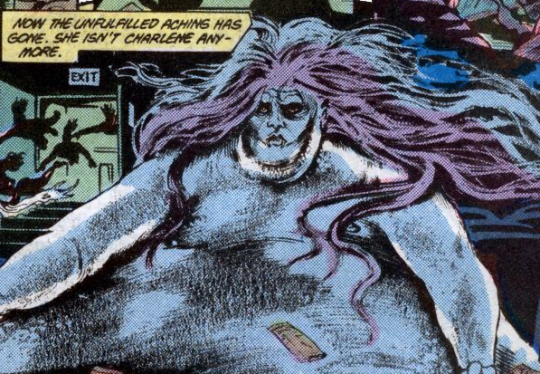
5. Alan Moore made a “morbidly obese vampire bride” … “a fat monster that spends her day wallowing in the filth of an abandoned movie theater.“ It was part of a Swamp Thing series, I think. [full page here]
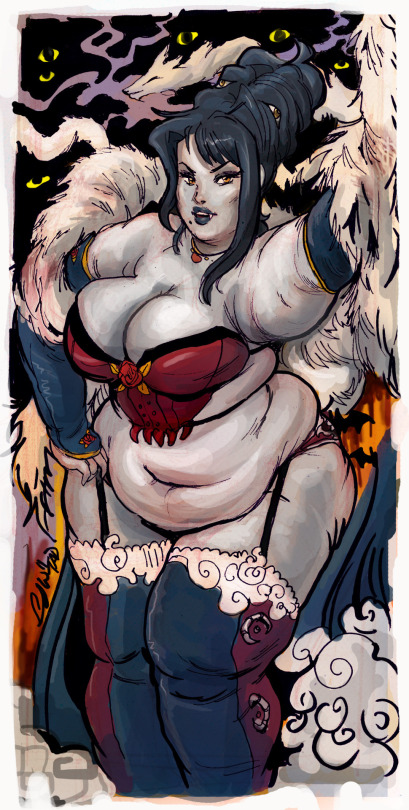
6. Lady Luljetta “is a female vampire who resides in the country of Lelitania, where is originally from no one really knows.” [X] There seems to be fanart of her out there! [fanart by @fatline, who will draw any and all fat related draw requests]
7. This is a very real book, I haven’t read it but apparently it’s part of a FAT WHITE VAMPIRE series!

8. Here’s another fat vampire series:

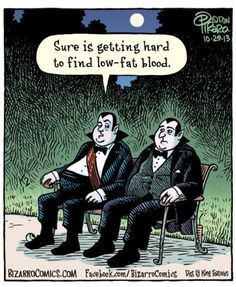
9. Here’s a coupla fat vampires in a cartoon:
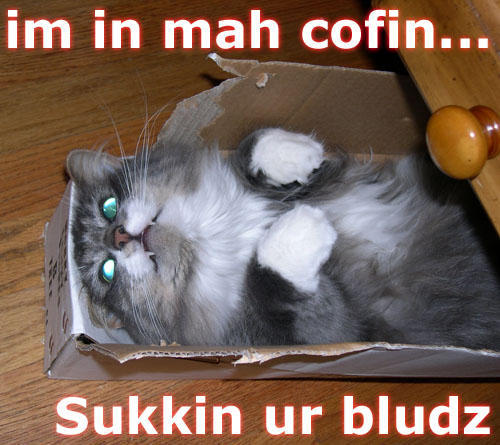
10. Here’s a fat vampire kitty from schadenfreudepony:
 I-want-my-IWTV