Hey I saw one of your posts about Armand’s accent, and Kiev was actually part of Russia until the 50s. Over half the people in Ukraine are Russian. Also, Kiev is actually known as the “mother of all russian cities.” So it’s Kiev, Ukraine now, but I guess AR says Russia because back when Armand lived there it was still Russia. (:

Thanks for clarifying! I was confused about that. [Anon refers to this post]

image

BTW, there are some gr9 reblogs/comments on that post about his accent, worth checking out. The general consensus seems to be that it depends upon what point in canon you’re at and accept, bc it changed over time (I’m going to reblog from smne on the chain after it has a little more time to get more responses).
Gallery

cloudsinvenice:

luthi69:

But can we please talk about Armand’s
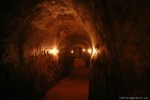
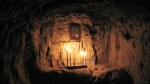
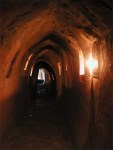
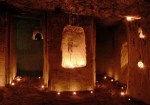
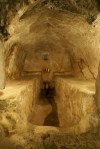
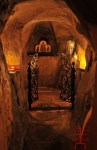
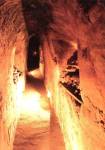
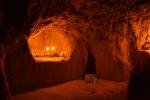
(actually Andrei’s) Monastery of the Caves because it’s a real place!

Kiev Pechersk Lavra also
known as the Kiev Monastery of the Caves, is a historic Orthodox Christian monastery which gave its name to one of the city districts where it is located in Kiev. It was created in the early 11th century by an Orthodox monk named Anthony. He chose a cave at the Berestov Mount that
overlooked the Dnieper River. The Kiev Pechersk Lavra caverns are a very
complex system of narrow underground corridors (about 1-1½ metres wide and 2-2½ metres high), along with
numerous living quarters and underground chapels. 

Even
found a small interview with one of the actual modern monks, who said “The monk is actually a person who,
ideally, should not face the world for he is constantly talking to God. Therefore, he goes underground, he buries himself
alive by digging his own grave – that is, his cell. And when the real death comes, the
cave takes his body for perpetual storage. Therefore,
every cave monastery is a kind of an underground necropolis”.

I honestly have no idea how I’ve never researched this, but I finally have a visual and detailed reference and I’m SO happy.

My hat is off to you. This post is a brilliant, evocative piece of fandom research. The funny thing is that when I came to my dash and saw the photos I was thinking, OMG, SOMEONE FOUND SEVRAINE’S CAVES OF GOLD! and then… well, I’m floored! 

It shows something that I hadn’t understood when I read Armand’s story: how the caves could seem safe, reassuring, even. How they could echo the womb in some way to one’s lizard brain, particularly for a kid who’s torn between two different ways of life and is told that this place will mean peace of a kind, rightness with God. Somehow I doubt there would’ve been so many candles back then, but any candlelight at all on walls of stone… I’d forgotten how it looks and feels, and somehow I’d always visualised the caves as having earthen walls, which of course makes no sense because they wouldn’t have stayed up!