Sunbathing 😍 (Source: http://ift.tt/2pdzcyp)
Remake yourself.
It hurts, and it’s bloody, and sometimes that blood isn’t metaphorical. You have to face things about yourself you didn’t want to face and admit the lies you had comforted yourself with were the most vicious lies of them all, and you’re going to wonder why you haven’t just settled the matter once and for all.
Do it anyway.
The mold you have been forced to fit into never fitted you, never fitted anyone, and was created for the sole reason for making you comfortable for other people but never for you to be comfortable for yourself.
Once you break the mold, what you refashion yourself into will fit your self a little better, but it won’t be perfect. You won’t be this “new self” forever, but it will allow you to see a little more clear, and to speak a little more loud, and to be a little more what you are comfortable being.
You will remake yourself often.
Each time you take a hammer to the form, it will be because you found another lie you can’t live with anymore, or you found another leech you won’t tolerate anymore, or you realize that even though you’re a little better than before, you need to keep working at yourself if you are going to survive.
You will survive.
After a few iterations of this, you’ll look back and not recognize yourself. You’ll see who you were in the distant past and realize that is not the person you are now, and the person you are now is not likely to be the person you will become this time next year.
And that’s okay.
That’s how you will survive.
It’s okay if you can’t stand who you are right now. Because that is the launching point. That is the clearing of the work table and the gathering of the tools. This is how you start: Identify what you want to change and start breaking the mold off of it.
It will hurt and it will be bloody and your personal connections will change and you will lose friends and “friends” and that’s okay.
As long as you are doing this for you, that’s okay.
(Ice cream helps.)
Why do people make shit arguments against queer representation by saying things like, “The percentage of LGBTQ people in the population isn’t that high.” Well neither is the percentage of vampires, but we see plenty of them in our media don’t we?
Reblog if you’ve seen more vampires in the media than lgbt+ people







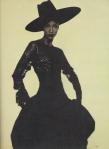
Vampire Types: The American South
The south eastern United States became a profane pilgrimage site for young vampires, and those craving the life eternal. Many of the vampires here are less than two hundred years old, vagrants, wanderers, foreigners, visitors, but there are some who can trace their lines back farther, some who live in glittering houses full of music, parties, art, and ghosts.
You’ve got a couple of options:
- A 1:10 mix of cheap vodka (cheap, unflavored, undrinkable vodka) and water in a spray bottle. Spray down the blazer, inside and out, and either toss it in the dryer for 30 minutes on low, or leave it outside in the sun for a few hours. (This is an old costumers’ trick, and is how I used to get club smoke out of my velvet dresses Back In The Day.)
- Get a Dryel “home drycleaning” kit (you want the “starter” kit). Use the booster spray on any stained places, thoroughly soaking them. Then toss the blazer into the special dryer bag, put one of the Dryel sheets in the bag, and toss the whole thing into the dryer for 30 minutes on high.
The one benefit the Dryel kit has over the the DIY vodka/water mixture is that the booster cleaning spray is AMAZING. So far, the only things I’ve not been able to remove from white fabric using it are chocolate and blood. (And OxyClean or similar works on those.) (Look, I occasionally have … issues with my gothic heroine nightgowns, okay?)
OKAY SO HERE WE GO
BUCKLE UP CREAMPUFFS
this is less of a panic actually and more of a sustained belief that the outside world became more aware of all at once so it seemed like a condensed event
belief in vampires was a Thing in much of the world for a really long time, including rural New England (mostly Connecticut, Rhode Island, and Vermont). during the 19th century, tuberculosis was also a very big, very bad Thing as @queenofairandsnarkness pointed out. it’s transmitted through microscopic aerosolized drops of infected saliva when the victim coughs, and highly contagious, especially among families or other people who live in close quarters. in a time when people commonly shared beds for warmth, quarters could be very close. one case usually became an outbreak
a wasting illness that slowly drains the energy and strength from its victims…sound familiar?
the word “vampire” was seldom if ever used, but stories spread of the consumptive dead- the consumed, I guess you could say -rising and stalking the village. often they were said to prey specifically on their own family members. it’s a bit dicey in these accounts whether the villagers believed the vampires spread the disease or it was a vampire instead of the disease
the body of the suspected vampire would be disinterred and examined. if the hair or nails seemed to have grown (a common misconception with fresh corpses, since the scalp and nail beds draw backand make nails and hair look longer) or the mouth was bloody (decomposition. fluids. enough said), the corpse would be staked in the grave.
or decapitated
or have a brick stuffed in its mouth
or all three
overkill was very big in rural 19th century New England. but that wasn’t the most gruesome part. often, the vampire’s organs would be cut out and burned on a gravestone or in a forge. the ashes would then be mixed in water and given to a victim to drink
why they kept doing this cure even though it had literally a 0% success rate is beyond me. maybe everyone knew a “friend’s cousin’s sister” it had worked for. maybe chain emails would have been huge in 1860s Vermont. go figure
anyway, the most famous face of the New England Vampire Panic was Mercy Brown, a 19-year-old girl who died of consumption in 1892. shortly thereafter, her ailing brother claimed that Mercy came and sat on his chest, draining the life from him. the obligatory mob dug up her grave, found her corpse well-preserved, and assumed not that being buried in January in Rhode Island had frozen the corpse but that she was a vampire. they gave her brother her heart to drink. her brother still died. this is my shocked face
the press got ahold of some of these stories and regarded them with a curious mixture of classism and Victorian morbidity. these were country people, after all- superstitious yokels with backward beliefs alien to a new age of enlightenment. (can you feel the extreme sarcasm there)
never mind that the medicine of the time only accepted germ theory near the end of the century and had no more idea what caused TB than a Connecticut farmer burning his neighbor’s liver on an anvil. people have always loved to feel superior to someone
anyway, as for influence on literature, it’s possible. authors get their information from varied sources; I’m sure any vampire lit that existed at the time was fair game for Stoker to read. it’s been suggested that Lucy Westenra is based on Mercy Brown, but honestly I think she’s too common of an archetype to cite any specific inspiration. other people have argued that there hadn’t been time for the newspaper reports to reach Stoker in England when he wrote the book in 1897. one way or another, I guess you could argue that the NEVP influenced him in the sense that all vampire lore did
H.P. Lovecraft references the exhumation of Mercy Brown in his story “The Shunned House” as does Caitlin Kiernan in “So Runs the World Away.” There are also a few movies that draw inspiration from her story, I believe, but I’m not sure which ones they are.
AND THAT’S THE NEW ENGLAND VAMPIRE PANIC EVERYBODY
here is an excellent article about it




He knew I would love her more than the waking world
Interview with the Vampire (1994)
Dir. Neil Jordan