Aye so I’m thinking of picking up the books but I heard they get pretty bad and u was just wondering what’s your opinion

Define “bad”? Problematic for sure. Squicky for some ppl. Cracky as heck. 

I wanted to delete this ask bc an objective “bad” is so hard to define, especially with regard to fiction in this current wave of scrutiny about it. I think we can all agree on things that are bad in Real Life, but what we’re not agreeing on these days is the role of fiction and Real Life, that consumption/depiction of problematic things =/= endorsement of those things in Real Life. 

(This is all aside from the criticism dealing with the writing itself on its own merits, which, I am pretty forgiving about. I don’t consider my palette as a reader to be all that refined, I’m more interested in the ideas, and I don’t mind as much about the skills of the writer, even one who may have been very good and then devolved over the years. So you’ll have to ask someone else if the writing style is your concern.)

Some books will be loved by some ppl and praised to high heaven, those same books despised by others and cursed for existing, and everything in between.

IDK we used to call the later books “the Vampire Crackicles,” and I for one, would love to bring that back! 

At its core, it is my belief that VC as a whole is a means of demon exorcism and of wish-fulfillment for their author. Sure they have some higher value, if they didn’t, I don’t think the fandom would be as large and as loyal. But VC also has a ton of various kinds of porn, let’s be honest. As a mix of those elements I just described, they do not have to be that deep, they are whatever each individual reader wants them to be. Personally, I really enjoyed the first few, and have found enjoyable stuff even in the crackiest of later canon. If you don’t take them too seriously, it’s worth the effort. But then, I am pretty forgiving and I can do headcanon gymnastics for fun to explain stuff I don’t like, or treat it as AU.

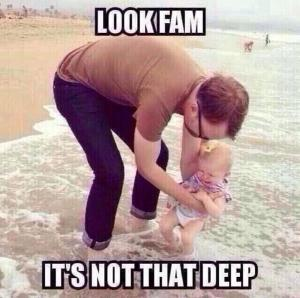
So they can be considered shallow escapism with problematic dysfunctional hipster vampires:
image

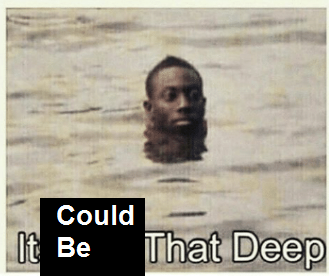
Or, you can dive in and look for deeper meaning, and make richer analysis out of it. It could be that deep, if you want it to be! 
image

When I got this ask ~6 months ago, it was close to Thanksgiving, I had more pressing real-life things going on like traveling and visiting with family. I also didn’t want to answer it bc I was thinking it might be from a troll. Might be someone asking this in order to trick me into some kind of response that could be a launching pad for Discourse.

Now, time has passed, and having absorbed plenty of fiction =/= reality, anti-anti-shipping, and pro-shipping blog posts, I’m not afraid. Of the two possible approaches above (and there are others, of course), you don’t need to pick a side. Sometimes it can be deep, and sometimes not. You don’t have to defend liking it one way or the other, it’s fiction. It’s whatever any individual reader wants it to be, and keep that in mind when you read. Your reading is your own. Your headcanon is your own. Don’t let ppl concern-troll you, policing what you enjoy in fiction. I’m being a little forceful here bc I want to give you the confidence to know and believe: You. Can. Read. AND. Write. Whatever. You. Want.

Anon, you might be a troll, but this is also an honest question ppl have had about this series over the years. I want to believe you’re coming to this honestly and not trying to start something. 

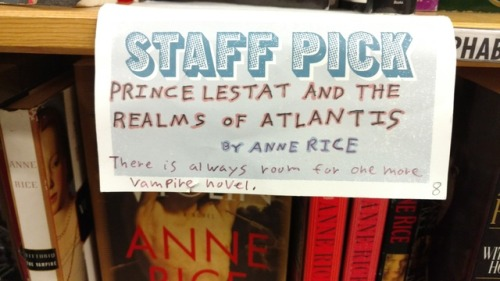
I feel like I’m going to get redundant… to wrap up, the most recent and I would say, the Crackiest of the Crackicles, advertised as:

“There is always room for one more vampire novel.”

Couldn’t agree more ;D
image

^At Powell’s book store in Portland, Oregon. 10/30/17. 

Hope that helped, Anon!

portraitoftheoddity:

I feel like a lot of tumblr culture, especially the particularly ineffective brand of Tumblr Social Justice™, has somewhere along the line lost track of the difference between something having the potential to be bad, and being innately bad. 

For instance, a white author writing a character of another race absolutely has the heightened potential for problematic portrayal, since that author lacks lived experience as a member of marginalized racial/ethnic group to draw on, and has a heightened chance to misrepresent that group. However, if they do their research, talk with individuals from that racial/ethnic group, consult with sensitivity readers, etc., they may still tell a very honest, sympathetic, good story with good representation. It is not innately bad, simply because of the author’s race; though I’ve seen arguments on tumblr insisting this is the case. 

Another example is relationship dynamics; couples who have an age gap or a power imbalance (such as one individual being lower on a professional chain of command from the other) might have an increased potential for an abusive dynamic to form. The couple with the age gap has to be more conscious of differences in lived experience, and the couple with a power differential in the professional side of their relationship needs to overcome more hurdles to equalize things in the context of their personal dynamic. But neither of these things is impossible. These dynamics are not innately abusive; they might make abuse easier, or more common, but they don’t guarantee it. Just as avoiding these dynamics doesn’t guarantee a lack of abusive behavior.

Some situations/dynamics/endeavors have a heightened potential for things to go wrong. And we should be conscious of that potential and keep an eye out for problems – not to destroy the thing, but to encourage course correction (an edit to a manuscript; couples’ therapy; etc.). Many of these things, however, tumblr culture has labelled as innately bad, rejecting any possibility of the thing being done well and thus shutting down that encouraged course correction in favor of flat-out condemnation, without nuance, thought, or consideration. And by drawing clear lines of what is ‘innately bad’ and ‘innately good’ we also avoid giving due criticism of problematic things that have been assigned as ‘innately good.’ 

This hellsite is allergic to nuance, but damn, do I wish we could all be better at it and recognize that few things are as black & white and simple as we’d like them to be. Shit is messy. Everything is problematic. But not everything that can be bad is, and not everything that’s less likely to be bad is perfect. 

joons:

i’ve been thinking a lot about why people don’t get creepy ships and automatically expect you to apologize for liking them

and it’s just that the appeal, to them, is “oh, wow, the phantom kidnapped christine / the villain decided to spare this other character / the vampire snuck into her room, how romantic” and they think that’s super weird and indefensible 

but that’s not how people genuinely think about it? at least not me and most people i know who enjoy those kinds of tropes. we’re interested in characters who don’t have a healthy concept of love, who don’t understand it, making the greatest gesture they’re capable of within the timeline of their stories, recognizing that they Feel a Feeling for someone else and struggling to articulate it. most of the time they are Horrifically Bad at this, but it’s fascinating to watch them bump up into the limitations of their emotional capacity, even as their heart is SWELLING OVER with something they can’t name. their morality doesn’t preclude them from finding someone they admire. we like to hope they’ll figure it out in time and understand how to handle their feelings in a good way, and if they don’t, imagining a scenario where they do and things end happily isn’t hurting anyone. people’s knee-jerk response is “you’re romanticizing, you’re excusing” but all that’s happening is people are recognizing that a character is having a deep internal conflict with themselves and rooting for them to make good choices. i don’t think kidnapping is romantic, i think it reveals that a character who has romantic feelings doesn’t have a guideline for how to express them, and that’s automatically fascinating to me. 

chicklette:

qlazzarusgooodbyehorses:

foxsgallery:

shinelikethunder:

can we please bring back “in poor taste” as a concept

Because at some point it got folded in under “problematic,” and now every damn thing that has Unfortunate Implications or deals with sensitive topics indelicately enough to raise hackles or gores somebody’s sacred cow is treated as a grave injustice or a threat to society. Online activism culture has lost the vocabulary to express “this deals with touchy stuff in a way many people might find inappropriate, and you should probably avoid it if insensitivity on this subject gets you angry/upset, but it’s not promoting hateful ideas or demeaning people or affecting anything but my opinion of the creator’s sense of tact.”

I think this really an important post.

We’ve fallen into such a rut of “everything is right or wrong, no inbetween” that stuff that’s merely in poor taste is conflated with things that are actually offensively malicious.

this is so well worded like i been trying to say this for awhile thank you

Damn. This is the thing.

Re: whether you have to tag smtg upon request, I was asked to tag a fanart reblog as {#abuse}. The fanart was a /vision/ the character was having, in which they were shown w/ bleeding wounds (not a depiction of a canon whipping scene), and not actually abuse. I tagged it w/ {#abuse} bc of the wounds: at first glance, w/o reading the caption, it could be upsetting to smne in a way that the caption would be too late or insufficient; & the #abuse tag could save this person from seeing it at all.

That’s true, art is different than writing in terms of the immediate engagement of seeing it. And yet, in galleries/museums, I can only remember a handful of times I’ve ever seen warnings for art that could be potentially upsetting in the context we’re using. With paintings like Judith Slaying Holofernes by Artemisia Gentileschi, you round a corner, and !!! someone’s getting brutally beheaded in vividly gorey detail. However, to attempt to discuss [fanworks] vs. [museum (or gallery)-displayed artwork and published fiction], that’s a potentially long and difficult discussion, and your blog is about fanfiction specifically, so I won’t go there.

But I do think we have to drag published fiction into the discussion as that’s what the fanworks are based on. As you wrote:

My concern is always that a tag like that is going to change how people interpret my work into something I didn’t intend. Like, I’ve been asked to tag things as abuse before that I really didn’t agree WERE abuse, just regular conflict in a relationship. I can appreciate that that might be upsetting someone, and would like to give them a way to avoid it, but I don’t want to label something as abuse if it’s not, either.

I agree with you on this. As “beauty is in the eye of the beholder,” so is “abuse is in the eye of any given reader,” whether or not the author intends it to be a depiction of abuse. Our fandom is based on works that contain plenty of problematic elements (including abuse) that the author most likely does not consider problematic, even when many of the fans are in agreement that they are problematic. Still, “many” is not “all,” and I choose not to trample on fans/fanficwriters/fanartists who ship A/B by tagging every depiction of 

A/B

with {#abuse}, even when other fans condemn A/B as being a problematic and specifically abusive ship. 

When fanartists and fanwriters take these same problematic elements from canon and extrapolate, they’re handling the same “tainted” material, whether or not they depict A/B as abusive, and therefore bear the brunt of the demands for tagging their works with {#abuse}. 

So I don’t know what the answer is bc as I said above, I would not want to needlessly upset someone, but I also see it from the shipper/fanficwriter/fanartist/creator’s POV.

If we can’t agree on what should be tagged as {#abuse}, I feel like Dead Dove: Do Not Eat should apply:

shipping-isnt-morality:

That’s fair!

I guess that writing is a little different, since it’s unlikely people are going to just glance at the work and be upset by something there. They sort of have to engage with it.

My concern is always that a tag like that is going to change how people interpret my work into something I didn’t intend. Like, I’ve been asked to tag things as abuse before that I really didn’t agree WERE abuse, just regular conflict in a relationship. I can appreciate that that might be upsetting someone, and would like to give them a way to avoid it, but I don’t want to label something as abuse if it’s not, either.

Dead Dove: Do Not Eat is a warning or tag used to indicate that a fanwork contains tropes or elements that may be deemed “problematic” without explicitly condemning the problematic aspects. 

The “Dead Dove: Do Not Eat” tag would essentially be a “what it says on the tin” metatag, indicating “you see the tropes and concepts tagged here? they are going to appear in this fic. exactly as said. there will not necessarily be any subversion, authorial commentary condemning problematic aspects, or meditation on potential harm. this fic contains dead dove. if you proceed, you should expect to encounter it.”

I don’t feel that a

(published or fanfic)

writer is required to condemn abuse in the narrative, especially when, as you point out, they may perceive the abuse in question as regular conflict in a relationship. “Regular” is also up for debate, of course. As a fandom’s lifeblood is its fanworks, my feeling is to try to find some compromise between allowing the shipper/fanficwriter/fanartist/creators to create the fanworks they want to create, and for that to be done in a way that offers the most protection possible for people who might be upset by those fanworks. 

ooc: Ok can you clear this one up for me? Did Santino ever love Armand? As a brother or family member type of thing? Or was Santino just his wicked teacher?

bloodyvampchrons:

desanctii:

antoineandthepiano:

desanctii:

ooc. Well, headcanons may vary of course, but the way I read the character and the relationship he had with Armand… Yes, Santino loved him. And I will even say that he loved him very deeply. The love was likely not a very considerate kind but it was real.

I hinge this a) on Santino actively assuring Marius that he did love Armand (in TVA) and b) Santino’s exhibiting very fatherly and sympathetic behavior towards Armand. 

Santino is depicted as a very honest and very caring character. His honesty is attested by Marius (B&G) and Santino himself claims to hate evil and to suffer from the way he has to live in the cult. Further: He actually cries when he visits Armand in his cell because the torture was so cruel and he couldn’t stand it (TVA). He is evidently very taken with Armand and compliments him even when there is nothing to gain from it. (also TVA) Because of all of this I say he loved him like a son, or else a protégé.

What he feels for him nowadays is more difficult, I think.

OOC: I totally hear what you’re saying but Santino’s fucked up cruelty in the past done unto Marius, Palazzo Boys and Armand were so horrific, I just have a hard time picturing how you describe him. How can I improve my perspective of Santino?

ooc. I genuinely can’t help you there. If you don’t want to view him in a sympathetic light then nothing I say will change that. Mind you, I started out hating him, too. It took me a while to warm up to him. (cut for length)

Keep reading

This is really good !! I’m always a slut for nuanced understandings of complex characters 😍

^YES! I really enjoyed this response from @desanctii.

Perspective and context can allow us to view a character in a sympathetic light, but if you don’t want to do so, that’s fine, too. Both approaches are equal,  we all have our own interpretations of canon.

marysuewhipple:

ameliarating:

allofthefeelings:

I think it’s really important to talk about how different people have different power fantasies.

For example:

  • For some people, the idea of someone redeeming a villain is a power fantasy.
  • For other people, the idea of a villain being defeated is a power fantasy.
  • And for other people, the idea of a character owning their villainy is a power fantasy.

I would argue a lot of fandom conflicts re: villains come from people being unable to see that their fantasies, which put them in control of a narrative (and all three of these are designed to give the author or reader control of the narrative in different ways) are someone else’s horror stories.

I think this is a really interesting look at power fantasies and I personally have experienced all three, regarding different characters.

I would argue, however, that most of these fandom conflicts actually come from the reverse situation. That is, it’s not people looking at their own fantasies and being unable to see that these fantasies are horrifying for others (though that does, of course, happen).

I see, more often, people looking at other people’s fantasies and declaring them to be horrifying. That they are objectively bad and harmful and representative of whatever it is people find to be dangerous. And that, in fact, their fantasies or empowering at all, but rather symptoms of societal sickness.

So rather than saying a lot of fandom conflicts re: villains come from people being unable to see that their fantasies are someone else’s horror stories, I would say that a lot of fandom conflicts re: villains come from people being unable to see that different people have different fantasies in the first place. That it’s not that they’re thinking of their own fantasies at all. But that they’re seeing only their own horrors in the fantasies of others. 

Good meta, but I wanna add: 

For some people, the power fantasy is not necessarily “someone redeeming a villain” but “a villain being redeemed”; that is, they identify more with the villain going through the redemption, rather than the hero offering redemption, or the villain who owns their villainy. 

Idk if you could really call it a power fantasy exactly, but it serves a similar purpose. It can be really cathartic to see a character who is in the dark and alone be reached out to, to see a hero extend a hand and good faith and help them back into the light. To see someone believe in them, to see them better themselves and heal. 

It’s okay to identify with vulnerability instead of (or in addition to) power, is what I’m saying. 

thatgirlnevershutsup:

codenamecesare:

socialjusticewargames:

It’s okay to have fictional characters do problematic stuff. Really, it is. Fictional characters are there to tell a story; not to be perfect paragons of virtue.

“Yeah!” some people will say. “It’s fine as long as you show that it’s problematic!”

And I’ll say: No. You don’t need to always do that either. We can’t expect writers to point out every moral misstep a character makes.

It’s okay to have characters do something problematic, and it’s okay to assume that the readers can see why it’s problematic on their own.

The number of notes on this that say “No, you have to moralize, because readers are stupid!”  is… disheartening. So what? We have to treat everyone like toddlers just in case someone happens to get the wrong idea about some fiction? If random fanfic (or any other semi-anonymous online content, for that matter) is a major determiner in someone’s life, they already have bigger problems than any fic could affect.

How about this: if someone pays me to write, they’ll get a say in what I write. As long as I’m writing for my own pleasure for free, I will write what I want.

Another suggestion: if you need moral guidance, stop reading fan fiction and turn to victorian children’s literature! Very helpful in encouraging good morals in the young!

shipping-isnt-morality:

shipping-isnt-morality:

Anyone have that quote from Lin Manuel Miranda (I think?) about exploring things you’d never want to do in real life through fiction, and exploring the worst parts of your psyche?