Aye so I’m thinking of picking up the books but I heard they get pretty bad and u was just wondering what’s your opinion

Define “bad”? Problematic for sure. Squicky for some ppl. Cracky as heck. 

I wanted to delete this ask bc an objective “bad” is so hard to define, especially with regard to fiction in this current wave of scrutiny about it. I think we can all agree on things that are bad in Real Life, but what we’re not agreeing on these days is the role of fiction and Real Life, that consumption/depiction of problematic things =/= endorsement of those things in Real Life. 

(This is all aside from the criticism dealing with the writing itself on its own merits, which, I am pretty forgiving about. I don’t consider my palette as a reader to be all that refined, I’m more interested in the ideas, and I don’t mind as much about the skills of the writer, even one who may have been very good and then devolved over the years. So you’ll have to ask someone else if the writing style is your concern.)

Some books will be loved by some ppl and praised to high heaven, those same books despised by others and cursed for existing, and everything in between.

IDK we used to call the later books “the Vampire Crackicles,” and I for one, would love to bring that back! 

At its core, it is my belief that VC as a whole is a means of demon exorcism and of wish-fulfillment for their author. Sure they have some higher value, if they didn’t, I don’t think the fandom would be as large and as loyal. But VC also has a ton of various kinds of porn, let’s be honest. As a mix of those elements I just described, they do not have to be that deep, they are whatever each individual reader wants them to be. Personally, I really enjoyed the first few, and have found enjoyable stuff even in the crackiest of later canon. If you don’t take them too seriously, it’s worth the effort. But then, I am pretty forgiving and I can do headcanon gymnastics for fun to explain stuff I don’t like, or treat it as AU.

So they can be considered shallow escapism with problematic dysfunctional hipster vampires:
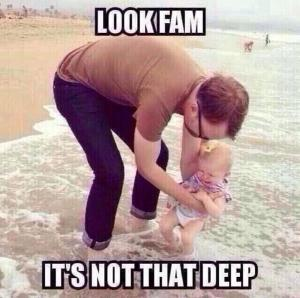
image

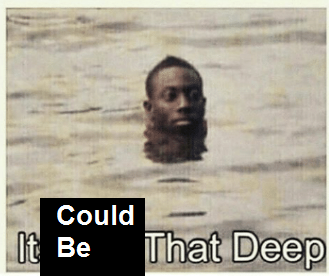
Or, you can dive in and look for deeper meaning, and make richer analysis out of it. It could be that deep, if you want it to be! 
image

When I got this ask ~6 months ago, it was close to Thanksgiving, I had more pressing real-life things going on like traveling and visiting with family. I also didn’t want to answer it bc I was thinking it might be from a troll. Might be someone asking this in order to trick me into some kind of response that could be a launching pad for Discourse.

Now, time has passed, and having absorbed plenty of fiction =/= reality, anti-anti-shipping, and pro-shipping blog posts, I’m not afraid. Of the two possible approaches above (and there are others, of course), you don’t need to pick a side. Sometimes it can be deep, and sometimes not. You don’t have to defend liking it one way or the other, it’s fiction. It’s whatever any individual reader wants it to be, and keep that in mind when you read. Your reading is your own. Your headcanon is your own. Don’t let ppl concern-troll you, policing what you enjoy in fiction. I’m being a little forceful here bc I want to give you the confidence to know and believe: You. Can. Read. AND. Write. Whatever. You. Want.

Anon, you might be a troll, but this is also an honest question ppl have had about this series over the years. I want to believe you’re coming to this honestly and not trying to start something. 

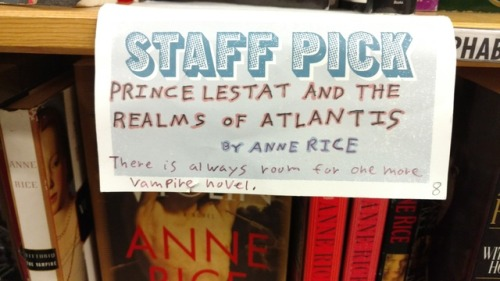
I feel like I’m going to get redundant… to wrap up, the most recent and I would say, the Crackiest of the Crackicles, advertised as:

“There is always room for one more vampire novel.”

Couldn’t agree more ;D
image

^At Powell’s book store in Portland, Oregon. 10/30/17. 

Hope that helped, Anon!

lines-and-edges:

shipping-isnt-morality:

Another realization: “disgust as morality” leads directly to “mere exposure leads to moral decay”

As you are exposed to something frequently, you become acclimatized to it. It stops eliciting disgust. This happens with everything from gore to porn.

There has been research after research showing that fictional depictions don’t lower empathy for real victims or decrease the perceived severity of the crime, but it does lower disgust reactions at fictional depictions of it.

To antis, this lack of disgust is the normalization they are fighting against, because disgust is how you know something is wrong. If you no longer feel disgust, your morality is compromised.

That’s what I mean when I say antis resemble Puritan Christian morality. Christianity has so many conflicting instructions regarding morality, and many areas where it’s flat-out vague. And yet they know exactly what is good and natural, and what is horrifying and sinful.

How? It’s disgusting.

Antis are impossible to argue with, because the logical arguments are made post hoc to defend what they already know: this disgusts me because it is wrong. The disgust is the true basis of their argument, and no reasoned argument will touch it.

“There has been research after research showing that fictional depictions don’t lower empathy for real victims or decrease the perceived severity of the crime, but it does lower disgust reactions at fictional depictions of it.”

This. This is another reason we have to fight.

Because disgust is a messy and destructive emotion, it doesn’t target perpetrators of violence – it leads to victim blaming.

What’s more, for csa survivors with PTSD, disgust is connected with poor emotional regulation and is a risk factor for suicide, so the idea that it is moral and should be cultivated is literally harming and killing survivors.

Disgust is not empathy. It is a source of harm to vulnerable people. Reducing it is good.

Re: whether you have to tag smtg upon request, I was asked to tag a fanart reblog as {#abuse}. The fanart was a /vision/ the character was having, in which they were shown w/ bleeding wounds (not a depiction of a canon whipping scene), and not actually abuse. I tagged it w/ {#abuse} bc of the wounds: at first glance, w/o reading the caption, it could be upsetting to smne in a way that the caption would be too late or insufficient; & the #abuse tag could save this person from seeing it at all.

That’s true, art is different than writing in terms of the immediate engagement of seeing it. And yet, in galleries/museums, I can only remember a handful of times I’ve ever seen warnings for art that could be potentially upsetting in the context we’re using. With paintings like Judith Slaying Holofernes by Artemisia Gentileschi, you round a corner, and !!! someone’s getting brutally beheaded in vividly gorey detail. However, to attempt to discuss [fanworks] vs. [museum (or gallery)-displayed artwork and published fiction], that’s a potentially long and difficult discussion, and your blog is about fanfiction specifically, so I won’t go there.

But I do think we have to drag published fiction into the discussion as that’s what the fanworks are based on. As you wrote:

My concern is always that a tag like that is going to change how people interpret my work into something I didn’t intend. Like, I’ve been asked to tag things as abuse before that I really didn’t agree WERE abuse, just regular conflict in a relationship. I can appreciate that that might be upsetting someone, and would like to give them a way to avoid it, but I don’t want to label something as abuse if it’s not, either.

I agree with you on this. As “beauty is in the eye of the beholder,” so is “abuse is in the eye of any given reader,” whether or not the author intends it to be a depiction of abuse. Our fandom is based on works that contain plenty of problematic elements (including abuse) that the author most likely does not consider problematic, even when many of the fans are in agreement that they are problematic. Still, “many” is not “all,” and I choose not to trample on fans/fanficwriters/fanartists who ship A/B by tagging every depiction of 

A/B

with {#abuse}, even when other fans condemn A/B as being a problematic and specifically abusive ship. 

When fanartists and fanwriters take these same problematic elements from canon and extrapolate, they’re handling the same “tainted” material, whether or not they depict A/B as abusive, and therefore bear the brunt of the demands for tagging their works with {#abuse}. 

So I don’t know what the answer is bc as I said above, I would not want to needlessly upset someone, but I also see it from the shipper/fanficwriter/fanartist/creator’s POV.

If we can’t agree on what should be tagged as {#abuse}, I feel like Dead Dove: Do Not Eat should apply:

shipping-isnt-morality:

That’s fair!

I guess that writing is a little different, since it’s unlikely people are going to just glance at the work and be upset by something there. They sort of have to engage with it.

My concern is always that a tag like that is going to change how people interpret my work into something I didn’t intend. Like, I’ve been asked to tag things as abuse before that I really didn’t agree WERE abuse, just regular conflict in a relationship. I can appreciate that that might be upsetting someone, and would like to give them a way to avoid it, but I don’t want to label something as abuse if it’s not, either.

Dead Dove: Do Not Eat is a warning or tag used to indicate that a fanwork contains tropes or elements that may be deemed “problematic” without explicitly condemning the problematic aspects. 

The “Dead Dove: Do Not Eat” tag would essentially be a “what it says on the tin” metatag, indicating “you see the tropes and concepts tagged here? they are going to appear in this fic. exactly as said. there will not necessarily be any subversion, authorial commentary condemning problematic aspects, or meditation on potential harm. this fic contains dead dove. if you proceed, you should expect to encounter it.”

I don’t feel that a

(published or fanfic)

writer is required to condemn abuse in the narrative, especially when, as you point out, they may perceive the abuse in question as regular conflict in a relationship. “Regular” is also up for debate, of course. As a fandom’s lifeblood is its fanworks, my feeling is to try to find some compromise between allowing the shipper/fanficwriter/fanartist/creators to create the fanworks they want to create, and for that to be done in a way that offers the most protection possible for people who might be upset by those fanworks. 

ooc: Ok can you clear this one up for me? Did Santino ever love Armand? As a brother or family member type of thing? Or was Santino just his wicked teacher?

bloodyvampchrons:

desanctii:

antoineandthepiano:

desanctii:

ooc. Well, headcanons may vary of course, but the way I read the character and the relationship he had with Armand… Yes, Santino loved him. And I will even say that he loved him very deeply. The love was likely not a very considerate kind but it was real.

I hinge this a) on Santino actively assuring Marius that he did love Armand (in TVA) and b) Santino’s exhibiting very fatherly and sympathetic behavior towards Armand. 

Santino is depicted as a very honest and very caring character. His honesty is attested by Marius (B&G) and Santino himself claims to hate evil and to suffer from the way he has to live in the cult. Further: He actually cries when he visits Armand in his cell because the torture was so cruel and he couldn’t stand it (TVA). He is evidently very taken with Armand and compliments him even when there is nothing to gain from it. (also TVA) Because of all of this I say he loved him like a son, or else a protégé.

What he feels for him nowadays is more difficult, I think.

OOC: I totally hear what you’re saying but Santino’s fucked up cruelty in the past done unto Marius, Palazzo Boys and Armand were so horrific, I just have a hard time picturing how you describe him. How can I improve my perspective of Santino?

ooc. I genuinely can’t help you there. If you don’t want to view him in a sympathetic light then nothing I say will change that. Mind you, I started out hating him, too. It took me a while to warm up to him. (cut for length)

Keep reading

This is really good !! I’m always a slut for nuanced understandings of complex characters 😍

^YES! I really enjoyed this response from @desanctii.

Perspective and context can allow us to view a character in a sympathetic light, but if you don’t want to do so, that’s fine, too. Both approaches are equal,  we all have our own interpretations of canon.

marysuewhipple:

ameliarating:

allofthefeelings:

I think it’s really important to talk about how different people have different power fantasies.

For example:

  • For some people, the idea of someone redeeming a villain is a power fantasy.
  • For other people, the idea of a villain being defeated is a power fantasy.
  • And for other people, the idea of a character owning their villainy is a power fantasy.

I would argue a lot of fandom conflicts re: villains come from people being unable to see that their fantasies, which put them in control of a narrative (and all three of these are designed to give the author or reader control of the narrative in different ways) are someone else’s horror stories.

I think this is a really interesting look at power fantasies and I personally have experienced all three, regarding different characters.

I would argue, however, that most of these fandom conflicts actually come from the reverse situation. That is, it’s not people looking at their own fantasies and being unable to see that these fantasies are horrifying for others (though that does, of course, happen).

I see, more often, people looking at other people’s fantasies and declaring them to be horrifying. That they are objectively bad and harmful and representative of whatever it is people find to be dangerous. And that, in fact, their fantasies or empowering at all, but rather symptoms of societal sickness.

So rather than saying a lot of fandom conflicts re: villains come from people being unable to see that their fantasies are someone else’s horror stories, I would say that a lot of fandom conflicts re: villains come from people being unable to see that different people have different fantasies in the first place. That it’s not that they’re thinking of their own fantasies at all. But that they’re seeing only their own horrors in the fantasies of others. 

Good meta, but I wanna add: 

For some people, the power fantasy is not necessarily “someone redeeming a villain” but “a villain being redeemed”; that is, they identify more with the villain going through the redemption, rather than the hero offering redemption, or the villain who owns their villainy. 

Idk if you could really call it a power fantasy exactly, but it serves a similar purpose. It can be really cathartic to see a character who is in the dark and alone be reached out to, to see a hero extend a hand and good faith and help them back into the light. To see someone believe in them, to see them better themselves and heal. 

It’s okay to identify with vulnerability instead of (or in addition to) power, is what I’m saying. 

thatgirlnevershutsup:

codenamecesare:

socialjusticewargames:

It’s okay to have fictional characters do problematic stuff. Really, it is. Fictional characters are there to tell a story; not to be perfect paragons of virtue.

“Yeah!” some people will say. “It’s fine as long as you show that it’s problematic!”

And I’ll say: No. You don’t need to always do that either. We can’t expect writers to point out every moral misstep a character makes.

It’s okay to have characters do something problematic, and it’s okay to assume that the readers can see why it’s problematic on their own.

The number of notes on this that say “No, you have to moralize, because readers are stupid!”  is… disheartening. So what? We have to treat everyone like toddlers just in case someone happens to get the wrong idea about some fiction? If random fanfic (or any other semi-anonymous online content, for that matter) is a major determiner in someone’s life, they already have bigger problems than any fic could affect.

How about this: if someone pays me to write, they’ll get a say in what I write. As long as I’m writing for my own pleasure for free, I will write what I want.

Another suggestion: if you need moral guidance, stop reading fan fiction and turn to victorian children’s literature! Very helpful in encouraging good morals in the young!

shipping-isnt-morality:

shipping-isnt-morality:

Anyone have that quote from Lin Manuel Miranda (I think?) about exploring things you’d never want to do in real life through fiction, and exploring the worst parts of your psyche?

Gallery

asparrowsfall:

cleo4u2:

THIS. I saw a post the other day that literally said if you do it to a fictional character, you’ll do it in real life.

No. Just NO.

I’m so glad someone put it into words.

In art, we can be fucking nuts.

@shipping-isnt-morality

anyways why do you support pedophilia and abuse!!!!!!!!!!!!!! everyone here is so gross

shipping-isnt-morality:

oh god I’m done I’m fucking. I’m done I’m sick and I’m exhausted and I’m done

Nobody here supports real life pedophilia and abuse.

Antis support bullying creators for depicting it in fiction in ways they don’t approve of. They harbor bullies because they would have no power otherwise.

What are you – I assume an anti – missing in your life that you need so badly to feel righteous about the fiction you consume? Why do you need to feel you have power over people? Antis openly admit that they go after smaller creators because they know that smaller creators will “listen” to them – except that what they’re doing is intimidation and bullying, so what they really mean is that smaller creators are afraid of them.

And you know what? It worked. It fucking worked. Small creators are terrified. Multiple artists have been driven into depression and suicide attempts by harassment that came from antis. Creators who never hurt anyone had their careers ruined over false accusations of pedophilia over a cartoon drawing. Someone got fed needles. Three artists that I know of at conventions have had their merch and displays damaged by people calling them pedophiles or abuse apologists or whatthefuckever because of the completely safe for work art they were displaying.

You’re bullies. You’re fucking bullies and you need to feel powerful so you gang up on fandom creators, who are almost all already marginalized young people, so that you can feel like you’re doing something. But you’re not. You’re fucking not. You can tear down all the queer artists you want, it won’t make a single goddamn bit of difference. YOU ARE NOT HELPING ANYONE.

You’re not. Helping. Anyone.

But you did it, I guess. Artists are scared. People are scared. Small, queer creators are more scared to release content now than they were 5 years ago, because their own community will almost certainly tear them apart like wild dogs.

Great job. Do you feel powerful now?