Define “bad”? Problematic for sure. Squicky for some ppl. Cracky as heck.
I wanted to delete this ask bc an objective “bad” is so hard to define, especially with regard to fiction in this current wave of scrutiny about it. I think we can all agree on things that are bad in Real Life, but what we’re not agreeing on these days is the role of fiction and Real Life, that consumption/depiction of problematic things =/= endorsement of those things in Real Life.
(This is all aside from the criticism dealing with the writing itself on its own merits, which, I am pretty forgiving about. I don’t consider my palette as a reader to be all that refined, I’m more interested in the ideas, and I don’t mind as much about the skills of the writer, even one who may have been very good and then devolved over the years. So you’ll have to ask someone else if the writing style is your concern.)
Some books will be loved by some ppl and praised to high heaven, those same books despised by others and cursed for existing, and everything in between.
IDK we used to call the later books “the Vampire Crackicles,” and I for one, would love to bring that back!
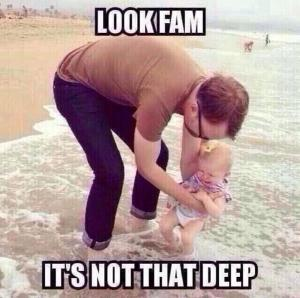
At its core, it is my belief that VC as a whole is a means of demon exorcism and of wish-fulfillment for their author. Sure they have some higher value, if they didn’t, I don’t think the fandom would be as large and as loyal. But VC also has a ton of various kinds of porn, let’s be honest. As a mix of those elements I just described, they do not have to be that deep, they are whatever each individual reader wants them to be. Personally, I really enjoyed the first few, and have found enjoyable stuff even in the crackiest of later canon. If you don’t take them too seriously, it’s worth the effort. But then, I am pretty forgiving and I can do headcanon gymnastics for fun to explain stuff I don’t like, or treat it as AU.
So they can be considered shallow escapism with problematic dysfunctional hipster vampires:
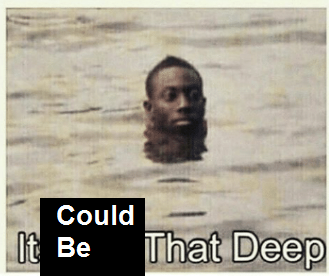
Or, you can dive in and look for deeper meaning, and make richer analysis out of it. It could be that deep, if you want it to be!
When I got this ask ~6 months ago, it was close to Thanksgiving, I had more pressing real-life things going on like traveling and visiting with family. I also didn’t want to answer it bc I was thinking it might be from a troll. Might be someone asking this in order to trick me into some kind of response that could be a launching pad for Discourse.
Now, time has passed, and having absorbed plenty of fiction =/= reality, anti-anti-shipping, and pro-shipping blog posts, I’m not afraid. Of the two possible approaches above (and there are others, of course), you don’t need to pick a side. Sometimes it can be deep, and sometimes not. You don’t have to defend liking it one way or the other, it’s fiction. It’s whatever any individual reader wants it to be, and keep that in mind when you read. Your reading is your own. Your headcanon is your own. Don’t let ppl concern-troll you, policing what you enjoy in fiction. I’m being a little forceful here bc I want to give you the confidence to know and believe: You. Can. Read. AND. Write. Whatever. You. Want.
Anon, you might be a troll, but this is also an honest question ppl have had about this series over the years. I want to believe you’re coming to this honestly and not trying to start something.
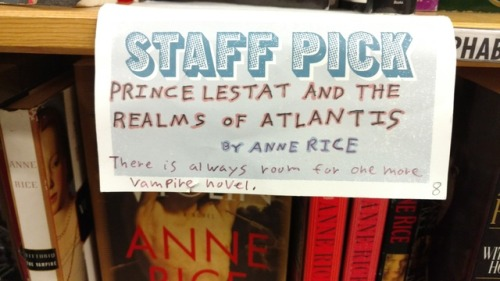
I feel like I’m going to get redundant… to wrap up, the most recent and I would say, the Crackiest of the Crackicles, advertised as:
“There is always room for one more vampire novel.”
“this ship/work of fiction could hypothetically hurt someone” is not an argument.
We don’t prohibit alcohol just because some people can hurt themselves/other people with it. People who can drink responsibly aren’t at fault for people who can’t.
You either believe in people to be personally responsible for themselves or you believe in a dystopia where all fiction is subject to censorship due to any possible cultural impact.
“In fairy tales, monsters exist to be a manifestation of something that we need to understand, not only a problem we need to overcome, but also they need to represent, much like angels represent the beautiful, pure, eternal side of the human spirit, monsters need to represent a more tangible, more mortal side of being human: aging, decay, darkness and so forth. And I believe that monsters originally, when we were cavemen and you know, sitting around a fire, we needed to explain the birth of the sun and the death of the moon and the phases of the moon and rain and thunder. And we invented creatures that made sense of the world: a serpent that ate the sun, a creature that ate the moon, a man in the moon living there, things like that. And as we became more and more sophisticated and created sort of a social structure, the real enigmas started not to be outside. The rain and the thunder were logical now. But the real enigmas became social. All those impulses that we were repressing: cannibalism, murder, these things needed an explanation. The sex drive, the need to hunt, the need to kill, these things then became personified in monsters. Werewolves, vampires, ogres, this and that. I feel that monsters are here in our world to help us understand it. They are an essential part of a fable.”
Define “bad”? Problematic for sure. Squicky for some ppl. Cracky as heck.
I wanted to delete this ask bc an objective “bad” is so hard to define, especially with regard to fiction in this current wave of scrutiny about it. I think we can all agree on things that are bad in Real Life, but what we’re not agreeing on these days is the role of fiction and Real Life, that consumption/depiction of problematic things =/= endorsement of those things in Real Life.
(This is all aside from the criticism dealing with the writing itself on its own merits, which, I am pretty forgiving about. I don’t consider my palette as a reader to be all that refined, I’m more interested in the ideas, and I don’t mind as much about the skills of the writer, even one who may have been very good and then devolved over the years. So you’ll have to ask someone else if the writing style is your concern.)
Some books will be loved by some ppl and praised to high heaven, those same books despised by others and cursed for existing, and everything in between.
IDK we used to call the later books “the Vampire Crackicles,” and I for one, would love to bring that back!
At its core, it is my belief that VC as a whole is a means of demon exorcism and of wish-fulfillment for their author. Sure they have some higher value, if they didn’t, I don’t think the fandom would be as large and as loyal. But VC also has a ton of various kinds of porn, let’s be honest. As a mix of those elements I just described, they do not have to be that deep, they are whatever each individual reader wants them to be. Personally, I really enjoyed the first few, and have found enjoyable stuff even in the crackiest of later canon. If you don’t take them too seriously, it’s worth the effort. But then, I am pretty forgiving and I can do headcanon gymnastics for fun to explain stuff I don’t like, or treat it as AU.
So they can be considered shallow escapism with problematic dysfunctional hipster vampires:
Or, you can dive in and look for deeper meaning, and make richer analysis out of it. It could be that deep, if you want it to be!
When I got this ask ~6 months ago, it was close to Thanksgiving, I had more pressing real-life things going on like traveling and visiting with family. I also didn’t want to answer it bc I was thinking it might be from a troll. Might be someone asking this in order to trick me into some kind of response that could be a launching pad for Discourse.
Now, time has passed, and having absorbed plenty of fiction =/= reality, anti-anti-shipping, and pro-shipping blog posts, I’m not afraid. Of the two possible approaches above (and there are others, of course), you don’t need to pick a side. Sometimes it can be deep, and sometimes not. You don’t have to defend liking it one way or the other, it’s fiction. It’s whatever any individual reader wants it to be, and keep that in mind when you read. Your reading is your own. Your headcanon is your own. Don’t let ppl concern-troll you, policing what you enjoy in fiction. I’m being a little forceful here bc I want to give you the confidence to know and believe: You. Can. Read. AND. Write. Whatever. You. Want.
Anon, you might be a troll, but this is also an honest question ppl have had about this series over the years. I want to believe you’re coming to this honestly and not trying to start something.
I feel like I’m going to get redundant… to wrap up, the most recent and I would say, the Crackiest of the Crackicles, advertised as:
“There is always room for one more vampire novel.”
Honestly, when it comes to my own personal views? I believe that no one is beyond redemption (though whether or not the people said individual wronged are willing to forgive is wholly up to the people in question). For me, the belief that anyone can claw their way out of iniquity is not only a central tenet of my faith but also the knowledge that keeps me emotionally balanced and stops me from wallowing in bleak cynicism. I have to believe that redemption is possible for all, even if some choose not to take that road.
It always grinds my gears when people talk about redemption as if it’s something to be ‘deserved’, rather than an active choice, a verb, something a person does, with more or less variable degree of success. To redeem oneself is to take the necessary steps toward uplifting one’s soul from moral degradation. In essence, they keep equating redemption with something like forgiveness, when the two are entirely different matters and don’t have a 1:1 correlation at all. Some of my favourite redemption narratives (Anakin Skywalker lives AUs, for example) don’t really contain all that much in the way of forgiveness, because some acts simply can’t be forgiven by their victims. For me, the enjoyment of such stories comes from seeing the central character’s physical and emotional struggles with everything redemption entails, until they can achieve a weary, wizened peace with the world and with themselves. There’s an almost poetic beauty, I’ve always thought, to the words of a person who has walked in both the brightest light and the darkest shadow and it’s a real pleasure to put those sorts of words down on paper.
And yes, as I said before, I suspect that at least some of this nonsense comes from people having a visceral reaction to their own flaws being reflected back at them. For others, it’s your run-of-the-mill purity culture wankery.
I really like this for making a distinction between redemption and forgiveness. I am well on record as hating most forgiveness arcs. A lot of time, it feels like the character hasn’t earned it, but the narrative requires that their victims forgive, and I vomit inside my mouth a little. A redemption arc is just the opposite. By god, the character puts in the work. And at the end of the day, they may not be forgiven, but they do what they have to do, because they have to do it, because it’s the right thing to do. And that? That matters.
Aw thank you! Yes, I am doing well. Hope you’re doing well, too. I took a decent break from tumblr, and now I’m getting back into the swing of things, there are fanworks to reblog here ❤ and I have my own fic ideas percolating.
(I’m sorry that this response got kind of long, there are things in here I’ve expressed before, and some I may not have, or haven’t mentioned in awhile, and I kind of want to have these things out there for ppl to see where I’m coming from.)
Your message really means a lot, bc I feel like, if I have any responsibility to the fandom as a somewhat popular blog, that I have to stand up for shippers and creators of fanworks. Fanworks are the lifeblood of the fandom, both for the creators and the consumers. Fanworks are made for free (or on commission) by smaller creators who need the encouragement more. Being smaller and more accessible, they’re also easy & more responsive targets for harassment than the published creators 😛
And so when you see it from that perspective, you can understand that when I reblog those fiction =/= reality, pro-shipping, and anti anti posts, it’s coming from a place of good intention. I identify with those easy targets who are criticized for their creation/consumption of published works and fanworks. I was bullied for pretty superficial reasons in my formative years, not an unusual amount/degree of bullying, but it hurt. “Oh, but words can’t hurt you!” <– this is pretty insensitive, and I shouldn’t have to convince anyone that bullying is painful, but there are those who would compare injuries and say that being bullied was less suffering compared to other things (like abuse, PTSD, mental illness, etc.), and therefore invalid. Should we be comparing injuries to validate ownership to fiction? I don’t know, but the bullying was real to me and it hurt.
And this part of the story is my own attachment to canon (and, later, fandom), before I was even aware of others. Do we sever our attachment to something bc smne else says that their connection to it is more valid? I feel like fandom is limitless, it’s big enough for all of us.
Media/Fiction was an escape from reality for me. It was a place I could find inspiration, could see characters beaten down (by antagonists and/or their own faults) and rise up again and again, in so many variations! Even the same plot points can yield different emotions when told in different ways, and/or involving different characters. Characters refusing to lay down and submit to their obstacles/antagonists was inspiring and helped me rebuild the self-confidence the bullies had crushed.
So that was my story, as valid as any. I love stories of how ppl got into VC (or any fandoms/media really!), and there are so many. I don’t think that any reason is more valid than any other.
There are those who saw themselves reflected in the fact that there are queer/LGBT+ characters, that they existed and had depth and could love and be loved in return.
Someone told me that they shared a love of history with their father, especially of Rome. The father passed away when the person was young, and so they loved the historical explorations in canon, it seemed to bring them closer to that lost parent. In fact, the act of pointing out historical inaccuracies in canon was enjoyable to this person.
There are those who passionately adore Armand, for all his beauty, strength, and sass, the fact that he is a survivor of so much tragedy. “We must be beautiful, powerful, and without regret.”
There are those who love the quiet and dignified manner of Louis and how he burns everything down handles situations.
There are those who live for the ~purple prose~ and ~wealth porn~, in the loving descriptions of luxury, the declarations of love and 3 pages of describing how pretty a character is.
… etc. etc.
^And fanworks based on the media consumed may relate to the fans’ reasons for getting into that fandom in the first place. I like to think my memes and fanfic show the same refusal to quit that I valued so much in the characters when I read canon. I would think that other writers/artists/etc. would say smtg similar, that their fanworks are their way of engaging with canon, whether it’s to have more of what they enjoy about it, fix and/or explore a character/ship/situation, or take the characters into different situations (like AU) and see how they might fare within changed parameters. Ppl analyze canon and critique it, comparing it to other fiction/non-fiction to lay out their ideas. Ppl might want to dress like the characters and act like them in cosplay! So many ways to engage with canon. And then you have comments on works and works inspired by fanworks and that’s p. much the definition of fandom, to my mind.
HOWEVER.
In my zeal for reblogging posts (and writing my own) about defending shippers and creators/consumers of published media and fanworks, I can be too blunt, and unintentionally injure others. I trust ppl to inform me privately if a post goes over the line in that regard, and I have responded by editing/deleting posts. This blog isn’t sacred, editing/deleting a post is not a sign of weakness, but of curating it to better serve my needs and those who come to it for whatever reason.
Bc my blog really is at its core about entertainment and encouragement/sharing of fanworks.
It’s hard for me to sit in silence about attacks on shippers and creators/consumers of published media and fanworks
when I feel like if I don’t speak up, silence is tacit agreement when ppl state, “Don’t draw/write/talk about X bc it is harmful to Y” I understand that some ppl do have real triggers and some fictional characters/ships are painful to them, but on the other hand, is it fair to restrict everyone else who wants to explore those characters/ships?
We have to find ways to coexist, and that may mean everyone taking on some responsibility for their fandom experience and extending respect towards others. Someone asked me to tag a certain ship, and now I do, so that they can block it. I can’t tag every possible thing, but within reason, I will add tags on request.
I don’t believe in censorship when it comes to fiction, for many reasons, there are blogs out there who are much more eloquent than I am in their defense of it. I don’t have their rhetoric. But I feel like I need to defend those who are easy targets for bullying (as I had been).
^^^With all that said, I think it would be best for me to refrain from too much of this type of posting so as not to trample others. Instead, I want to focus on encouraging fanworks, reblogging posts about writing/art and advice about that.
(If you are looking for more blogs that defend fanfiction, I can recommend more to you privately, or in a separate post.)
Another realization: “disgust as morality” leads directly to “mere exposure leads to moral decay”
As you are exposed to something frequently, you become acclimatized to it. It stops eliciting disgust. This happens with everything from gore to porn.
There has been research after research showing that fictional depictions don’t lower empathy for real victims or decrease the perceived severity of the crime, but it does lower disgust reactions at fictional depictions of it.
To antis, this lack of disgust is the normalization they are fighting against, because disgust is how you know something is wrong. If you no longer feel disgust, your morality is compromised.
That’s what I mean when I say antis resemble Puritan Christian morality. Christianity has so many conflicting instructions regarding morality, and many areas where it’s flat-out vague. And yet they know exactly what is good and natural, and what is horrifying and sinful.
How? It’s disgusting.
Antis are impossible to argue with, because the logical arguments are made post hoc to defend what they already know: this disgusts me because it is wrong. The disgust is the true basis of their argument, and no reasoned argument will touch it.
“There has been research after research showing that fictional depictions don’t lower empathy for real victims or decrease the perceived severity of the crime, but it does lower disgust reactions at fictional depictions of it.”
This. This is another reason we have to fight.
Because disgust is a messy and destructive emotion, it doesn’t target perpetrators of violence – it leads to victim blaming.
I feel like a lot of tumblr culture, especially the particularly ineffective brand of Tumblr Social Justice™, has somewhere along the line lost track of the difference between something having the potential to be bad, and being innately bad.
For instance, a white author writing a character of another race absolutely has the heightened potential for problematic portrayal, since that author lacks lived experience as a member of marginalized racial/ethnic group to draw on, and has a heightened chance to misrepresent that group. However, if they do their research, talk with individuals from that racial/ethnic group, consult with sensitivity readers, etc., they may still tell a very honest, sympathetic, good story with good representation. It is not innately bad, simply because of the author’s race; though I’ve seen arguments on tumblr insisting this is the case.
Another example is relationship dynamics; couples who have an age gap or a power imbalance (such as one individual being lower on a professional chain of command from the other) might have an increased potential for an abusive dynamic to form. The couple with the age gap has to be more conscious of differences in lived experience, and the couple with a power differential in the professional side of their relationship needs to overcome more hurdles to equalize things in the context of their personal dynamic. But neither of these things is impossible. These dynamics are not innately abusive; they might make abuse easier, or more common, but they don’t guarantee it. Just as avoiding these dynamics doesn’t guarantee a lack of abusive behavior.
Some situations/dynamics/endeavors have a heightened potential for things to go wrong. And we should be conscious of that potential and keep an eye out for problems – not to destroy the thing, but to encourage course correction (an edit to a manuscript; couples’ therapy; etc.). Many of these things, however, tumblr culture has labelled as innately bad, rejecting any possibility of the thing being done well and thus shutting down that encouraged course correction in favor of flat-out condemnation, without nuance, thought, or consideration. And by drawing clear lines of what is ‘innately bad’ and ‘innately good’ we also avoid giving due criticism of problematic things that have been assigned as ‘innately good.’
This hellsite is allergic to nuance, but damn, do I wish we could all be better at it and recognize that few things are as black & white and simple as we’d like them to be. Shit is messy. Everything is problematic. But not everything that can be bad is, and not everything that’s less likely to be bad is perfect.
fandom: I’m anti [this] and here’s why you should be too. Lemme lecture you and everyone about this thing it’s important we all come together to hate on it. 🙂 I just wanna be positive and this thing is nOT POSITIVE AND HERES WHY I HATE THIS THING. I JUST NEED To HAVE A CLEAN PURE BLOG. BUT PLS HATE THIS THING WITH ME. me:

 I-want-my-IWTV