Can we talk about… how Louis repeatedly has visual/auditory/tactile hallucinations, episodes of dissociation and depersonalization, and panic and anxiety attacks all throughout IWTV but these things are never really touched upon again in the series… like these are all possible symptoms of very severe depression, which I guess Rice alludes to Louis having throughout the series, but like honestly Louis was barely functional in IWTV and that’s never really been demonstrated again… in the later books Louis is always described as being calm, quiet, morally exceptional, conveniently kind, and romantically “sad.” I’ve always felt like the others’ perception of Louis was completely different from Louis’s perception of himself in his own account, and I wonder what ever happened to that intensity in his character in IWTV. I think if it’s touched upon later at all, it’s in Merrick? A little? Still though, it feels like Louis was conveniently stabilized and made static in the narrative in order to make him an easier character to sideline lmao
Very much so…..
//Frankly, this is an astute observation. And I think a lot of the changes in Louis’ character came, frankly, from his author no longer wishing to associate with him. Anne made it quite clear that she hated Louis’ voice and never wished to write in it again–and it took her almost forty years (39, to be exact) for her to be able to write in it again (I’m referring to the Epilogue in Prince Lestat).
ooc; I agree with @devilsfool re: Anne. I believe she was actually quoted at one point after writing Merrick saying that she didn’t want to ever write in Louis’ voice again??? Or something like that. She definitely expressed not caring all that much for his character.
But I can agree with what you’re saying too, because ultimately, IwtV was the only first-person narrative from Louis until the last chapter of PL. I’ve always felt Louis to be this intense perfectionist that can’t tolerate his own downfalls, and I definitely agree that he shows numerous symptoms of depression. He’s his biggest critic, and I think that shows a lot in IwtV.
I feel like IwtV would have seemed a lot different if told from Lestat’s perspective? Because while Lestat may get really, really angry with Louis sometimes, his descriptions of Louis are the most glorified in the books. He’ll talk about Louis moping around, but he paints a general picture of Louis being a very strong person that is dedicated to his convictions. Louis is literally his emotional rock, and really, I don’t believe Lestat would actually ever openly write of any breakdowns Louis may or may not have had. And I feel like if Louis was to have a bad bout of depression, Lestat would be the one to know, above anyone else.
Then you have Khayman’s description of Louis, where he flat out says that Louis can’t exist without Lestat. And Armand’s bit about Louis in TVA paint him as very melancholy, imo.
I also look at where Louis was when he gave the interview. He’s a very careful, private person, and he had his reasons for giving the interview in the first place (which can be debated in itself; I’ve always thought it was a cry out for Lestat and/or suicidal recklessness). He’d been alone for years and felt he’d nothing left. He was infuriated that Daniel didn’t see his story as despairingly as he himself viewed it to be. Louis felt down on everything at that point, and I don’t know that he’d really be that open with his experiences and feelings on any other night?
Idk, I’ve always felt that for as emotional as Louis seems to be, he still sucks majorly at actually dealing with his own emotions. Which is how I reason his major breakdown(s) in Merrick.
/writing this at 1am and hopes it makes sense lol
#YES #THIS #this post cannot be improved upon
Gonna add 2 things anyway.
1 – AR wrote IWTV after the loss of her daughter. Louis was pretty much AR herself, dealing with that grief, questioning a God as to why he had to punish her so much. What did Louis do to deserve a life-in-death living hell? What did Claudia do to deserve eternal imprisonment in that little body? What did AR’s daughter do to deserve dying so painfully at such an early age?
In the end, Louis (and the readers) draws his own answers and has to come to some kind of peace in order to move on. Lestat has his Savage Garden, in which peace lies in the fact that there is no explanation, bad things just happen to good people. The most we can do is try to do Good and help eachother survive the slings and arrows, try not to be the slinger of arrows, and if we are, to do it for the sake of Good. We’re all imperfect.
2 – Louis’ voice is pretty damn hard to write, when done well. My guess is that AR didn’t see a need to revisit his POV, especially with the intensity of focus it required. @annabellioncourt had some excellent points on this awhile back:
“Louis is more along the lines of the Oscar Wilde’s era of the very late 19th century, which is what most people think of today when they think “Victorian writing.” Similar in voice (though not subject) would also be Matthew Arnold (read some of his essays, and tell me that’s not how Louis talks), Wilkie Collins, and Henry James.
”…Louis is not so much involved in human goings on, he’s aware of events and films, but still speaks in the language of the century where he spent the most time communicating with others–also he would not have lost his speech patterns over those decades with Armand because Armand was mostly isolated in his language circles. So we can look at all of that as to why Louis talks the way he does.“
“Louis does show a HEAVY influence from the French symbolist poets (the school that Charles Baudelaire was from).”
And of course Louis would express himself in the language of the writers he enjoyed. OF COURSE HE WOULD. We all know he’s basically a big ol’ bookworm w/ fangs.
I’ve discussed Louis with some of my professors as this embodiment for grief and severe depression. I latched onto him tightly when I was, oh sixteen? Seventeen? He is the most living-dead, the most human yet the least human, this liminal being trapped between two states of being, and he balances on that line so well in his melancholy bordering at times on madness. There are some emotions so hard to put into words, and Anne RIce wrote an entire book from the point of view of a character to explain those emotions, they came through not in his words alone, but also his tone–one we often associate with the grim and the dark, this late Victorian, elegant prose–and in his dress, his manners, his moods, the first book is such an exquisite thing.
David, the collector of stories who does not make stories, wants to be like him. If he was living the life that Louis led, he would have stories. How often, perhaps not as often now as in ages past, but how often do people talk or at least thing in terms of wanting a sense of this melancholy to help with their art. That art can only come from suffering. Its not always true, but sometimes it is. Anne Rice felt a grief unlike any that I have ever known in my life and from it she crafted a magnificent novel. There is so much of her own pain filtered into that work, but she’s daring the readers a little, I think, to ask themselves do you really want to feel this? To become this? It isn’t worth the product, it isn’t worth the stories and the ability, it isn’t worth it, this existence that is neither life nor death is too much a price to pay for anything that you think you might gain from it.
“There is so much of her own pain filtered into that work, but she’s daring the readers a little, I think, to ask themselves do you really want to feel this? To become this? It isn’t worth the product, it isn’t worth the stories and the ability, it isn’t worth it, this existence that is neither life nor death is too much a price to pay for anything that you think you might gain from it.”

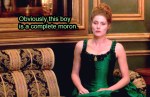
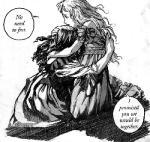
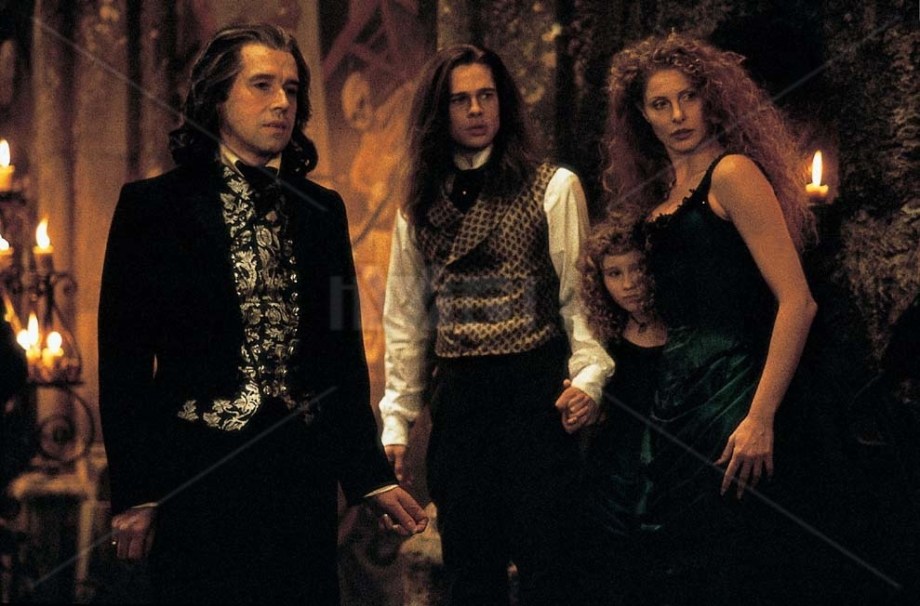
^I think that’s very astute, and I think it’s pretty much what Louis is saying in this scene when he’s trying to convince Madeleine not to vampire. Since Louis was essentially Anne’s avatar throughout that book.
I really think AR would trade all her success for her daughter (and her husband) back, no hesitation ;A;
“Do you find us beautiful? Magical? Our white skin, our fierce eyes. ‘Drink,’ you ask me. Do you have any idea of the thing you will become?!”







 I-want-my-IWTV