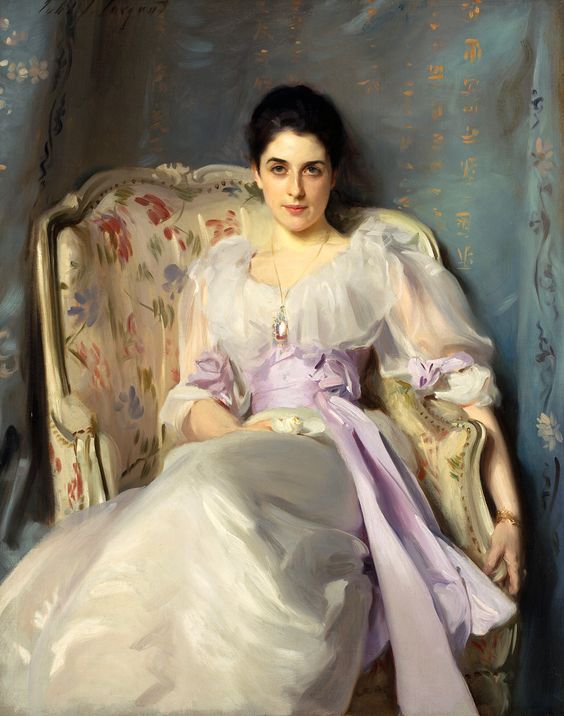
Sargent is not remembered for being a prominent gay artist, manly because many art scholars and followers of Sargent have dismissed all evidence and signs supporting such. Aside from being close to Oscar Wilde, Robert de Montesquiou and Fredrick Leighton (all gay fixtures of that time period). Sargent was well know in Paris circles for having sexual relationships with men. He never married or fathered children and after his death his family destroyed all correspondence he left behind. If that wasn’t enough proof, Sargent’s large portfolio of private male nude drawings and paintings display his sensual and romantic approach to painting men. John Singer Sargent lives on as one of the greatest artist that walked the earth, but he was also one of the most inspiring and important gay men that ever lived.
painting of St. Sebastian by Guido Reni used for the cover of Violin.* And I know not every dude-w/-his-hands-tied-above-his-head counts as a St. Sebastian reference but still, it’s interesting to consider whether it might be.
“St Sebastian (feast day January 20th)has become something of a gay icon, as saints go. Partly, perhaps, because it’s an opportunity to depict a curly-haired semi-nude youth in light bondage. It has to be said this isn’t how Sebastian died, or how he was originally depicted. Sebastian miraculously survived being shot with arrows and was healed by Irene of Rome. He continued to denounce the emperor Diocletian, who had him clubbed to death in the year 288.
The tendency to depict Sebastian as a handsome youth pierced with arrows began in the 14th Century when Europe was being ravaged by the plague of the Black Death.
See how the two ‘Sebastians’ in the modern version above look entirely unperturbed by the arrows protruding from their torsos?There is a long tradition of Sebastian looking unaffected by his plight: corruption fails to touch him and that made him proof against plague. Sebastian occupied an important place in medieval religion as a protector against plague. He was seen as a saint whose prayers would work.”[X]
*The lighting on the cover may be distorting the colors and contrast of the original painting, and I’m not even sure that’s the original painting, got that from here [X]… but these changes seem obvious:
changed the trees in the BG,
blended the nips in a little more by changing their color,
rounded his face somewhat (tho, that O could be just making it look rounder)
moved the armpit arrow,
added a tummy arrow,
changed the angle of Left Ribcage Arrow a little bit,
lengthened his hair a little,
reduced the shadows in the Adonis muscle area, too sexy?
This is a painting of Jacek Malczewski called simply ‘Death’ and it’s my favourite personification of death in any medium.
She’s not creepy or scary, or sexy, or abstract. She is this thick woman with worn hands, dressed as normal, with a non-stylised scythe and pins in her hair: like a farmer’s wife that just came form the field and rests against the wall, catching some sun. She is not creeping about the dying one holding her scythe over their head, she is just there, calmly waiting her turn.
This painting always fills me with peace and optimism when I think about death. She is just there, outside the window, in no hurry at all, sensible and down to earth. I can live with that.










 I-want-my-IWTV
