“We write our own fairy tales, my love,” I said, “The lesson in this is that nothing can destroy what you are now. Every wound will heal. You are a goddess.”
“And the goddess thirsts.” She said.
“What are you waiting for, the church to pronounce it a miracle?”
But, we can’t cut Louis’ evil out of the conversation. His own cocktail of potent feelings for his…daughter, sister, friend, almost-lover? Whatever she was. Whatever she continues to be.
Louis’s evil is that he kills indiscriminately, which Akasha points out makes him “the most predatory of all the immortals here. You kill without regard for age or sex or will to live.”
But yeah, back to the NOTP of Louis/Claudia, I thought it was very well-handled in the movie. Which I consider almost canon bc AR did write the screenplay and was consulted on it alot. My notes in ().
Louis: “Listen to me. Claudia is very dear to me. (pause, feeling like he needs to actually specify the relationship?) She’s my daughter.”
Armand: “Your lover.” (and he mouths this word again silently bc he’s TEH JEALOUS)
Louis: “Well my beloved. My CHILD.” (He’s being very clear here, NOT LOVER)
Armand: “You say so, you are innocent.” (Armand knows that she didn’t come out of Louis’s wrist)
Louis: “She’s in danger, isn’t she?” (Tactically changing the subject so as not to bring up Lestat).
Truthfully she was his sister. But so is Gabrielle. Gabrielle is sort of his sister, Grandmother, and Mother-in-Law all rolled into one. WHAT A MESS.
She’d been looking out the window for hours, book balanced upon her belly, when the first pains came. By now, she knew not to panic, that there would be time before anything of consequence might happen. She did not bother to call the girl to her rooms to help her, but set the book down beside her and placed her hands upon her swollen belly, closing her eyes against the cutting tremors.
It was cold for November, far colder than it should have been. The ice in the bowl in her room had to be broken each morning so she might rinse her face, the frosty water underneath turning her fingertips blue with cold.
The contractions increased faster than she’d been prepared for—this child was a month before its time, eager to arrive in the world, and she knew already that it had little patience. When the midwife found her way into the bedroom (called for by the girl who’d heard her groans), she was already in a deep squat near the fire. The older woman made quick work of her clothing, removing much of it so that she stood before the flames, her swollen breasts resting upon her naked belly, her hands down between her legs and touching the crown of the child’s head.
Her heart pounded as he slid from her body: another boy, another disappointment. But he was so small; that was all she noticed as the girl took him to clean him off, the water now warmed over the fire, his body pink underneath the smears of blood and white.
It was only then, after the placenta had also exited her, that she noticed once more the chill in the air, the gooseflesh upon her skin. The old woman wrapped her in a dressing gown after gently wiping off her thighs, her purple and bruised flesh, leading her to bed and pulling blankets and furs up around her.
“Wait.”
One word she uttered as the girl started to take the infant out of the room, his mouth wide with cries. The girl muttered something about the wet nurse, but she shook her head, her arms stretching out for him.
As that wide mouth latched upon her nipple, she sighed. He was different in her arms than the others had been. And, though he was tiny and wrinkled as any other newborn, she knew with one look that he would favour her—unlike so many of the others.
Her eyes wandered to the window, her fingers trembling as she held him.
“The well spring of my strength unrestricted There’s so little I could fail to endure I could face a tract across the Himalayas Survive the freezing mist of Scottish Moores
My need to go is hard to fight I want to gaze upon this world just like the Northern Lights”
I was still sitting there staring at the entrance to the tunnel when I heard fast crisp steps approaching, someone walking steadily, heavily and fast.
“Get up, Lestat.”
I turned and looked up into the face of my mother.
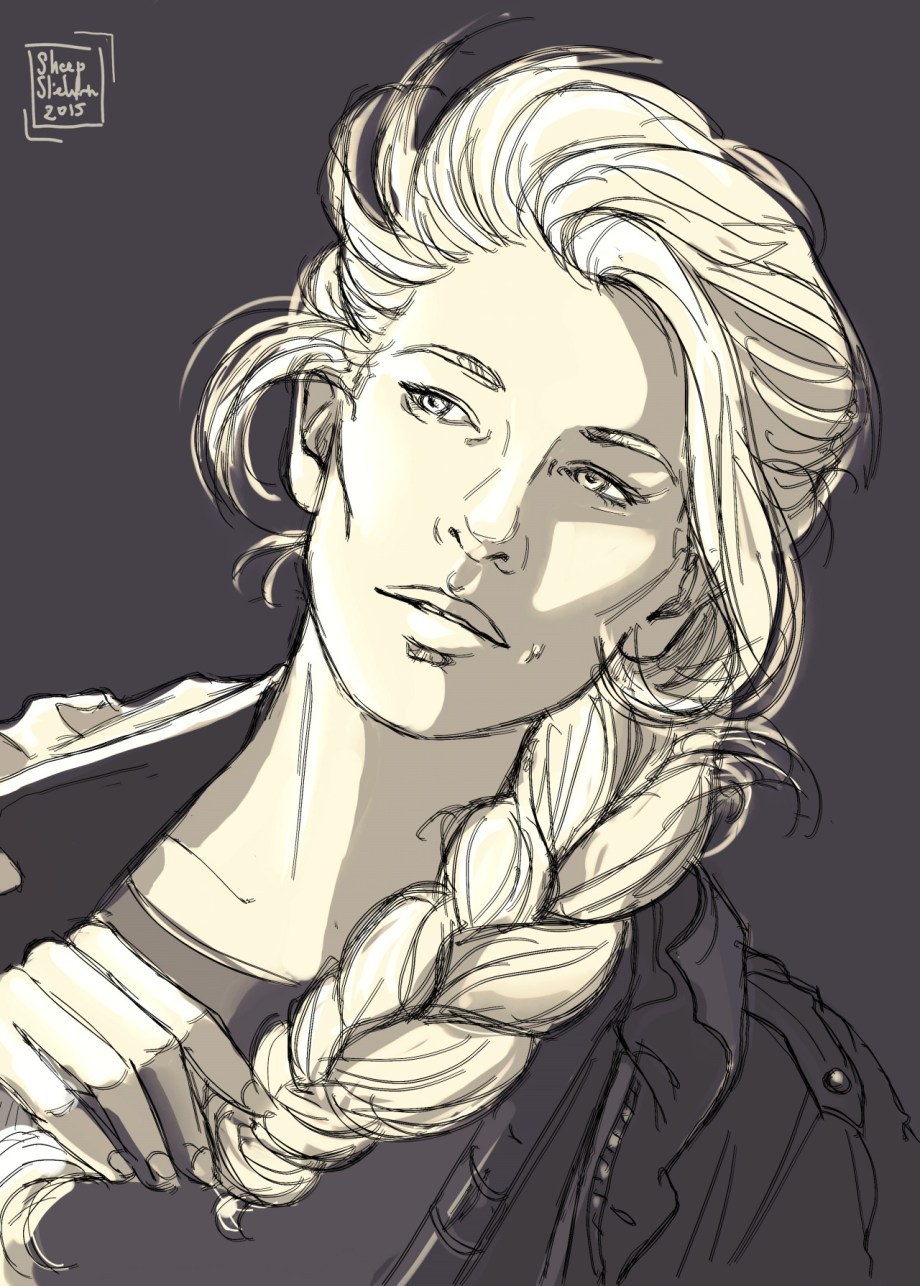
There she was after all these years in her old khaki safari jacket and faded jeans, her hair in a braid over her shoulder, her pale face like a porcelain mask.
“Come on, stand up!” she said, those cold blue eyes flashing in the lights of the burning building at the mouth of the tunnel.
And in that moment as love and resentment clashed with humbling fury, I was back at home hundreds of years ago, walking with her in those cold barren fields, with her haranguing me in that impatient voice. “Get up. Move. Come on.”
“What are you going to do if I don’t?” I snarled. “Slap me?”
And that’s what she did. She slapped me.
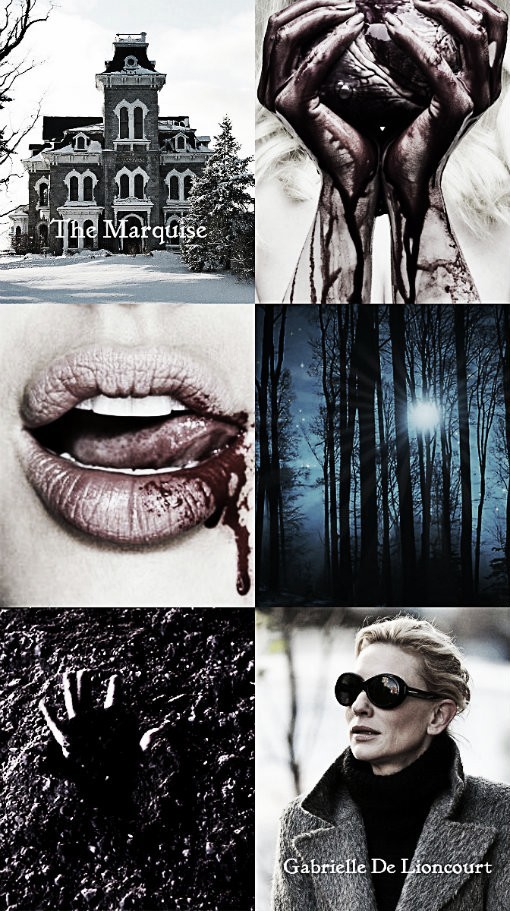
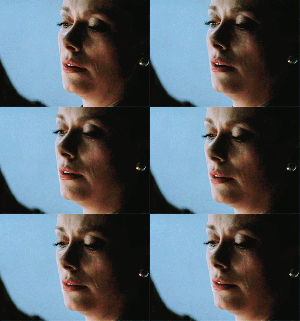
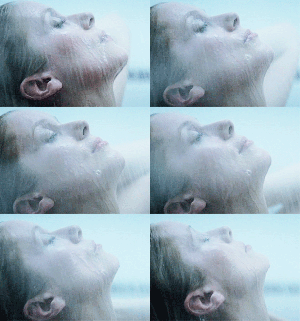
Gabrielle’s introduction in the novel Prince Lestat (Anne Rice)











 I-want-my-IWTV