Gallery

magicbubblepipe:

i felt like doing some loustat shmoop ❤

champagne-embassy:

image

Bonjour everybody!

As everybody knows, our dear Monsieur Bonnefoy is a romantic man, and what’s more romantic than calling your lover a thousand things that aren’t their actual name! ♥
Pet names are extremely common in french, you can use them for practically anybody but beware! Some names are adequate for friends but not lovers, young people but not older people, men but not women-

I’ve seen these pet names used wrong in many, many fanfics I’ve read online so I think a bit of a crash course would be good for anybody who writes fic with Francis!

NOTE: French is, like many other romance languages, a gendered language with a grammatical masculine and feminine. French does not have a gender-neutral pronoun (at least, not officially) and thus no gender-neutral way to refer to words.
This is important to keep in mind for the sake of grammar alone. Thank you.

1/ The basics

The most used pet name is chéri, which means dear. Mon chéri = my dear. 

Chéri/e is a ‘cuter’ version of the words cher/chère which also mean dear (but can also mean dear as in ‘expensive’- it’s considered a little old-timey or sarcastic to call someone mon cher/ma chère nowadays!)

The most common mistakes people make are mixing up gender-relative pronouns and the gender of the word itself. Chéri is a variable word, meaning it has a feminine; chérie

Mon chérie and ma chéri are both incorrect.

As you may have noticed, there’s a change of pronoun whether the word is masculine or feminine. Mon and ma both mean ‘my’ but are both respectively the male and female possessive pronoun.

2/ Variable/Invariable words

Nouns in french can be variable or invariable, meaning that some of them have an ‘other gender’ equivalent or not! Chéri is variable because it has a female equivalent, chérie (also note: the letter e at the end of a word often denotes the feminine form BUT NOT ALWAYS! ahhhh… French.)

Amour (love) is invariable on this point. Amour is a masculine word with no feminine equivalent, therefore one would always call their lover mon amour regardless of them being a man or a woman.

Mon trésor (my treasure) is masculine, ma puce (my flea) is feminine (I swear it’s used! ;o; ), mon ange (my angel) is masculine, mon cœur (my heart) is also masculine, ma biche (my doe) is feminine, etc…

Animal names as pet names will more often than not have a feminine. Mon loup/ma louve (my wolf) is an example of this. Always check if your preferred animal nickname has a masculine or feminine equivalent!
Some animal names are only used in one form- But that’s anther story.

Anyway, I’m rambling. Let’s get to what we were all here for!

3/ Use of pet names and terms of endearment

image

For a male lover, Francis would most likely use

  • Mon cher (my dear)
  • Mon chéri (my dear) *
  • Mon amour (my love)
  • Mon cœur (my heart)


  • Mon canard (my duck)
  • Mon trésor (my treasure) *
  • Mon loup (my wolf) [ variant: loulou * (also a diminutive for the name Louis) ]
  • Grand fou (translates to crazy man, supposedly a man who is crazy about you) *
  • Mon étalon (my stallion – with OBVIOUS SEXUAL CONNOTATIONS)
  • Mon beau (my handsome (man) )
  • Mon ours (my bear)

(*) These can be used without the possessive pronoun

image

For a female lover, Francis would most likely use

  • Ma chère (my dear)
  • Ma chérie (my dear) *
  • Mon amour (my love)
  • Mon cœur (my heart)
  • Mon ange (my angel)
  • Mon trésor (my treasure) *
  • Ma tigresse (my (female) tiger – kind of sexual) *
  • Mon chaton (my kitten) *
  • Ma biche (my doe)
  • Ma belle (my beautiful (girl/woman) )
  • Ma colombe (my dove)
  • Ma poupée (my doll) *

(*) These can be used without the possessive pronoun

image

For your convenience, here’s a list of terms of endearment that are mostly gender-neutral, regarding the person you use it with.

  • Mon amour (my love)
  • Mon cœur (my heart)
  • Mon ange (my angel)
  • Mon trésor (my treasure)

I’m sure I’ll find others soon enough. Chéri/e can be used verbally since both words are pronounced exactly the same way!

BONUS:

image

(I wanted an excuse to draw Monmon)

Let me explain to you the use of mon chou.

There is actually no good translation for this word (cauliflower isn’t an accurate equivalent) but it goes in the same vein as chéri. It’s an invariable word which is always masculine regardless of who you use it for.
It can be honest, friendly, loving, motherly- or downright condescending. (think- oh honey…)
Context is always important for this. I personally hc that Monaco uses it a lot for this ambiguity!

image

That’s all I have for now! I apologise if it was a bit rambly or complicated- but feel free to ask questions in the replies or my askbox!

– APH Ambassador Baguette

@hetaliafandomhub

painauchocolatine:

Look what I found while grocery shopping earlier today ! Apparently Prince Lestat has just been published in French !? (I thought it was the case since like a year and a half but apparently not)
Aaaand the best part is, the local store decided to put it in the YA fictions, just between Percy Jackson and John Green’s books. I really don’t know what happened for them to make that decision (maybe they just read the first two pages and were like “Oh my god, 1st person narrator and that main protagonist bitching about everything, must be one of these post-apocalyptic teenager thing”. Anyway, I’m sure Lestat would appreciate.

~~~VC has infiltrated the YA section, it’s official!~~~

Merde

devilsfool:

(a drabble written as a gift for @i-want-my-iwtv on their birthday. Takes place at the end of TVL)

“That costume is nothing short of ridiculous.” 

Keep reading

Thank u so much @devilsfool​! I LOVE IT SO MUCH! 

❤❤❤

…Now, to see what this costume looks like, I’m placing a #FANART REQUEST out there…

flowers in french 💐

frenchaise:

  • daffodil – la jonquille
  • daisy – la marguerite 
  • tulip – la tulipe
  • lily – le lys 
  • sunflower – le tournesol
  • carnation – l’œillet (m) 
  • rose – la rose  
  • rosebud – le bouton de rose
  • cherry tree – le cerisier
  • chrysanthemum – le chrysanthème 
  • dandelion – le pissenlit
  • honeysuckle – le chèvrefeuille
  • aster – l’aster (m)
  • orchid – l’orchidée (f)
  • flower bouquet – le bouquet de fleurs 
  • to blossom – fleurir 
  • flower – la fleur 
  • freesia – le freesia 
  • flowering tree – l’arbre en fleur (m) 
  • meadow – la prairie 
  • petal – le pétale 

a big list of french adjectives 💐

frenchaise:

🌻 Describing People:

1. Physical appearance

aguichant– enticing, alluring
avachi– limp, sloppy, baggy
baraqué– well-built
bizarre– strange
boursouflé– bloated
bronzé– tanned
chétif,-ive– weak, sickly
débraillé– untidy, sloppy
dépenaillé– unkempt
douteux, -euse– doubtful, dubious, questionable
élancé– slim
frêle– frail, fragile
grand– tall
grassouillet, ette– plump
gros, grosse– fat
hâlé– tanned
insolite– unusual, quirky
maigre– skinny
mignon– nice, sweet
mince– slender
musclé – brawny, muscular
nerveux– nervous, upset
pâle– pale
potelé– plump (like a baby)
rabougri– wizened, shrivelled
séduisant – attractive, charming, seductive

2. Character

abruti– idiotic
acariâtre– sour, bad-tempered
antipathique– unfriendly
anodin– harmless
astucieux, euse– clever, astute, shrewd
atone– lifeless, expressionless
avisé– sensible, wise
borné– narrow-minded (“bornez-vous!” limit yourself)
braillard– describes someone who complains a lot
brave– good, honest, brave
candide– naive, ingenuous, innocent, trusting
casanier,-iere– homebody, home lover
compassé– starchy, stiff
compliqué– complicated; fussy (e.g. about food)
compréhensif,-ive–  understanding
dépravé– perverted
dévoyé– perverted
difficile– difficult
distrait– absent-minded, distracted
drôle– funny
ennuyeux,-euse– boring
évolué– broad-minded, independent, progressive
exigeant– demanding
extraverti– extrovert
faiblard– weak, feeble
fainéant– lazy, idle
falot– dreary, bland
farfelu– eccentric, bizarre
franc– candid
futé– cunning, smart
guindé– stiff, awkward
imprévisible– unforeseeable
juste– fair
lunatique– temperamental
maladroit– clumsy
mal commode– bad-tempered
malicieux,-euse– mischievous, naughty
malin– cunning
malveillant– malicious, malevolent, spiteful
maniaque– finicky, fussy
marrant– funny; odd
maussade– gloomy, sullen
méchant– malicious, nasty
méfiant– distrustful, suspicious
méprisant– contemptuous, disdainful
névrosé– neurotic
perspicace– perceptive, insightful
primesautier-iere– impulsive
rébarbatif -ive– hostile, off-putting
renfrogné– sullen
replié sur soi-meme– introverted, withdrawn
rusé– cunning
sage – well-behaved, good
saugrenu – absurd
sensé– sensible
sensible– sensitive
sérieux,-euse– serious, responsible
susceptible– touchy, sensitive, delicate
sympathique– nice, friendly
terre-á-terre– down-to-earth
tordu– warped, twisted
travailleur-euse– hard-working

3. Mood

accablé– distressed
admiratif, -ive– admiring
affolé– in a panic
amer, -ere –bitter
assoupi– drowsy
béat– blissfully happy; smug, complacent
cafardeux,-euse– in the dumps
débordé (de travail)– snowed under (with work)
décontracté– relaxed
détendu– relaxed
découragé– disheartened, discouraged
dépité– vexed
désemparé– distraught, at a loss
effaré (de)– alarmed (at)
énergique– energetic
enthousiaste– enthusiastic
gai– cheerful
bien ententionné– well-intentioned
lointain– distant
mélancolique– gloomy
navré– sorry, apologetic, upset
paumé– lost, at sea
ravi –delighted
surpris– surprised
tendu– tense
vanné– exhausted
vexé– annoyed

🌿 Describing ideas or events

1. Positive
alléchant – tempting, mouth-watering
attendrissant– touching
bénéfique– beneficial
commode– convenient
cocasse– funny, comical
conforme (á)– conforming (with)
convenable– fitting, acceptable, respectable
déroutant – disconcerting
détaillé – comprehensive, detailed
distinct – separate, distinct
équitable – fair
excellent – excellent, first-rate
formidable – fantastic
fulgurant – dazzling, thundery
grave – serious
honnête – decent
hors pair – exceptional
impeccable – great, without flaws
important – important
marrant – funny
merveilleux – marvellous
parfait – perfect
passionnant – exciting
percutant – powerful, striking, forceful
primordial – of prime importance
propice – favorable, suitable
raisonnable – reasonable
rarissime – extremely rare
recherché – much sought-after, studied
réconfortant – comforting
réjouissant – delightful
rentable – profitable, financially viable
réussi – successful, well-done
sagace – sagacious
sage – wise
sensationnel – sensational
spontané – spontaneous
subtil – subtle
surprenant – surprising
véridique – truthful

2. Negative
aberrant – absurd, nonsensical
abominable – abominable
affreux – dreadful, ghastly
agaçant – irritating
aléatoire – uncertain, random
ardu – arduous
chimérique – fanciful, imaginary, idealistic, utopic
complexe – complex
courant – common, current
déchirant – heart-breaking, gut wrenching
dégoûtant – disgusting
déprimant – depressing
déraisonnable – unreasonable
discutable – questionable, arguable
écoeurant – sickening, nauseating
ennuyeux,-euse – boring
épouvantable – horrendous, ghastly, atrocious
éprouvant – strenuous, punishing
étrange – strange
fastidieux,-euse – tedious, dull, tiresome
frustrant – frustrating, irritating
gênant – annoying
immonde – filthy, vile
impensable – unthinkable, unimaginable
impossible – difficult; impossible
improbable – unlikely
inadmissible – intolerable
inattendu – unexpected
loufoque – crazy, over the top
lourd – heavy/annoying
malaisé – difficult
malencontreux-euse – unfortunate
médiocre – mediocre
minable – seedy, hopeless, pathetic
pénible – difficult, tiresome; painful
pitoyable – pathetic
prosaïque – prosaic
quelconque – ordinary, mediocre
rebutant – off-putting, unappealing
répugnant – disgusting
ridicule – ridiculous

Tell me Lestat, what do you think about the actual French used by young people ?

//ooc: mun doesn’t know much about the actual French used by young people, so my Lestat can’t really answer that… 

image

[^X] He loves learning slang and curse words and such, though, so I’m sure he’d be totally into whatever the actual French used by young people today is! I headcanon that he learns these things and loves mixing slang and colloquialisms from different generations accidentally (or purposely!) and ends up sounding pretty ridiculous sometimes.

Heya ! I’ve always wondered about how Lestat would feel about today’s french, how would he speak ? Would he use slang or would he stick to a more polite and noble way of speaking ? (noble slang, seems like Lestat’s jam tho.)

I’m not sure about that specifically, but I think Lestat curses alot more than he lets on in the books. 

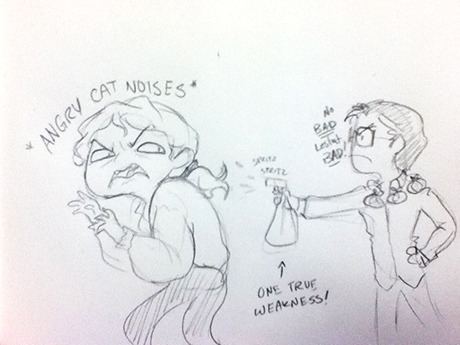
[X by @mortcharmant, bc ppl tried to curb Lestat’s cursing by spritzing him w/ holy water, didn’t work.]

Noble or not, Lestat loves learning slang and sometimes uses it incorrectly, and that can be hilarious in itself. In general, I think he does try to keep it classy, if possible.