This is a tough question for many reasons. It’s hard to know what speaks to you about Vampire Fiction, it may be something different than what speaks to me. I think you should watch the movie again and choose a scene that you love!
As far as the “how that fiction portraits male and/or female characteristics,” I’m not sure what your professor is specifically looking for in that regard. Many of the VC vampires do not necessarily conform to gender stereotypes in the way that they act or present themselves. In the real world, gender presentation can vary widely historically and geographically.*
One example that comes to mind, for me, is Lestat’s turning of Claudia.
Lestat says in the book: “I am like a mother… I want a child!”Are men not equally capable of having that desire? Is it a female characteristic specifically? I don’t know the answer. But this is an example of a scene in which using the book would be better than the movie, because this line was not in the movie.
BTW, this line comes at the end of the often-quoted “Evil is a point of view” monologue, where Lestat talks about the vampires being like God. God creates life, and Lestat wants to do so, too. Is God necessarily female in this regard? I don’t know that either.
In the movie, Louis only tries to stop Lestat in one small, feeble attempt, by catching his hand before it starts, and Lestat places some of the blame on Louis by asking him, “Do you want her to die, then?” Movie!Louis seems to accept some of the blame by allowing Lestat to proceed in ‘giving Claudia another life,’ and we see Louis watch like a nervous father might watch his wife giving birth, with equal parts wonder and horror at the obvious pain involved.
In the movie, his wife had died in childbirth, was he present for that?
Does that then give Louis the male characteristics? This scene happened in a slightly different (but significantly so) way in the book, which I’m not going into since this is already a longish post.
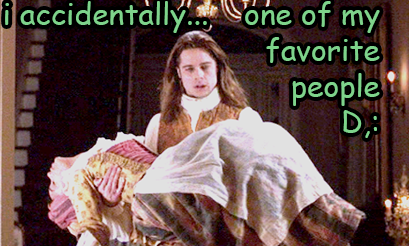
Another example is when Louis carries Yvette out of the plantation house.
^In this scene, it’s evocative of the traditional image of a man carrying his wife across the threshold, away from her friends and/or family, into the home they will share together. Louis is doing it in reverse. He’s carrying her out of the house, bc he has killed her, and is now returning her to her friends and/or family. Later in the movie, Santiago tries to convince a mortal woman to become Death’s Bride. Yvette was one, for sure.
So I would say that Louis has the traditionally male characteristics here.
There is so much more to both of these scenes, in my opinion, but I think I’ll stop here bc I don’t know if you are also supposed to do analysis and I wouldn’t want to do your analysis for you! I hope that’s okay with you, and I hope this answer helped inspire you to choose a scene that speaks to you.
That’s so sweet of you! You’ve made my day, telling @wicked-felina and me this *u*
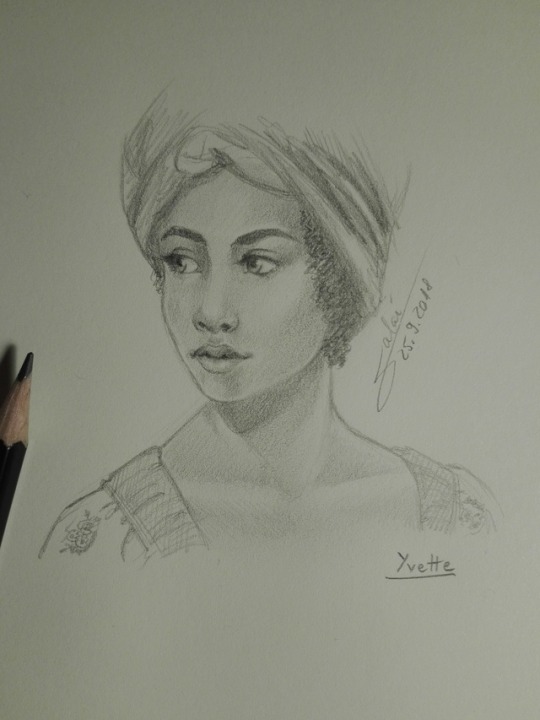
VC has few F/F (are we supposed to call them w|w now?) ships, there is plenty of room for more. It would be such an honor if Yvette and Jesse became a new ship thanks to our little AU!
Jesse/Yvette was something we didn’t predict, and it’s not a real ship (yet!). Btw, that’s Hattie Watson as Jesse on the right, from her IG. I’m using a pic of Yvette from movie!IWTV bc our Yvette was originally inspired by movie!IWTV’s Yvette, who some of us headcanon grew up with Louis and was more of a sister to him than his own sister. That they genuinely cared about eachother. In our fic,
Yvette is a baker par excellence, grew up with Louis, and they even were a couple at one point. That’s long over now, but they’re very good friends.
[X] Lookit this cutie, Hattie Watson! She has tatts, she could be a modern AU Jesse w/ tatts.
I think that’s a valid theory! I’m not sure I would use the word “concubine,” since that would imply that she was coerced into it due to her status on the plantation. My headcanon is that if she was in a relationship w/ him, she was willing, and not coerced into it, based on fanon that she was raised w/ him, and they were always very close and mutually respectful, even though he was her plantation master in title.*
We see little of their interaction in the movie, so it’s impossible to say definitively, but it appears that she was not afraid of him before he was turned, could sense the change in him, and was genuinely concerned about him with more than a servant’s required amount of care.
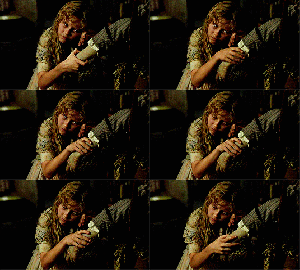
Unfortunately we can’t talk about Louis/Yvette w/o bringing up the way he ended that relationship – rather badly (and I’m using a little levity in the pic below bc it’s very grim, upsetting, so many other words for how awful it is, but if anyone is offended, I apologize in advance. This is the way I choose to engage w/ the material, so Unfollow if you need to, I understand)
After he kills her, Louis carries Yvette out of the house bridal-style, a reversal of the carrying-over-the-threshold tradition that newlywed men do w/ their living wives to signify that she is welcome and a necessary part of their home and life together.
Louis carries Yvette OUT before he burns down the big house, so that she can be returned to her people (and family members, probably) and given the proper religious rites, funeral arrangements, etc. Conversely, he knows he doesn’t deserve any of that since he’s going straight to Hell; he intends to pay for her life (really, taking her life is the worst thing he’s done so far, especially considering their implied ship and the way he took her life) with his own. He knows that killing an innocent is terrible, even worse that she was someone he loved! He succumbed to desire, fed his vampire nature, and that finally sealed his damnation: “This place is cursed. Damned! And yes your master is the Devil!”
Fun fact: Brad Pitt and Thandie Newton (Yvette) were dating during the filming of IWTV. They are both professionals, but if my boyfriend had to basically act like he metaphorically raped and murdered me, or I had to do the same to him, pretty sure it’d kill the romance somewhat. [X]
Hit the jump for moar, cut for length.
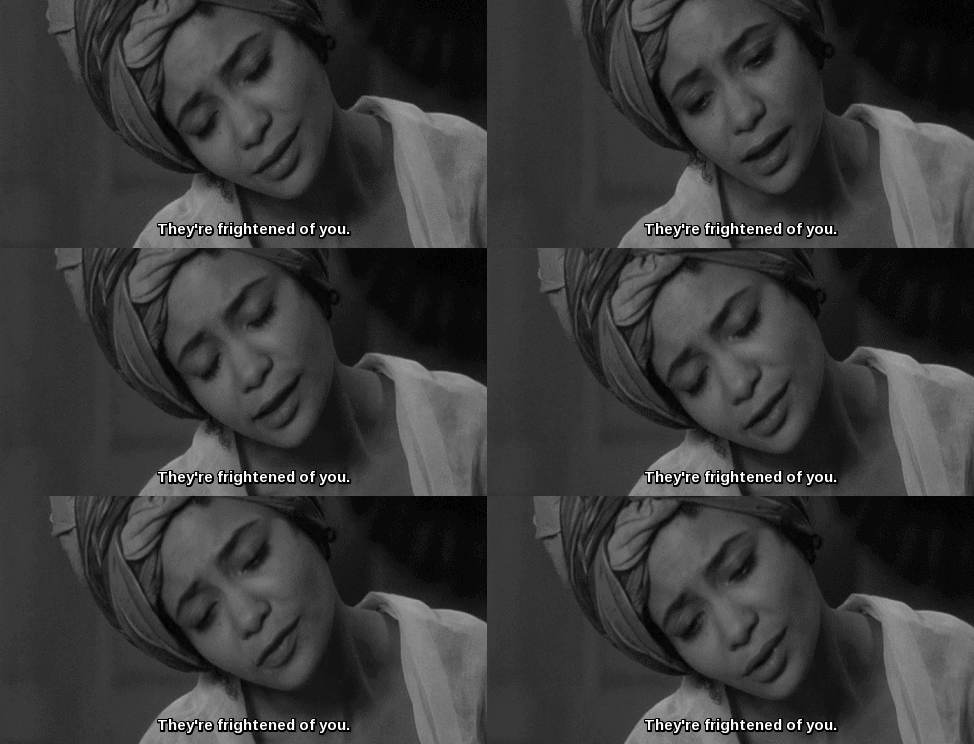
There is some fanon out there that Yvette was raised along with Louis, that they had real history together and cared deeply for each other ❤ So the idea of them becoming closer than that would make sense. Yvette NOTICED his daytime absence in the fields, and seemed to want him back out there. She seems to genuinely care about him: “Are you still our master at all? You must send away this friend of yours… they’re frightened of him. And they’re frightened of you.” I headcanon that they had a good relationship prior to his turning, maybe the best possible relationship between two ppl of such different stations at that time.
This doesn’t seem like the face of someone required to be concerned for her boss, it seems like the face of a lover or family member, someone very close who senses something is very “off” about Louis, more even than when he was drinking and throwing himself at whores; she wants to help and probably thinks she knows him well enough to be able to talk some sense into him ;A;
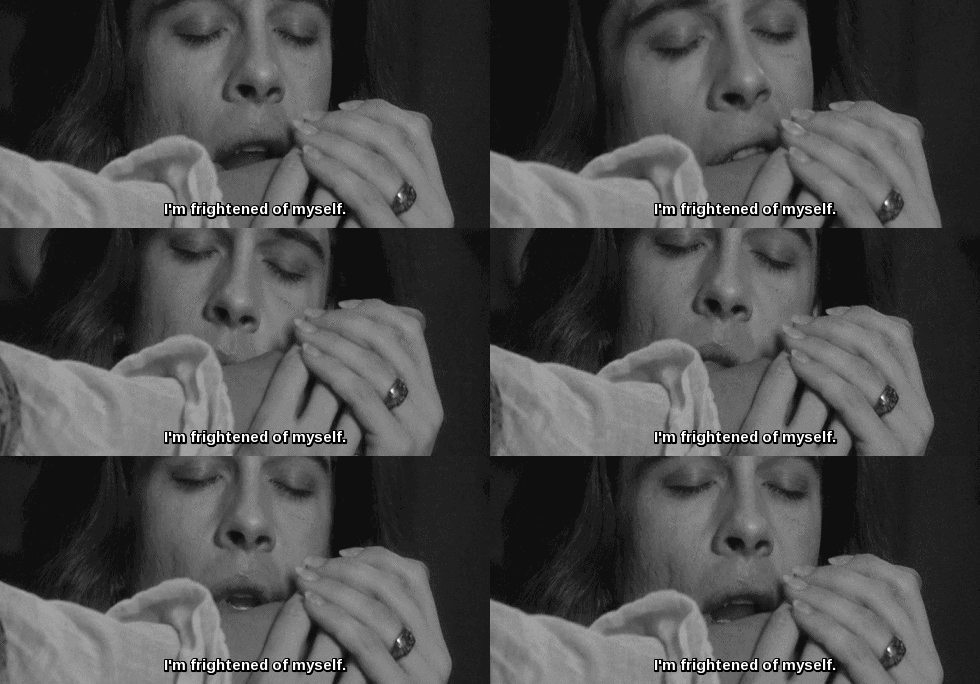
In movie!IWTV: Louis’ killing of Yvette seems to also be a metaphor for giving in to sexual urges, basically a metaphorical rape in how it’s nonconsensual :[
We see him struggling with it and trying to make Yvette leave him alone, even ordering her to leave: “That will be all, Yvette.” (which he can barely even say, so consumed w/ hunger) but she deliberately disobeys: “I will not go unless you listen to me!” Again, does not seem like the kind of interaction between a plantation owner and his servant.
He looks like he’s about to receive Holy Communion in the shot above, his eyes closed almost in prayer, he’s probably thinking about everything Lestat’s told him, and How wrong can this be when it seems so right? VERY WRONG.
*So my answer is based on their 100% consensual relationship, but books could be (and have been!) written on the pressures of a slave being coerced into a relationship with the plantation’s owner, and I’m not going there.












 I-want-my-IWTV
