And yet my sorrow did not overwhelm me, did not actually visit me, did not make of me the wracked and desperate creature I might have expected to become. Perhaps it was not possible to sustain the torment I’d experienced when I saw Claudia’s burnt remains. Perhaps it was not possible to know that and exist over any period of time.
Louis de Pointe du Lac, Interview with the Vampire (via monstersinthecosmos)
I think there are many ways to make a character’s death really sad, and bc we can all have different feelings about a given character, any individual reader will be very sad about the death, when another reader might be totally indifferent (or even glad!). I’ve only written fanfic myself, and I know what makes me sad when I read/write character death, that’s about as informed as I am on the topic, DISCLAIMER: I’m not a professional writer and this is not professional advice.
💀 Some things that come to mind re: making a character’s death really sad: 💀
How they die,
How preventable their death was,
How other characters feel their loss and/or the loss of their potential,
And how much that character meant to the reader/audience, did they like the character?
I don’t know what specifically you’re doing in the Memnoch timeline… I won’t use any examples of deaths from that book in case of spoilers (Idk sometimes I’m more respectful about spoiling ppl than other times *shrugs*)
In IWTV, it was a very sad death when Claudia died. It’s portrayed differently in the book(s) and the movie, but I’m just going to address it re: the points above generally and drawing from both.
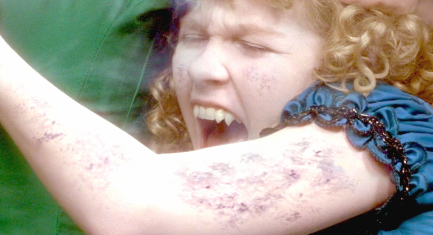
1. She died by sunlight exposure and it seemed extremely painful.
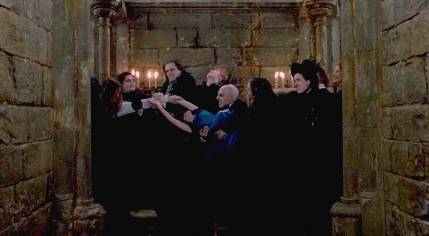
Louis would not have seen it, so he can’t describe the moment of her death in the book, but it’s shown in the movie. Leading up to the death, the tension builds and builds, all these moments where Louis, Claudia and Madeleine are hoping for Armand (or some other deux ex machina) to swoop in and save them all. It doesn’t happen. Probably one of the last shreds of hope they had was when the troupe pull Louis and Claudia apart, from that point on, he can no longer protect her ;A;
As it was so painfully underscored in Claudia’s Story, the last name Claudia hears Louis call for is “Armand,” bc calling her name won’t do them any good. But to her, it feels like a final betrayal, that he’s calling for Armand bc he cares more about him ;A;
Claudia and Madeleine get locked in the well, and when Claudia sees the sunlight approaching, she’s already starting to cry, trying to wake Madeleine to try to figure out a way out… there is none and then they can only brace themselves bc there IS NO ESCAPE ;A;!! The acceptance of their own deaths is part of the tragedy.
It’s a pretty universally nightmarish situation, even though sunlight is not fatal for ppl (most, anyway), but we can all relate to the experience. It’s like being pushed onto subway tracks and not being able to escape in time ;A;
2. Her death was a failure in diplomacy, basically. The Theatre des Vampires, led by Santiago, held a kangaroo court (although they may have felt that they were within their rights) in which they found Claudia guilty of attempted murder of her maker, and decided to punish her with the death penalty.
Louis tried to protect her from it as best he could, he tried to make a deal to save her life, but failed. In the book:
“ `Listen to me, Lestat,’ I began now. `You let her go, you free her… and I will… I’ll return to you,’ I said, the words sounding hollow, metallic.
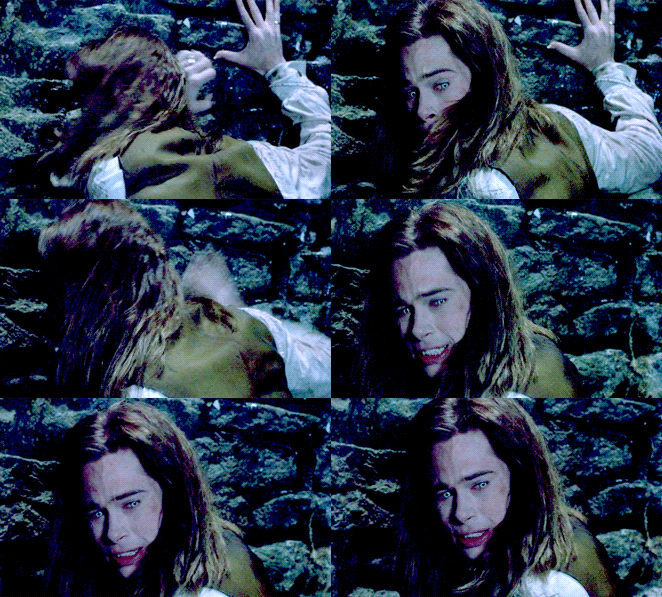
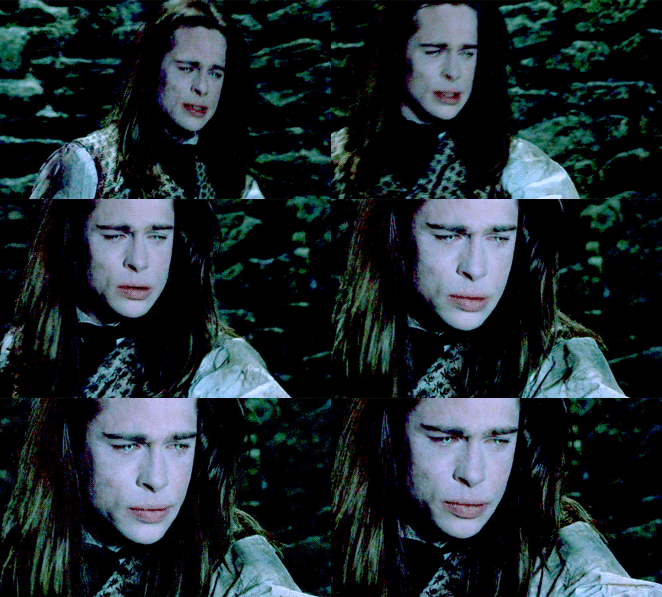
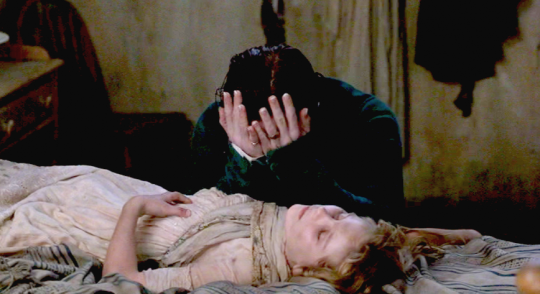
3. It kills a part of Louis when Claudia dies. His immediate reaction is extremely sad (not even factoring in the revenge he takes after).
I have a more thorough commentary on this scene here. It’s in this moment that Louis has lost the most precious person, the one who’s told him what to do, someone he could worship and follow, someone who metered out his doses of happiness with her approval. In the movie, he calls her “my child,” Armand tries to correct him: “Your lover,” and Louis compromises with “My beloved.”
In the book, the next night, Louis finds Lestat clutching Claudia’s bloody dress and sobbing over her death, too. Even though he was the very person who testified against her! Even he could not prevent their “justice.”
“And then I saw the thing in [Lestat’s] hands. I knew what it was. And in an instant I’d ripped it from him and was staring at it, at the fragile silken thing that it was – Claudia’s. His hand rose to his lips, his face turned away. And the soft, subdued sobs broke from him as he sat back while I stared at him, while I stared at the dress. My fingers moved slowly over the tears in it, the stains of blood; my hands closing, trembling as I crushed it against my chest.
Louis was expecting Claudia to go on and live with Madeleine, that he would still be in touch with her and see her occasionally. So that potential continued relationship was destroyed, too ;A;
4. What did Claudia mean to the audience/reader…
I know I sympathized with her and very much enjoyed her overall, and I like to think that other readers/viewers agreed, and don’t totally blame her for her actions against Lestat… after all, she was a victim herself. Lestat doesn’t blame her when he speaks of her in canon. We saw the love they both had for her ❤
Is that enough to convince the readers/audience to care enough for her that her death is sad for them? All those factors help!
~💀I hope that helps, Anon! Now make us cry!💀~
OKAY LIKE HI HELLO, I realize I haven’t killed anyone in my fics in a while but my never-gonna-be-fucking-finished novel is about death and grief and was closely based on my own grief process following the deaths of two of my friends in the span of three months so. Here’s what I want to say !!!
The points @i-want-my-iwtv are all super true, but I also want to say that to write an effective death scene or to be affected by a literary death you have to try to empathize with what death really feels like IRL. So, for me? Grieving hinged (and hinges, lbr, it never really goes away) on three things:
The immensity of the concept that you will never see the person again.
That as time goes by it’s not just “missing” them because you won’t see them again but that it’s been longer and longer and longer since the last time you saw them and you miss them the way you can even miss the living that you haven’t seen in a while.
The ruined potential of everything this person had to offer the world.
This is all pretty personal and grief is super emotionally complicated so obviously different people have different experiences and I AM SO EXCITED THAT AS CREATIVE HUMANS WE ALL HAVE WAYS TO EXPRESS WHAT WE INDIVIDUALLY WANT TO SAY ABOUT IT, that’s super special and I think it helps heal people a lot. But to me that’s kinda like how I narrow it down personally.
So when it comes to a story I think it’s going to depend on the POV of the text itself and also if the grief is more directed at other characters or at us as the reader.
Things to consider:
Are you trying to make us sad for US, for our own sake, because we will missing having the character around in canon? Are we attached to them?
Are you trying to make us sad for the survivor(s) of the death who we have grown to love?
In IWTV specially I think the movie does more of a job of letting us care about Claudia as her own person because see her with a bit of a wider frame, vs. the book I think heavily weighs on us caring about Louis and feeling empathy of his loss.
So if you want to make the character’s death “really sad” I think we have to first decide who we’re feeling sad for and go from there. Are we having to survive without them as a reader or are we just empathizing with someone like Louis, that we care about and feel sorry for?
EITHER WAY an important thing to note, whichever approach you take, is that we need to understand the value of this person and what they had to offer and why someone should miss them. If you’re trying to make your reader sad for the character I think it’s important to make sure they are valuable and liked and that we will care that they are gone. I think in the IWTV novel that Claudia is sort of cold and savage and by the time they’re in Paris she’s pretty cruel to Louis, so it’s natural for me not to feel personally affected by her loss, but as a reader I know that Louis is crushed because it’s the loss of his daughter. So even if the character is cold/cruel/unlikable/etc we can still hurt for someone who cares about them anyway.
So.
IDK!
@i-want-my-iwtv had super good points but I also just wanted to add that. Grief and death are messy and horrible and I think the emotional depth and sense of loss makes all the difference.
I think there are many ways to make a character’s death really sad, and bc we can all have different feelings about a given character, any individual reader will be very sad about the death, when another reader might be totally indifferent (or even glad!). I’ve only written fanfic myself, and I know what makes me sad when I read/write character death, that’s about as informed as I am on the topic, DISCLAIMER: I’m not a professional writer and this is not professional advice.
💀 Some things that come to mind re: making a character’s death really sad: 💀
How they die,
How preventable their death was,
How other characters feel their loss and/or the loss of their potential,
And how much that character meant to the reader/audience, did they like the character?
I don’t know what specifically you’re doing in the Memnoch timeline… I won’t use any examples of deaths from that book in case of spoilers (Idk sometimes I’m more respectful about spoiling ppl than other times *shrugs*)
In IWTV, it was a very sad death when Claudia died. It’s portrayed differently in the book(s) and the movie, but I’m just going to address it re: the points above generally and drawing from both.
1. She died by sunlight exposure and it seemed extremely painful.
Louis would not have seen it, so he can’t describe the moment of her death in the book, but it’s shown in the movie. Leading up to the death, the tension builds and builds, all these moments where Louis, Claudia and Madeleine are hoping for Armand (or some other deux ex machina) to swoop in and save them all. It doesn’t happen. Probably one of the last shreds of hope they had was when the troupe pull Louis and Claudia apart, from that point on, he can no longer protect her ;A;
As it was so painfully underscored in Claudia’s Story, the last name Claudia hears Louis call for is “Armand,” bc calling her name won’t do them any good. But to her, it feels like a final betrayal, that he’s calling for Armand bc he cares more about him ;A;
Claudia and Madeleine get locked in the well, and when Claudia sees the sunlight approaching, she’s already starting to cry, trying to wake Madeleine to try to figure out a way out… there is none and then they can only brace themselves bc there IS NO ESCAPE ;A;!! The acceptance of their own deaths is part of the tragedy.
It’s a pretty universally nightmarish situation, even though sunlight is not fatal for ppl (most, anyway), but we can all relate to the experience. It’s like being pushed onto subway tracks and not being able to escape in time ;A;
2. Her death was a failure in diplomacy, basically. The Theatre des Vampires, led by Santiago, held a kangaroo court (although they may have felt that they were within their rights) in which they found Claudia guilty of attempted murder of her maker, and decided to punish her with the death penalty.
Louis tried to protect her from it as best he could, he tried to make a deal to save her life, but failed. In the book:
“ `Listen to me, Lestat,’ I began now. `You let her go, you free her… and I will… I’ll return to you,’ I said, the words sounding hollow, metallic.
3. It kills a part of Louis when Claudia dies. His immediate reaction is extremely sad (not even factoring in the revenge he takes after).
I have a more thorough commentary on this scene here. It’s in this moment that Louis has lost the most precious person, the one who’s told him what to do, someone he could worship and follow, someone who metered out his doses of happiness with her approval. In the movie, he calls her “my child,” Armand tries to correct him: “Your lover,” and Louis compromises with “My beloved.”
In the book, the next night, Louis finds Lestat clutching Claudia’s bloody dress and sobbing over her death, too. Even though he was the very person who testified against her! Even he could not prevent their “justice.”
“And then I saw the thing in [Lestat’s] hands. I knew what it was. And in an instant I’d ripped it from him and was staring at it, at the fragile silken thing that it was – Claudia’s. His hand rose to his lips, his face turned away. And the soft, subdued sobs broke from him as he sat back while I stared at him, while I stared at the dress. My fingers moved slowly over the tears in it, the stains of blood; my hands closing, trembling as I crushed it against my chest.
Louis was expecting Claudia to go on and live with Madeleine, that he would still be in touch with her and see her occasionally. So that potential continued relationship was destroyed, too ;A;
4. What did Claudia mean to the audience/reader…
I know I sympathized with her and very much enjoyed her overall, and I like to think that other readers/viewers agreed, and don’t totally blame her for her actions against Lestat… after all, she was a victim herself. Lestat doesn’t blame her when he speaks of her in canon. We saw the love they both had for her ❤
Is that enough to convince the readers/audience to care enough for her that her death is sad for them? All those factors help!
“Mon cher, Lestat.” Claudia sighed with a sweet smile. “I may have left the nest but my home is with you.” Biting her lower lips she shook her head only to continue smiling. “I think of you too often and I miss you more than you think. You may be a Brat Prince now but you were mine before you were many of theirs….”
I had to think about this one for awhile, bc my immediate reaction was to defend Louis and say: “Oh no, our sweet bb Louis wouldn’t kill a child! Nor a preteen or teens! He may not choose guilty from innocent but surely a teen and under would be safe from him??!”
But he’s NOT a sweet bb. He’s a vampire.
Louis killed Claudia, or attempted to do so. More on that in a bit. The only further explicit reference we have re: his killing methods in canon is in QOTD, when Akasha states that he kills “without regard for age or sex or will to live.“ and since she can read his mind and Louis does not correct her on that statement, I would assume that she’s pinned him accurately.**
(**Note 1: in the scene at the end of book!IWTV (which we still don’t know if it actually happened or not, bc unreliable narrators), Louis takes a baby that a young vampire brings to feed to Lestat, and returns it to its home: “I returned to the small house from which the vampire had taken the child, and left it there in its crib.” So maybe BABIES are safe from Louis!)
(**Note 2: Louis accepts the offer of taking a bite of Denis, Armand’s mortal preteen/teen pet at the Theatre des Vampires, not knowing if Armand intended him to kill this offering or not, but in the book, Louis takes it without any resistance and Armand takes Denis back before Louis can finish him BC HE MIGHT HAVE.)
TL;DR #1: Yes, I do think Louis would kill a lost child/preteen/teen, and I think that the circumstances of such a choice could be worth exploring in fiction.
TL;DR #2: I think it would be unlikely for Louis, on his own, to kill one member of a group of ppl of any age, for the practical difficulty of killing one of them w/o the others noticing and causing a scene. I think this would make his kill more difficult than necessary, as Louis kills perfunctorily, only exerting the amount of time and effort required to satisfy the need:
“I would let the first hours of the evening accumulate in quiet, as hunger accumulated in me, till the drive grew almost too strong, so that I might give myself to it all the more completely, blindly.
“…I lingered only a short while, long enough to take what I must have, soothed in my great melancholy that the town gave me an endless train of magnificent strangers.
“For that was it. I fed on strangers. I drew only close enough to see the pulsing beauty, the unique expression, the new and passionate voice, then killed before those feelings of revulsion could be aroused in me, that fear, that sorrow.” (IWTV)
^If his killing style had changed since then, I think he would have mentioned it to Daniel during the interview.
It also begs the question whether he would kill the elderly, people with disabilities (mental, physical, etc.), and other types of people whose defenses are lowered to some degree, and I think “indiscriminate” applies to all of those categories. Yes to all, Louis kills indiscriminately.
TL;DR #3: Claudia is a child Louis kills (well, attempts to kill) in canon, and her similarity to Anne Rice’s daughter (who died at the age Claudia was turned) was very likely the reason for Anne writing IWTV in the first place. Through the characters in IWTV, I think Anne asked the questions to get the answers to exorcise her demons regarding that loss. Fiction is a safe ground from which we can examine and lance the pain we have experienced in real life and release it, and in sharing the story, we might give others a catharsis, too. I think this novel’s rich exploration of these difficult issues is part of what has made it so beloved by her readers, we can relate deeply with her story in our own ways and feel a catharsis from her explorations.
There are parents who outlive their children bc of these early-childhood diseases (and other reasons) and they have to find a way to go on living, and even trying to be happy again. I’m sure Anne will always experience pain from this loss, but through fiction, she may have been able to achieve enough closure to go on living her life.
I think Anne’s answer for herself at the end of writing IWTV was, “Neither you nor your daughter, nor anyone else, were being punished. Michele was in the wrong place at the wrong time.”
Hit the jump for more, cut for length.
1. “So if a lost child happens to cross his path would he kill them?”
A) I think that Louis feels like he, personally, shouldn’t judge who should die, and that therefore ppl who cross his path of any age are fair game. Louis was very Savage Garden about it before he was aware of the concept. In the Savage Garden, tigers can’t really be held responsible for killing the young, infirm, or elderly of their prey. Vampires are not human, even though they were once human, and some seem very human still… some of them hold themselves to human laws and morality about killing, but some of them do not.
B) If a child is lost at night without a parent or guardian, if the child was as abandoned as Claudia was, I think Louis would probably still kill them. It could be considered a case of the child being in the wrong place at the wrong time.
After all, it would fall under the Savage Garden concept, they’re at risk of more than just being Louis’ dinner. Louis is just another risk out there, maybe scarier because you might be able to reason with him where you can’t with, for example, a virus or a tiger.
C) is for CLAUDIA: While it’s true that Claudia didn’t exactly “cross his path,”
Louis was drawn to her cries and she was a lost child, abandoned by her parents. Her father had left, her mother was dead, and she was defenseless. Claudia might have already been sick with the plague, or might have died from starvation.
One could argue that Louis killing her was more merciful than the slow death she might have suffered if no one had found her ;A; There are situations where death is more preferable to suffering. We don’t know whether she could have been saved from death if brought to the hospital in time; even a hospital and the best medical care is not a guarantee that a life will be saved.
Louis was filled with guilt and shame when Lestat found him with Claudia, and I do think that Lestat turned Claudia to take that guilt from Louis. At that time, this was Louis’ first human kill in years, and Louis might have committed suicide for the guilt of having killed an innocent child if Lestat hadn’t “given her another life.”
2) So if a bunch of punk preteens or teens
happen to cross his path
would he kill them?
As far as “a bunch of punk preteens or teens,” Louis still would not judge them, even though society tends to think less of “punks” for disrupting the peace, vandalizing property, or otherwise purposely causing trouble. So I don’t think they would be targets for Louis specifically because of their “punk” label.
Louis would
probably not be interested in a group of any type or age (even a group of violent middle-aged bikers would be safe!); as it would be difficult to kill one of them in the presence of the others without creating trouble. He goes for people who are out on their own. I don’t think he’d want to go to the effort of coercing one away from the pack.
It’s not canon but I would think Louis can share kills with other vampires now, and he would be able to do so more stealthily with another vampire or two with him, if they wanted to take down more than one victim together, any age.
3) Re: Claudia being Michele Rice: I think that Louis’ attempted killing of Claudia is the major impetus behind IWTV being written in the first place.Anne Rice lost her own daughter at the age Claudia is turned, and Anne was going through the pain of that loss, asking why it happened to her daughter. Had Anne been an irresponsible mother? Was it God’s punishment for Anne (and/or her family) failing to be a devout enough Christian? Was her daughter being punished for some crime?
Was it Satan?? Was it a case of a bad thing happening to a good person?
To my mind, IWTV’s real cornerstone, on which the rest of the story was built around, Anne Rice created muses through which she could ask these questions and try to get the answers.
Anne said she modeled Louis after herself, but he also represented Death. Anne wanted these answers:
Why did Claudia die?! Bc Louis killed her.
Who’s this Louis monster and why did he have to kill her?! Well, he’s a vampire, that’s what they do.
Ok… But why did Louis have to kill an innocent childspecifically?Bc he was a vampire who had been sustaining himself on animal blood for years. and he was in a state of malnutrition and extreme desperation, and this child was nearby and defenseless. She had done nothing wrong.
Also, Louis felt terrible for this, even though he admits to Daniel that the act itself (as all blood drinking is to vampires) was pleasurable. Louis does not bring it up to Claudia herself until she began to rebel and demand answers.
So I think Louis battling with his religious upbringing, whether he was from the Devil, and having so much guilt about killing all victims (especially Claudia!) was a release for Anne, bc she could empathize with the entity she created who killed her child.
If the murderer himself felt guilt over it, that may have helped Anne achieve some measure of peace.







 I-want-my-IWTV