Gallery

astolat:

fyeahcopyright:

heidi8:

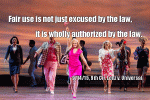
Fair use is … wholly authorized by the law. That’s what the 9th Circuit said today, in a ruling that will become a terrific tool to support sharing of transformative works (like fanfic, fanart, cosplay, fanfilms, filks, etc.). 

Back in 2001 and 2003, when I first started writing and speaking about fair use in connection with what we’re now calling “fan law”,  we did a lot of argiing by analogy. Caselaw hadn’t really caught up with how people were actually using the internet and definitely hadn’t caught up with the idea that fans of a show or book or film or band or piece of art or work of creativity would create a “follow-on work” and share it at no cost to anyone, on the internet. 

But lawyers argue by analogy – we go before a court and say “this is similar to that, and thus the laws for that should also apply to this”. That’s how it works (at least in the US) so it was reasonable  to say because of court rulings in The Wind Done Gone and the 2 Live Crew case re Pretty Woman, or a 1996 case in the 11th Circuit that said “

fair use is not an infringement, that (noncommercially distributed) fanworks – as transformative works – were fair use and thus were not infringements of someone’s copyright. 

By and large, over the last fifteen years (and actually, through  the 90s too) the courts have agreed with this concept every time something that parallels an aspect of fanworks comes before an appellate court. Click the Fair Use tag here for examples. 

However, today the 9th Circuit issued its ruling in Lenz v. Universal, a case that dates back EIGHT YEARS to a pre-Google time at YouTube, when the tv networks were all freaking out about this new way that people could get content via the internet, and the music companies were continuing their perpetual angst about the idea that certain uses of songs could be, in any way noninfringing. 

While Lenz doesn’t really redefine large swaths of law, it makes a few points explicit and clear: 

  • Fair use is not just excused by the law, it is wholly authorized by the law.
  • A copyright holder must consider the existence of fair use before sending a takedown notification.
  • The DMCA requires consideration of fair use prior to sending a takedown notification…
  • If a copyright holder ignores or neglects our unequivocal holding that it must consider fair use before sending a takedown notification, it is liable for damages.
  • A copyright holder who pays lip service to the consideration of fair use by claiming it formed a good faith belief when there is evidence to the contrary is still subject to §512(f) liability.

The court also quoted a brief from transformativeworks (OTW/AO3) where we set forth when computer programs might be of use in finding infringements where  “(1) the video track matches the video track of a copyrighted work submitted by a content owner; (2) the audio track matches the audio track of that same copyrighted work;and (3) nearly the entirety…is comprised of a single copyrighted work.” As you can see, that process wouldn’t be applicable for fanworks. 

The ruling doesn’t mean an end to automatic takedown notices; where a file of concern matches exactly to a single copyrighted work *and* nearly the entirety of the file of concern is comprised of that single copyrighted work, bots and automated notices would still be viable. 

But a video manifesting mashup culture or a story that’s a follow-on work or a meme that includes a copyrighted photo and text that comments on or criticizes something, or educational infographs should not be DMCA-ed by autobots, and any analysis by the copyright-holder of the fanfic, fanart, etc. they’re looking at must actually look to current law regarding whether something is a transformative work/fair use/otherwise noninfringing. 

Does this mean that creative fans will suddenly start experiencing fewer DMCA takedowns? Possibly, but also maybe not. But it does mean that if a creative fan gets a DMCA takedown/notification about fanworks (especially when there’s no commercial sale) the fan can and should push back on whether the sender has actually considered fair use; if it’s obvious that they haven’t, the creative fan may be able to seek damages. 

Perhaps that risk of damages will be a disincentive to copyright-holders, so they focus their attention, and DMCA notices, on works that are actual counterfeits – copies of entire movies, books or tv serieses, or high resolution copies of art. 

Copyright holders cannot shirk their duty to consider—in good faith and prior to sending a takedown notification—whether allegedly infringing material constitutes fair use, a use which the DMCA plainly contemplates as authorized by the law.

And that’s a good thing. 

Now that you’re up to date on fair use law, check out the discussions that OTW’s Legal Chair Betsy and I had about fanworks, fair use, copyright law and so much more with fansplaining last week for their awesome new podcast. 

Such awesome news! And go Legal Committee!! o/

Also if you haven’t yet, take a look at the great candidates running for OTW board this year (the nonprofit that supports the AO3 and the Legal Committee and their advocacy work, among other awesome projects) and don’t forget to vote! (You have to be a $10 minimum dues-paying member to vote.)
image

So the Priapae is a thing

luthi69:

Talking about the Priapus jokes, I can totally picture Lestat reciting some verses from the Priapeia to Louis. For example:

– “Simpler far to declare in our Latin, Lend me thy buttocks; What shall I say to thee else?”
– “Pierced with a foot-long pole thy skin shall be stretched in such fashion, Thou shalt be fain to believe ne’er had a wrinkle thine arse. ”
– “Such be the fruits that youth who owneth the flourishing fieldlet, Placed on the table of stone, naked Priapus! for thee. ”
– “This staff in robbers’ vitals deep shall plunge, Up to its bushy base and bag of balls. ”


– Oh, and there’s many many MANY more. 

^Well that was informative. Try memorizing these for hilariously better insults to hurl at your friends and family!

Gallery

truebluemeandyou:

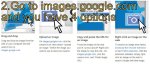
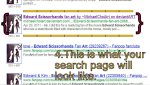
5 Easy Steps to Searching for the Original Source on Google. Someone puts hours and hours into an original tutorial/photograph/illustration and sites like Handimania, Duitang, Tumblr (and many others) steal their images without taking a few minutes to give them credit for their work. But this is changing and the big sites on Tumblr may not reblog your post if you don’t have an original source (and Pinterest, weheartit, etc… don’t count). I’ve been asked numerous times on Tumblr and Facebook how to search for images. 

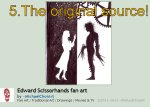
I saw this uncredited piece of fan art on a blog and it took 15 seconds to find the source. The best part? You can download this in a high resolution version for free and I posted it here.

What else can you do with google image search? Find out what photos, facebook pictures or avatars of yours are being used on the internet. It may really really surprise you (and horrify you) where images of you and your work are showing up.

EDIT: If you take someone’s image on Tumblr and the owner of that image thinks you stole it, they can file a Digital Millenium Copyright Act (DMCA) violation claim against you, and your entire blog can be deleted like Bohemea here.

EDIT: You may get a lot of Tumblr and Pinterest hits on your search page, but it isn’t hard to scroll through the pages quickly. You can also tell the original source quickly by looking at image sizes. GREAT TIP: type in -site:pinterest.com to get rid of pinterest results!

The signs as vampires

Aries: Reckless™. Doesnt know how to cover up their tracks. Ends up hiring someone to do it for them. Skilled at speed walking
Taurus: turns humans into vampires out of boredom. Accidentally creates a huge clan. Ends up a leader. Nice.
Gemini: the vampire that messes with everyone just because they’re immortal. Gets in trouble lots because they can get out of it easily. The vampire who accidentally ends up well known among other vampires by doing something stupid as hell
Cancer: feels guilty all the time. Likes the perks though. Living forever is cool.
Leo: the vampire who thinks they could be part of the Avengers or some crap. Thinks they’re some kind of vampire superhero. Actually ends up being some really lonely vampire who longs for another half.
Virgo: always thinking of ways their kind can blend in with humans. Misses being human. Probably binges because they avoid eating for a long time.
Libra: the preppiest vampire ever. Who cares if we’re undead? Doesn’t mean we cant party and have a great fashion sense, am i right? Lets go become undead models in high fashion.
Scorpio: intensity increased by a million percent. Falls in love with a human. Appears like the stereotype but occasionally wishes they were human.
Sagittarius: no guilt whatsoever. Feels as if they’re the superior race so who tf gives a damn about stupid humans. Plays with their food
Capricorn: always coming up with ways to take over the world. Vampires should be in charge. Humans are so dumb and temporary.
Aquarius: uses their abilities to help people. Mostly wishes everyone was a vampire so they could all look after themselves. The vampire that was shunned from their clan for being too “human like”.
Pisces: the coolest vampire ever. Uses their abilities to have fun. Thats it. You live forever so you might has well be eternally amused.

Don’t be this kind of asshole

batwynn:

image

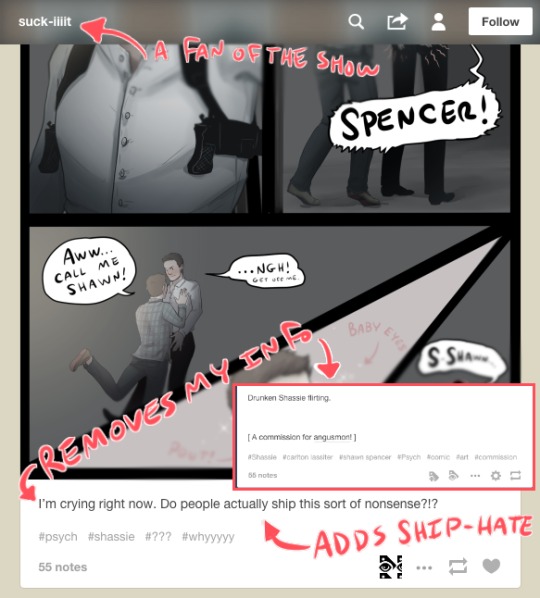
                                         See this person? See suck-iiiit


                                         Do not be this person.

                                     Do not remove artist’s comments.

                                 Do not add ship hate to an artist’s work. 

 It’s rude, it’s childish, it makes you no friends, and it lets everyone else know what a grade-A Asshole you are. 

                    This has been a been a PSA, with love, from Batwynn. 

PREACH. ^This applies to all fanwork posts, at least on this blog.

on censorship and sensitivity

akairiot:

There’s a certain attitude that scares the shit out of me – let’s call it destructive sensitivity.  It’s the philosophy that, if an idea is uncomfortable, it needs to go away.  If an image upsets you, or reminds you of a bad experience you had, then not only should you not have to look at it, no one should be allowed to look at it.  And if you can’t eradicate it completely, it should at least be buried so deep that a casual viewer would never stumble upon it.  This kind of censorship is nothing new, but I feel like it’s becoming more and more common.  So, why do I think it’s a problem?

FICTION

An important question we need to ask ourselves first is, what is the purpose of media, and particularly of fiction?  Why do we read, why do we look at artwork, why do we watch movies?  To only see happy things?  As escapism?  That’s certainly a valid interpretation, but it’s not the only one.

For the artist or creator, fiction can be a way to communicate the inner self to the outer world, through the use of symbols.  It’s a means of expression.  What they express might be deep, might be simple, might be beautiful or disgusting, might be for a niche audience or the whole world, but in the end, it is the artist taking pieces of their own experience and creating something new.  

For the viewer, fiction is a way to understand things that are outside their experience, and a way to expand their experience safely.  Fiction allows us to go places and do things that we can’t or wouldn’t in our own lives, without risk, without physical harm, and without causing harm to others.  Fiction can teach us what we fear, what we love, what we’re missing.  It can show us how others live, how others see us, how we see ourselves, and we’re free to engage with it as shallowly or as deeply as we want.

But fiction is not equal to reality. Watching Friday the 13th doesn’t make you a murderer, and it doesn’t kill you.  Reading Lolita doesn’t make you a pedophile.  Writing a story where a character is raped is not the same as committing rape, and reading that story is not the same as being raped.  Thought is not crime.

CENSORSHIP

Censorship is a way to force your interpretation of material on others, to reduce or destroy another’s experience by prejudging it as harmful to them.  But part of becoming a well-rounded human being is accepting that not everyone has the same sensibilities, and not every experience needs to be positive.  

What you find offensive, some might find enjoyable.  What you find traumatic, some might see as an exercise in empathy, or a means of catharsis.  Sad songs can be beautiful.  Horror stories can be fun.  When you decide to silence the things you don’t like, you’re cutting off others from that same experience. You’re making decisions for others, and you’re essentially saying that your feelings (and the feelings of people who agree with you) are more valid than anyone else’s.  I find this darkly ironic, because the audience that holds these particular sensitivities also tends to be the first to champion acceptance and non-traditional viewpoints, while organizing witch hunts for those they feel disrespect them.

So, why is this important to me?  Why does it scare me?  Well, as an artist, the complaint of one sensitive viewer can erase my work in an instant.  When complaints are made, content is removed first and questions are asked later.  Artists are guilty by default, and viewers are treated as victims.  No content host wants to be the one to stand up for freedom of expression at the risk of being seen as supporting offensive material.  Most alarming of all, this is all seen as totally acceptable, or even justified.  When an artist’s work is taken down, I see comments like, “Well, that’s the risk you take when you post stuff like that.  Can’t be helped.”  Even the people who disagree with censorship just shrug their shoulders.

SENSITIVITY

To those who are sensitive, I’m not trying to say, “just get over it”.  Emotional hurt is real, traumatic experiences are real.  I would never belittle someone else’s pain.  But you have to realize as well that your experience is not the be-all, end-all of the world.  Not all content is made with you in mind.  It is inevitable, if we want to exist in a world with other people in it, that we’ll be exposed to things we don’t enjoy.  The answer is not to destroy or degrade those things, but to try to understand them – and if that fails, at the very least, we can allow them to exist on equal terms.  It is that frightening desire to homogenize the world, to eliminate that which we fail to understand or which causes us emotional distress, that can lead as to real prejudice, to real violence and real crime.  Please understand that allowing content you dislike to exist is not the same as advocating it.  

THE ANSWER

What I would love to see is a perspective shift.  I want to see a world where responsibility is on the viewer, not the creator or the content host.  If you have a problem with something, it’s up to you to not see it, not for the artist to hide it for you, or add unavoidable warnings that prejudge a work.  I want a world where, rather than censorship by default, censorship is a conscious choice for those who want it.  No work is hidden until a user hides it themselves.  Artists are not punished for merely posting content that some find offensive, only for not tagging it correctly.  Freedom of expression and variety of content is seen as more important than protecting viewers from fiction, from discomfort, from viewpoints that don’t mesh with their own.

Accept others.  Take responsibility for yourself (and only yourself).  Understand that not all content is meant for you.  Understand that fiction is not crime, and fiction does not equate to real-world harm.  That’s all I’m asking.

(please don’t let this become a shitstorm… TT _ TT)

Gallery

overlook-hotel-survivor:

jehanjetaime:

Movie Meal Recreations

Interview with the Vampire, 1994

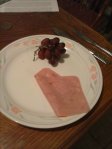
A sad slice of ham and like 10 grapes. Optional – two butter knives to eat this mistake.

#Nailed it.

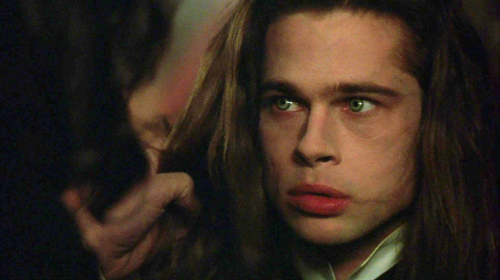
Ok so like, howwwwww …. does your vampire body know to grow your hair back, and to the same length. Like, you talk about vamps cutting their hair and then it grows back, which, ok, whatever, but then how does your body know when to STOP growing it. Like, uh oh, better add a few more inches for Claudia, but Armand only had a bob when he died, can’t go over that. How would it know?

merciful-death:

I stopped questioning these things many years ago.  I have no idea why it is that way.  It simply is.

image

pic of Santiago non-con petting Louis’ hair bc of reasons


I think the vampiric parasite (Amel) analyzes the blueprint of the host’s body when it’s installed and it then immediately uninstalls the features it doesn’t need (e.g. internal reproductive organs). It then starts converting all the organic matter of the host body into its own substance to “perfect it” into the pure supernatural killing machine that it wants to be. 

In that sense, that initial blueprint probably indicates length of hair, beard growth, muscle shape and position, etc., at time of death, and those are elements that the vampiric parasite program respects and wants to maintain as it continues to “update” its host body. It could be detrimental if a vampire shaved its head and then was stuck like that for eternity. The external appearance of the host body will affect its ability to hunt, and thus, preserve itself. It’s in the parasite’s interest for the host to continue to survive so that it can, too.

However, if the vampire had shaved as a mortal before turning, then that would be maintained.

BTW, about nails:

The nail growth part of vampire mythology seems to stem from how corpses tended to shrivel from dessication in their coffins after death, hence, making it appear that their fingernails had grown longer. Although I think hair does continue to grow for a short while after death? I’m not sure.