Notes: SO I wrote this listening to the Bioshock soundtrack, so as an homage we’re naming the fic after this. And this is the song Antoine is playing! Anyway this is gross and I’m your local fandom nuisance, SARRY.
The Gothic novel did not disappear with the turn of the previous
century, but instead evolved to reflect the increasing globalization, and to give new perspectives to the villains and supernatural beings that abound in the novels. As well, the Gothic tropes became very common in the new Young Adult genre, but that deserves its own post, Therefore, here are some of the best modern Gothic novels to date.
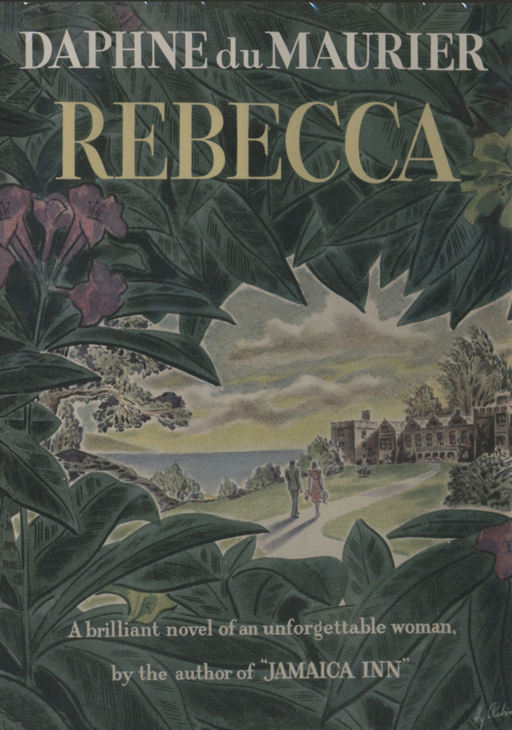
Rebecca, by Daphne du Maurier (1938)
One of the most famous examples of modern Gothic horror, Rebecca is a tale of obsession,
mistrust, and psychological torture. There are no ghosts or
supernatural horrors in this novel – the only spectre is that of the
eponymous Rebecca, haunting the protagonist through her servant Mrs.
Danvers. With the eerie trappings of Gothic horror and the additions of the modern world, such as automobiles and proper medical inquests, Rebecca
defined how the Gothic novel would evolve in the twentieth century.
The Haunting of Hill House, by Shirley Jackson (1959)
Shirley Jackson has traumatized
the last three generations with her short story “The Lottery”,
a Gothic in its own right, but her novel The Haunting of
Hill House is a step past Rebecca, and takes the Gothic novel back into the realm of the supernatural, where it spent the turn of the century. The Haunting involves a scientist, two young women, and the owner of Hill House, trying to unravel the mystery involving the ghosts and the horrors of the house, and how they begin to torment one young woman.
Anne Rice’s novel is infamous among Goths of varying types for
its depiction of grotesquely decadent vampires, flouncing through their afterlife with lacy cravats, temper tantrums, and an excess of fire and blood. Rice took the supernatural Gothic novel and focused it on the Byronic characters, as opposed to focusing on the traditional heroine. Interview With a Vampire is one of the most well-known Gothic novels, though it is Miss A’s personal opinion that it isn’t very good.
Most similar to: Dracula,
the entire life of Lord Byron
Although most people know the movie starring Daniel Radcliffe, the original book came out in the 1980s. It centres around a spectre, the ‘Woman in Black’, who haunts an English village heralding the deaths of children. The protagonist is a young barrister who comes to handle the estate of a deceased woman, but begins to unravel the mystery surrounding the Woman in Black and the secret horrors of the village.
Taking place just after the Spanish Civil War, Shadow of the Wind follows the life of Daniel Sempere, who finds a book in the Cemetary of Forgotten Books, a secret library in the heart of Barcelona. This book launches him into a decades-old mystery that includes a mysterious, scarred stranger, a haunted mansion, and the tragic death of a beautiful woman.
Following in the trail of Shadow of the Wind
is The Thirteenth Tale,
which returns the Gothic novel to the moors. A favourite of Miss A’s, it center around Margaret Lea, a biographer with a gaping hole in her heart that she cannot fill, and the famous writer Vida Winter, who is dying, and finally ready to tell the truth of her past. Two stories, both with their own ghosts and trappings, play out in this novel. There is a movie of this book, starring Olivia Coleman, Vanessa Redgrave, and Sophie Turner. The movie leaves out a number of the plot-points, and changes the past of Margaret, but keeps the haunting aesthetic of the book.
Most similar to: Agnes Grey, Jane Eyre, Turn
of the Screw
It’s spooky, it’s smart, thematic and has splashes of the otherworldly but it’s mostly a historical mystery
2. Tangleweed and Brine by Deirdre Sullivan
This is a collection of twelve fairytale retelling it’s Witchy, subversive and lyrical, it’s a bit dark but not to bad, it’s an ideal autumn read.
3. The Strange Case of the Alchemist’s Daughter by Theodora Goss
This is a retelling inspired from the classic horror stories of: Dr. Jekyll and Mr. Hyde, Sherlock Holmes, Van Helsing, Dracula (Mr. Renfield,) Frankenstein, Rappaccini’s daughter, and Dr. Moreau. it’s a very Interesting read if you love the Classics and a perfect read for Halloween.
4. The Accident Season by Moïra Fowley-Doyle
This is a ideal book for reading and re-reading every autumn, Come October, seventeen-year-old Cara and her family – including her mother, older sister and ex-stepbrother – board up the windows and hide the sharp implements in preparation for the Accident Season, a month in which mysterious and dangerous things seem to constantly befall them. A spellbinding magical realism standalone, it’s full of tarot cards, masquerade balls, fortune-telling, dreams, hallucinations and hazy, stylish prose. If you’re looking for an atmospheric autumnal read, this is absolutely the book to go for.
5.Harry potter by jk Rowling
Let’s face it you can’t have Halloween with out harry potter, with it’s wizards and witch’s, it’s magic spells and potions, it’s monsters and just overall feeling of autumn in this series it’s a must read.
6. Murder Most Unladylike by Robin Stevens
The Murder Most Unladylike Mysteries are one of those series you know is relatively recent but which seems like it’s been around for ages. It has that classic but accessible touch which makes it appealing to kids and brings something older readers or adults can appreciate, too.
7. All the Crooked Saints by Maggie Stiefvater.
Here is a thing everyone wants:
a miracle; here is a thing everyone fears:
what it takes to get one.Enchanting writing and complex characters interwoven into a tale of love, darkness, fear and redemption.
8. A Tree Grows in Brooklyn by Betty Smith
Why so perfect for fall? The emphasis on education makes this feel especially appropriate to read during back-to-school season.
This turn of the century coming-of-age story is an American classic for good reason. The beautifully crafted tale pulls you into Francie’s story and has you rooting for her as she grows up in challenging circumstances. There is an undercurrent of hope that buoys everything
9. And Then There Were None by Agatha Christie
One of Agatha Christie most famous mysteries, the eerie setting, and countdown of survivors makes for a satisfying mystery with a slightly Halloween-inspired feel. Add in the narrative following the children’s verse, and the disappearing soldiers mimicking the fallen guests and there is a decided sense of menace to the text.
10. The Halloween Tree by Ray Bradbury
This is a fast-moving, eerie…tale set on Halloween nigh. Eight costumed boys running to meet their friend Pipkin at the haunted house outside town encounter instead the huge and cadaverous Mr. Moundshroud. As Pipkin scrambles to join them, he is swept away by a dark Something, and Moundshroud leads the boys on the tail of adventures. This book is actually for kids but I read it last year at the age of 18 and I loved it and learned a lot about Halloweens history.
(Also I loved the movie as a kid)
Bonus
Rebecca by Daphne du Maurier
It’s an ideal choice when you’re looking for something to read while curled up under a blanket, sipping a hot drink. From the famous opening line to the dramatic conclusion, Rebecca is also perfect for a discussion title, if you’re looking for one for your book club to read this fall. The atmospheric novel is a modern classic, blending Gothic romance and mystery.
A compilation of all the horror filled movies, t.v shows & documentaries I could find. It includes some of my own masterposts and other people’s masterposts.
Merci beaucoup, glad you like this thing! You want more?
You do, I see >:}
I’d agree w/ you about Jack Frost, he’s forced into his immortal status by accident, too, and he’s orphaned and has to figure out what to do w/ himself, too. Jack and Lestat are definitely both
cheeky undead optimists! And yes, OLLA and What We Do in the Shadows are fantastic, that’s for sure! Those movies were very much the VC movie we had been waiting for, with different facets of VC-adjacentness. OLLA more for the aesthetic and WWDITS more for the comedy.
I don’t think that any ONE movie or book (or book series) has all the ingredients that make up that unique VC flavor but there are many that are adjacent. I knew this was going to end up being a masterpost, that’s why it took so long. Also I restrained myself from any Tom Cruise movies. He should have his own masterpost ;D
*cracks knuckles* Okayyy… SO,
VC-Adjacent is more doable than Lestatuesque, bc everyone’s headcanon of Lestat varies and we all know how attached I am to Tom Cruise So I’ll give you one Lestatuesque rec and the rest are VC-Adjacent.
Lestatuesque:
Blade Runner (1982) – this movie is mentioned in canon (QOTD). AR had wanted to cast Rutger Hauer as Lestat. But he was too old when they finally got IWTV into production D: so watch this and see her vision for Lestat.
Over and over [Armand] watched Ridley Scott’s Blade Runner, fascinated by Rutger Hauer, the powerfully built actor who, as the leader of the rebel androids, confronts his human maker, kisses him, and then crushes his skull. It would bring a slow and almost impish laugh from Armand, the bones cracking, the look in Hauer’s ice-cold blue eye.
“That’s your friend, Lestat, there,” Armand whispered once to Daniel. “Lestat would have the… how do you say?… guts?… to do that!”
In no particular order*
(and @annabellioncourt helped me out here, so wherever there’s an *, those are her recs that I agreed with)(and there are other movies I love obviously, but I tried to limit this list to VC-Adjacent only; and I couldn’t think of any of my fave books that come close enough to fit in here).
Vampire movies:
*Bram Stoker’s Dracula (1992) – Well this goes w/o saying, and it also shared movie!IWTV’s Michele Burke as head of the makeup dept ;D
The Lost Boys (1987) – @skeletalroses is kind of my authority on this one, and >>>this movie is cited as a major inspiration for WWDITS.<<<
What We Do in the Shadows (2014)- Including it on here bc of reasons, this is a very classy documentary of several vampires flatting together in New Zealand as a big coven ball approaches.
Only Lovers Left Alive (2013) – Including it on here bc of reasons, this is a very classy film of several vampires visiting together in Detroit, Michigan, and Tangiers, Morocco, as the world is slowly taken over by the “zombies” (not actual ones, metaphoric ones). And there are alot of parallels between the married couple and Claudia Ava, who is thirsty all the time and above the law bc of course she is.
Shadow of the Vampire (2000) – It’s a behind-the-scenes fanfic of the filming of the legendary Nosferatu! Mostly horror w/ a dash of comedy. Bonus: Eddie Izzard.
Dracula: Dead and Loving It (1995) – Yeah I love Leslie Nielsen, fight me. It’s a Dracula parody. This will never not be funny.
Jennifer’s Body (2009) – well she’s not really a vampire but she eats ppl, so close enough. I love the dynamic between Jennifer and her best friend, how you’re not sure whether Jennifer wants to bring her into this, or just terrify her, but there is something kind of Akasha-esque about this creature.
Let the Right One In (2008) – the original is better than the US remake (Let Me In, 2010) but they’re both worth watching. Child vampire! Choosing a new BFF! She has to respect the Being Invited In Rule, tho.
The Little Vampire (2000) – a cuter child vampire, w/o much of the angst of being a child vampire, overall super cute and I had to include this bc of Jack Frost.
Other Horror movies/shows:
*Crimson Peak (2015) –@annabellioncourt says: “would be a fair addition because of the atmosphere of it as well as its campy factor”
The Walking Dead (2010-current) – my new drug, group dynamics, fighting for supremacy, survival, romance, killing!
Sweeney Todd (2007) – It’s pretty goth, it has some comedy, it has murder, it has ppl pining for each other. Also, a musical. My fave is the whole By the Sea song sequence bc Helena is trying so hard!
The Witches of Eastwick (1987) – Jack Nicholson is the devil and wants to make his own harem of 3 powerful witches what could possibly go wrong? There is a hilariously awful scene in a church. Jack approaches Lestatuesque levels of charm as he courts these women, and then there’s supernatural stuff going on.
The Addams Family (1991) – Gomez and Morticia have the kind of ship Lestat would kill for. He would probably dig their aesthetic to some extent, too. Also murderous kids, who are encouraged to be murderous. ONE HAPPY FAMILY.
Black Swan (2010) – something about this, maybe the aesthetic, feels very Theatre Des Vampires.
Beetlejuice (1988) – Alec Baldwin! Looked like this once upon a time! But mostly, ppl dealing with being dead and not having a very helpful ghost w/ the most trying to help them. When it works for him.
Rocky Horror Picture Show (1975) – campy, musical, murdery, I still don’t really know what it all really means but it’s fun. Dr. F can be compared to Lestat, in that he’s lusty, charming, glamorous, materialistic, bossy as hell, has a real mean streak, tries to make the perfect lover for himself and fails at it over and over… an essay could be written comparing them. @laurasking is my authority on RHPS.
Other movies/shows:
Phenomenon (1996) – Telekinesis and someone dealing w/ acquiring it, and how his community treats him bc of it. THIS IS CUTE so like, yeah, much further away, I almost didn’t include it. Gonna lose my reputation over this rec OH WELL it’s your fault, Anon, bc Jack Frost.
Anime – recc’d by my best friend:
Vampire Princess Miyu – “similar atmosphere"
Witch Hunter Robin – “quite gothic”
Otogizoushi – “very atmospheric"
Annbellioncourt’s Recs bc she is classier than me:
Byzantium (2012) – Neil Jordan’s first vampire movie since IWTV
Wolfman (2010) – “its cheesey, but its atmospheric, spooky, and bloody”
The Hunger (1983) – “is one I always suggest to people wanting more”
The Bloody Chamber And Other Stories – Angela Carter
Some have expressed interest in what sources I use for references to the Royal Maréchausée or Nicolas’ political views or assignat inflation debates or les Amis de la Verité. Much of it is an accumulation of a lifetime of interest, but here are some good sources to get started:
Maria Linton, Choosing Terror: Virtue, Friendship and Authenticity in the French Revolution (2013)
How do a bunch of well-meaning dudes end up guillotining people who just look at them funny later?
Mark Darlow, Staging the French Revolution: Cultural Politics and the Paris Opéra, 1789-1794 (2012)
Really amazing archival research showing how cultural discourse via performances were key to forming public opinion, even though the state had a super-monopoly on what got to be performed.
Remember how Lestat talks about how Renaud’s isn’t really legit and the Comédie Française is where all the legit actors perform? It’s because of the government, y’all.
William Doyle, Aristocracy and its Enemies in the Age of Revolution (2009)
Traces the beginning of the decline of nobility and the effects of naming a particular group “the aristocracy”.
He also wrote a very short history called Old Regime France that’s worth a read if you care about 1648-1788 France, back when Lestat’s dad would have been important.
William Doyle’s actually kind of the ultimate first word in French Revolution survey work. He wrote the Oxford History of the French Revolution and he wastes no time with presenting really accessible detailed information that will give you a good feel for the era.
Jeremy Jennings, Revolution and the Republic: A History of Political Thought in France since the Eighteenth Century (2011)
Really huge survey of intellectual history, political theory, sociocultural history, and political economy.
Charles Walton, Policing Public Opinion in the French Revolution: The Culture of Calumny and the Problem of Free Speech (2009)
Really impressive analysis of how censorship during the French Revolution really messes up ancien regime and new republic troubles.
If you don’t have a lot of time, the Very Short Introductions series has great brief reads on aristocracy and the French Revolution.
Alistair Horne, Seven Ages of Paris
Super sassy and gossipy exploration of Paris from the very beginning. Great research but lots of in-jokes about Bourbons and Plantagenets and stuff and not enough teasing of the Carolingians but I’ll deal. Not great for a first-time history read, but good if you have some foundational knowledge of French history. Just a fun book.
Joan DeJean, How Paris Became Paris: The Invention of the Modern City
I haven’t read this one! But it’s on my reading list.
Baroness Emma Orczy, The Scarlet Pimpernel
A novel! But very good for the feel of an era. Also known as the further adventures of Lestat. Very fast read, guilty pleasure, dashing about France, and it even has mistaken identity comedy!
Rafael Sabatini, Scaramouche
Another novel! Basically Nicolas tries to avenge a friend’s murder and fucks up really badly.
Books I haven’t read but mean to:
R.R. Palmer, The Twelve Who Ruled: The Year of the Terror in the French Revolution
Yes, that Robert Roswell Palmer, the guy who wrote the Palmer & Colton European history textbook everybody lugs around in high school. He’s a fantastic and engaging writer with just the right amount of information to make you feel like a native in that time period. I can’t wait to read this book.
I think he wrote a book called Catholics and Unbelievers about the same period.
Simon Schama, Citizens
Apparently really comprehensive from pre-Revolution all the way through Thermidor.
Eric Hobsbawm, The Age of Revolution
He wrote this huge 4-part history of the world and I hear it’s a great way to contextualize what was happening in France. So, probably use this for figuring out what Nicolas felt about Italy and England, and why Lestat sent Renaud’s troupe to good ‘ol Blighty.
I was cruising through the net, following the cold trail of one of the periodic “Is or is not Fanfic the Ultimate Literary Evil?” arguments that crop up regularly, and I’m now bursting to make a point that I never see made by fic defenders.
We’re all familiar with the normal defenses of fic: it’s done out of love, it’s training, it’s for fun. Those are all good and valid defenses!
But they miss something. They damn with faint praise. Because the thing is, when you commit this particular Ultimate Literary Evil you’ve now told a story. And stories are powerful. The fact that it wasn’t in an original world or with original characters doesn’t necessarily make it less powerful to any given reader.
I would never have made this argument a few years ago. A few years ago I hadn’t received messages from people who were deeply touched by something I wrote in fanfic. So what if it’s only two or three or four people, and I used someone else’s world and characters? For those two or three or four people, I wrote something fucking important. You cannot tell me that isn’t a valid use of my time and expect me to feel chastened. I don’t buy it. I won’t feel ashamed. I will laugh when you call something that touches other people ‘literary masturbation.’ Apparently you’re not too up on your sex terminology.
Someone could argue that if I’d managed the same thing with original characters in an original world, it could’ve touched more people. They might be right! On the other hand, it might never have been accepted for publication, or found a market if self published, and more importantly I would never have written it because I didn’t realize I could write. The story wouldn’t have happened. Instead, thanks to fanfic being a thing, it did. And for two or three or four people it mattered. When we talk about defending fanfic, can we occasionally talk about that?
I once had an active serviceman who told me that my FF7 and FF8 fic helped get him through the war. That’ll humble you. People have told me my fanfic helped get them through long nights, through grief, through hard times. It was a solace to people who needed solace. And because it was fanfic, it was easier to reach the people who needed it. They knew those people already. That world was dear to them already. They were being comforted by friends, not strangers.
Stories are like swords. Even if you’ve borrowed the sword, even if you didn’t forge it yourself from ore and fire, it’s still your body and your skill that makes use of it. It can still draw blood, it can strike down things that attack you, it can still defend something you hold dear. Don’t get me wrong, a sword you’ve made yourself is powerful. You know it down to its very molecules, are intimate with its heft and its reach. It is part of your own arm. But that can make you hesitate to use it sometimes, if you’re afraid that swinging it too recklessly will notch the blade. Is it strong enough, you think. Will it stand this? I worked so hard to make it. A blade you snatched up because you needed a weapon in your hand is not prey to such fears. You will use it to beat against your foes until it either saves you or it shatters.
But whether you made that sword yourself or picked it up from someone who fell on the field, the fight you fight with it is always yours.
Literary critics who sneer at fanfic are so infuriatingly shortsighted, because they all totally ignore how their precious literature, as in individual stories that are created, disseminated, and protected as commercial products, are a totally modern industrial capitalist thing and honestly not how humans have ever done it before like a couple centuries ago. Plus like, who benefits most from literature? Same dudes who benefit most from capitalism: the people in power, the people with privilege. There’s a reason literary canon is composed of fucking white straight dudes who write about white straight dudes fucking.
Fanfiction is a modern expression of the oral tradition—for the rest of us, by the rest of us, about the rest of us—and I think that’s fucking wonderful and speaks to a need that absolutely isn’t being met by the publishing industry. The need to come together as a close community, I think, and take the characters of our mythology and tell them getting drunk and married and tricked and left behind and sent to war and comforted and found again and learning the lessons that every generation learns over and over. It’s wonderful. I love it. I’m always going to love it.
Stories are fractal by nature. Even when there’s just one version in print, you have it multiplied by every reader’s experience of it in light of who they are, what they like, what they want. And then many people will put themselves in the place of the protagonist, or another character, and spend a lot of time thinking about what they’d do in that character’s place. Or adjusting happenings so they like the results better.
That’s not fic yet, but it is a story.
But the best stories grow. This can happen in the language of capitalism—a remake of a classic movie, a series of books focusing on what happened afterwards or before—or it can happen in the language of humanity. Children playing with sticks as lightsabers, Jedi Princess Leia saving Alderaan by dueling Vader; a father reading his kids The Hobbit as a bedtime story as an interactive, “what would you like to happen next?” way so that the dwarves win the wargs over with doggie biscuits that they had in their pockets and ride to Erebor on giant wolves, people writing and sharing their ideas for deleted outtake scenes from Star Trek and slow-build fierce and tender romance with startling bursts of hot sex between Hawkeye and Agent Coulson.
A story at its most successful is a fully developed fractal, retold a million times and a million ways, with stories based on stories based on stories. Fanfic of fanfic of fanfic. Stories based on headcanons, stories based on prompts, stories that put the Guardians of the Galaxy in a coffee-shop AU and stories where the Transformers are planet-wandering nomads and stories where characters from one story are placed into a world from another. Stories that could be canon, stories that are the farthest thing from canon, stories that are plausible, stories that would never happen, stories that give depth to a character or explore the consequences of one different plot event or rewrite the whole thing from scratch.
This is what stories are supposed to be.
This is what stories are.
This is the most beautiful thing I have ever read. Thank you. Read this, @audlie45, and especially @goddessforloki, who doubts herself for no reason. @hallotom, if you can, please tag some necessities you know.


 I-want-my-IWTV