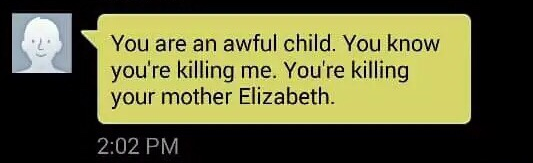
yknow if romeo had just Cried on juliets corpse for a couple hours instead of drinking poison Right Then they would have been Fine
The moral of the story is: always take time to cry for a few hours before making important decisions.
So I’m more or less being facetious here, but this is actually a thing.
Hamlet is genre savvy. Hamlet knows how Tragedies work, and he’s not going to rush in and get stabby without making absolutely certain he’s got all the facts.
Except once he thinks he has all the facts – once he’s certain that it really is the ghost of his father and Claudius really did kill him, he rushes in and stabs the wrong guy, which starts a domino line of deaths and gets Laertes embroiled in his own revenge tragedy and ultimately results in the deaths of nearly every character other than Horatio.
That’s the irony and the tragedy of the story. Hamlet knows his tropes and actively tries to avoid them, and the tropes get him anyway. It’s inevitable, the tropes are hungry.
I want a sticker that says the tropes are hungry so I can put it on my laptop
i met a scholar once who said that tragedies aren’t about a silly “flaw” or anything, it’s about having a hero who’s just in the wrong goddamn story
if hamlet swapped places with othello he wouldn’t be duped by any of iago’s shit, he’d sit down & have a good think & actually examine the facts before taking action. meanwhile in denmark, othello would have killed claudius before act 2 could even start. but instead nope, they’re both in situations where their greatest strengths are totally useless and now we’ve got all these bodies to bury.
IKR?! Part of what sets VC above other vampire series for me is that it’s got so much comedy -intentional and unintentional- and so much suffering, too. All mixed in together.
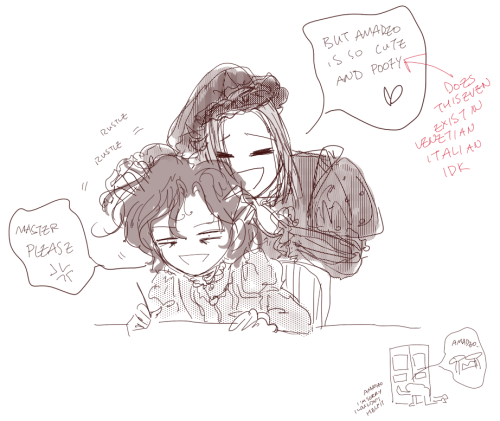
I don’t know the story of Leonardo Davinci /Salai! It’s possible AR was inspired by it, I haven’t seen her mention Salai… Did they do this kind of cute stuff?
Nope! Not that I’ve been made aware of. AR didn’t give us a reason why Universal was no longer involved. She just announced to us 11/26/16 that she had the rights back [X] and was developing a VC TV series. So I would assume that Universal rights expired, and they didn’t choose to renew. AR might have raised the renewal cost, too.
I hope we do get the backstory on that someday, but my guess is we never will. Probably the same kind of development hell that happened w/ movie!IWTV from ‘94, the rights were jostled around for almost 20 yrs bc, from what I understand:
the material was/is very difficult to adapt with all the problematic and taboo stuff in it.*
the filmmakers wanted to please the VC fans, but they also wanted to make something that people who had not read the books would want to go see! That’s probably one of the reasons for Banderas!Armand, btw. I’m sure the filmmakers had to choose between satisfying the VC fans and reducing the taboo stuff enough to make it more palatable for non-VC fans (Louis, an adult vampire, being seduced by a teenage-looking vampire, might have been too much to ask for in 1994 it might still be too taboo now).
casting was tough,several first choice actors declined.
*@moral-cipher and I were talking about this, and the way ppl criticize canon, and that’s fine, I encourage it! But it is a very problematic series and just about every character is dysfunctional, every character has suffered or has caused suffering in others. The new motto for VC fandom might as well be:
~VC: If you’re looking for a perfect cinnamon roll, you’ve come to the wrong fandom.~
REALLLYYY fun cyber-occult-neon-muscle-gore commission I got to do! So many fun glitchy effects were used in this so I learned quite a bit while working on it.
Usually I don’t post gorey things to this blog, but I’m so pleased I wanted to share.
Americans are no wiser than the Europeans who saw democracy yield to fascism, Nazism, or communism. Our one advantage is that we might learn from their experience. Now is a good time to do so. Here are twenty lessons from the twentieth century, adapted to the circumstances of today:
1. Do not obey in advance.
Much of the power of authoritarianism is freely given. In times like these, individuals think ahead about what a more repressive government will want, and then start to do it without being asked. You’ve already done this, haven’t you? Stop. Anticipatory obedience teaches authorities what is possible and accelerates unfreedom.
2. Defend an institution.
Defend an institution. Follow the courts or the media, or a court or a newspaper. Do not speak of “our institutions” unless you are making them yours by acting on their behalf. Institutions don’t protect themselves. They go down like dominoes unless each is defended from the beginning.
3. Recall professional ethics.
When the leaders of state set a negative example, professional commitments to just practice become much more important. It is hard to break a rule-of-law state without lawyers, and it is hard to have show trials without judges.
4. When listening to politicians, distinguish certain words.
Look out for the expansive use of “terrorism” and “extremism.” Be alive to the fatal notions of “exception” and “emergency.” Be angry about the treacherous use of patriotic vocabulary.
5. Be calm when the unthinkable arrives.
When the terrorist attack comes, remember that all authoritarians at all times either await or plan such events in order to consolidate power. Think of the Reichstag fire. The sudden disaster that requires the end of the balance of power, the end of opposition parties, and so on, is the oldest trick in the Hitlerian book. Don’t fall for it.
6. Be kind to our language.
Avoid pronouncing the phrases everyone else does. Think up your own way of speaking, even if only to convey that thing you think everyone is saying. (Don’t use the internet before bed. Charge your gadgets away from your bedroom, and read.) What to read? Perhaps The Power of the Powerless by Václav Havel, 1984 by George Orwell, The Captive Mind by Czesław Milosz, The Rebel by Albert Camus, The Origins of Totalitarianism by Hannah Arendt, or Nothing is True and Everything is Possible by Peter Pomerantsev.
7. Stand out.
Someone has to. It is easy, in words and deeds, to follow along. It can feel strange to do or say something different. But without that unease, there is no freedom. And the moment you set an example, the spell of the status quo is broken, and others will follow.
8. Believe in truth.
To abandon facts is to abandon freedom. If nothing is true, then no one can criticize power, because there is no basis upon which to do so. If nothing is true, then all is spectacle. The biggest wallet pays for the most blinding lights.
9. Investigate.
Figure things out for yourself. Spend more time with long articles. Subsidize investigative journalism by subscribing to print media. Realize that some of what is on your screen is there to harm you. Bookmark PropOrNotor other sites that investigate foreign propaganda pushes.
10. Practice corporeal politics.
Power wants your body softening in your chair and your emotions dissipating on the screen. Get outside. Put your body in unfamiliar places with unfamiliar people. Make new friends and march with them.
11. Make eye contact and small talk.
This is not just polite. It is a way to stay in touch with your surroundings, break down unnecessary social barriers, and come to understand whom you should and should not trust. If we enter a culture of denunciation, you will want to know the psychological landscape of your daily life.
12. Take responsibility for the face of the world.
Notice the swastikas and the other signs of hate. Do not look away and do not get used to them. Remove them yourself and set an example for others to do so.
13. Hinder the one-party state.
The parties that took over states were once something else. They exploited a historical moment to make political life impossible for their rivals. Vote in local and state elections while you can.
14. Give regularly to good causes, if you can.
Pick a charity and set up autopay. Then you will know that you have made a free choice that is supporting civil society helping others doing something good.
15. Establish a private life.
Nastier rulers will use what they know about you to push you around. Scrub your computer of malware. Remember that email is skywriting. Consider using alternative forms of the internet, or simply using it less. Have personal exchanges in person. For the same reason, resolve any legal trouble. Authoritarianism works as a blackmail state, looking for the hook on which to hang you. Try not to have too many hooks.
16. Learn from others in other countries.
Keep up your friendships abroad, or make new friends abroad. The present difficulties here are an element of a general trend. And no country is going to find a solution by itself. Make sure you and your family have passports.
17. Watch out for the paramilitaries.
When the men with guns who have always claimed to be against the system start wearing uniforms and marching around with torches and pictures of a Leader, the end is nigh. When the pro-Leader paramilitary and the official police and military intermingle, the game is over.
18. Be reflective if you must be armed.
If you carry a weapon in public service, God bless you and keep you. But know that evils of the past involved policemen and soldiers finding themselves, one day, doing irregular things. Be ready to say no. (If you do not know what this means, contact the United States Holocaust Memorial Museum and ask about training in professional ethics.)
19. Be as courageous as you can.
If none of us is prepared to die for freedom, then all of us will die in unfreedom.
20. Be a patriot.
The incoming president is not. Set a good example of what America means for the generations to come. They will need it.