I’ll try to keep making fresh ones, buuuut… I bet I have some old ones you haven’t seen in my #memeything tag, and also! The #vintage meme tag has a few that inspired me to start making my own.
…..aaaaand these ppl make VC memes! Check theirs out, I might have some of their memes mixed into my #by someone else tag (in no special order):
If anyone knows of other blogs that do VC memes/memeythings, reblog/comment plz.
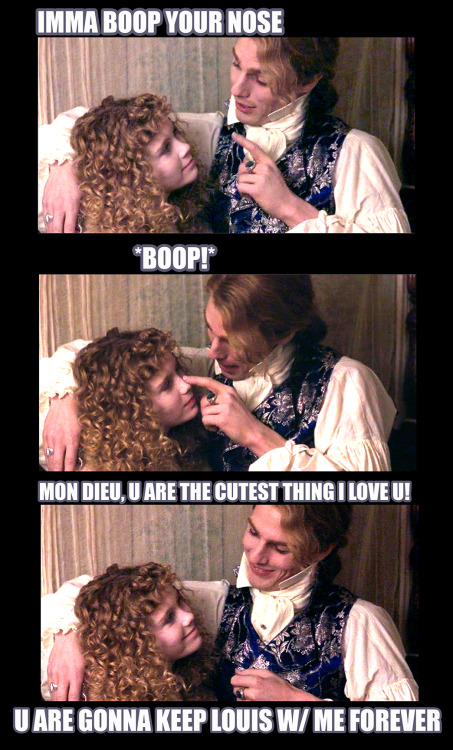
Why do I call them memeythings?? Well, when I started making them, I wasn’t sure if they really counted as “memes” bc “memes” as I understood them, had to be some widely-accepted joke first… text from somewhere else, so I called mine memeythings instead, bc I did some of my own “writing” for them, like this “boop your nose” one, but now it’s normal to make up your own text or grab text from anywhere and it counts as a “meme,” I think. I still like the word, tho, so I’m keeping it.
You’re so welcome, glad you enjoyed it! Answering asks is so much fun for me, it makes me consider my own current and previous thoughts, sometimes I even ask around privately for more ideas… and try to write it out as best I can, it gives me an excuse to make fresh gifs/memes, sometimes it inspires others to make fanworks… and I always like to hear back from the original asker that the effort was appreciated *u* ((No, you only get one question per quarter. Pffft. Of course you can ask more!))
“in general, how do we as a base know what is unreliable information or not when it comes to our narrators because from what I’ve always gathered, they have the earnest desire to convey the truth as they can see it.”
You would think that, but just like in real life, people can narrate a story for their own motivations.
TL;DR:
The characters telling their stories don’t always have the earnest desire to convey the truth, so it’s not always clear what the reliable information is! When we have accounts of the same event where the details align, that seems to be the best way to confirm it’s canon, bc even Anne Rice can’t always answer fan’s questions about canon stuff to everyone’s satisfaction.
When there’s conflicting details, we have to rely on headcanons, which ppl can choose to agree on or not, hence the fandom phrase, #Your Headcanon May Vary.
For example of facts aligning: I think we can all agree that Armand was the unspoken leader at the Theatre des Vampires bc Lestat left him there in a position of authority in TVL, which is where Louis found him some 80 years later in IWTV, confirming that that was Armand’s role there.
In the scene above,
IDK at that point in canon whether Lestat believes in a God, but if not, he’s deliberately lying to Claudia, bc she’s never going to see her mother again. Even if he does believe in God, he still doesn’t know where his dead go! He’s trying to answer her in a way that will keep her calm and complacent. He knows Claudia’s mother is dead, he saw the corpse in the movie. But she is still a child and he doesn’t want to scare her or depress her, or make her feel guilty about killing, which she just did!
I also think he’s a little taken aback bc she’s asking him for the whereabouts of her biological mother just minutes after he turned her into a vampire, a process that’s been compared to birth. It’s the most intimate act a vampire can experience. His smile falls right after she asks bc in a way it seems like he’s a deflated that she wants her biological mother, it’s like she’s already saying, “You’re not my REAL dad!” It might also remind him of his own mother who abandoned him ;A;
Re: Lestat P.1: In TVL, Lestat tells Armand:
“I never lie,” I said offhand. “At least not to those I don’t love.”
I’m still not 100% clear on this, bc of the double negatives. Can we translate it to “I’m honest with those I don’t love.” –> “I lie to those I love.” ? He spent some 65 years lying by omission to Louis and Claudia about the other vampires, and all the secrets he knew. So who’s to say he doesn’t also lie to his readers, “those I don’t love” ? How much does he really love his readers?
Re: Louis: I’ve always felt, and there are others who share this opinion, who gave me this opinion, that IWTV was dictated to Daniel from Louis with the intention of pissing Lestat off enough that he would rise from wherever he was hiding and find Louis. While I don’t think Louis intentionallyLIED, I do think he might have embellished some things, exaggerated here and there, left out certain things, in order to achieve his goal. And it WORKED because…
Re: Lestat P.2: The Vampire Lestat was Lestat’s rebuttal to IWTV, containing all the secrets he couldn’t tell Louis during their time together, so I’m inclined to believe that Lestat earnestly wanted to correct the record and win Louis back, since he still loved Louis.
Re: Armand: TBH, I don’t know Armand’s story well enough, what I believe and what I don’t, in all of canon, to say that he’s a liar. I think, like Louis and Lestat, he embellishes, he lies by omission, and he tells people things when he wants a certain reaction out of them. He lied to his coven when he was a leader all those years since he never really believed in serving Satan. Or did he? It seems like he didn’t.
There is a particular scene that Armand describes in TVA that is questionable, as to whether it happened.
How he tried to “help” Claudia the night she died (fanart by @sheepskeletonhere, if you dare, it’s gorey). Personally, I sometimes believe it’s the truth bc Armand does like… experiments! But then I also remember how David was flirting excessively with Armand in that book, andso it’s possible that “this story was just something that Armand made up; somehow trying to intimidate the others, displaying the cruelty he could be capable of.” (quote from @annabellioncourt)
That was certainly a good advertisement from you, so I found it and read it and actually I think it was pretty cute
(L/L read her a little Shakespeare! Among other cuteness), so I will just leave this link here and let you all decide if you want to click on it, so like, give it a chance?
“Daddy issues” is an unfair term in real life bc it’s a judgment that carries different implications, either that someone is functioning badly bc of a bad relationship with their father, or that they had too good ofa relationship with their father and are spoiled; etc.; there is a wide range, but it basically all boils down to the cheap jab: “That person has daddy issues.”
When I see that term used on fictional characters, it’s more about people outright shitposting or having a touch of dark humor (sometimes more than a touch!) because we know these characters are not real people, they’ll never actually hear us insulting them. And what’s intriguing to me about that term used in analysis or in canon about these characters is that sometimes it’s considered a huge fault, something you say to put a character down; but at other times, it’s a badge of honor that a character can function so well even carrying the burden of “daddy issues.”
[^ source unknown]
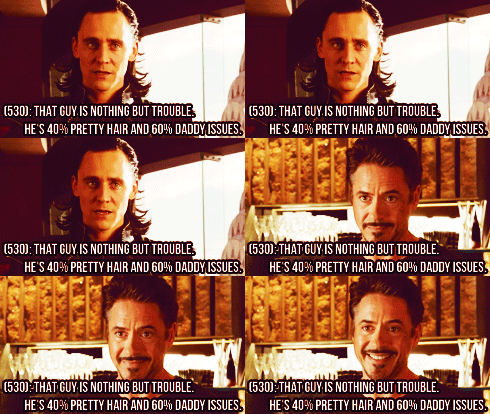
(530): THAT GUY IS NOTHING BUT TROUBLE. HE’S 40% PRETTY HAIR AND 60% DADDY ISSUES.
Loki and Tony Stark are great examples of fictional characters w/ “daddy issues,” bc they both had unhealthy relationships with their fathers and it was a very formative experience for them. They are very layered and intellectually stimulating characters, would they be this way if they’d had the benefit of better relationships with their fathers? Isn’t there a kind of catharsis in watching them struggle and battle through their demons in order to reach their goals? Isn’t there extra reward when we see them succeed despite the emotional burdens they bear? And especially when others taunt them about their “daddy issues” and they are strong in the face of that adversity, too?
Google gives the definition of “Daddy issues” as:
“a pejorative for a lot of social, psychological or behavioral issues that may OR MAY NOT stem from an unhealthy relationship with one’s father. It’s usually used to marginalize issues women are having, though to be honest men are perfectly capable of having “daddy issues” too.”
I was asked this a few months ago and it’s a delicate subject bc, again, “daddy issues” is a pejorative, and therefore it can belittle/marginalize real people who have ‘social, psychological or behavioral issues that may OR MAY NOT stem from an unhealthy relationship with one’s father.’
But since these are fictional characters I feel like we can discuss it without causing harm, and I would agree with @vampires-and-witches who had made commentary that Claudia would probably be the fictional character with the most daddy issues in VC [X].
^And yet, in spite of her “daddy issues,” Claudia had persevered (at least, temporarily) when she thought she had killed her own dad/maker. As much as I love Lestat, he did have that coming to him, he deserved it, and he doesn’t even blame her for doing it. So when Claudia rose up and attacked the one who had wronged her the most? 12 year old me was thrilled, cheering her on! I wasn’t about to copy her and kill my parents *eyeroll* but what it showed me was the immense strength of character, someone who was at a great physical disadvantage, AND burdened with “daddy issues,” and yet she executed her plan entirely on her own and succeeded!
I will add that I think VC has a ton of terrible fictional parents (mortal/biological and vampiric/makers). Many are neglectful, abusive, manipulative, etc. or a combination. A terrible or absent parent/maker can affect someone’s future relationships with everyone they interact with. It’s those fictional characters who bear that burden and rise up and succeed (or at least keep trying!) despite it, those are some of the best characters in the series, in my opinion.
So I’ll open this up, anyone can reblog/comment about the characters with the most “daddy/maker issues”!
Louis does not approve of making vampires himself, that’s for sure! But yes, Louis wanted to be with Armand and Armand didn’t want Claudia as part of that equation and she knew it.
So, right, IDK what Louis was thinking about how it could possibly work out w/o making her a new adult vampire companion. He had little choice in that. He couldn’t bear to think of her out there on her own, she clearly wasn’t going to be invited to join the Theatre des Vampires, and she couldn’t make an adult vampire herself. There was a line in book!IWTV where she tells Louis: “ ‘Can you picture it?’ she said, so softly I scarcely heard. “A coven of children? That is all I could provide…” <– whether she could actually turn a child is not known. We don’t know of it happening successfully anywhere else in canon before or after that point. Louis probably would not have approved of that, either.
Worth noting here is that in the first version of IWTV, Claudia wasn’t killed off by the Parisian coven (from the Vampire Companion):
“In the first version of [IWTV], Claudia eventually goes off with three vampire brothers whom she meets in Paris. She does not die. As such, it was as if Rice had attempted to give her daughter a form of immortality. Rice, however, experienced psychological problems that cleared up only after she had rewritten the ending – by killing off Claudia and taking Louis through an experience of intense grieving. This version was much more cathartic for Rice.”
It’s tough for me to answer bc I think it depends on every individual reader’s sense of humor,… even within “humorous/ dark tone as VC” there is a range*. So I can’t say definitively that these reccs are in line with what you’re looking for necessarily, but you can use this list as a starting point.
*Lestat dancing w/ Claudia’s mom’s corpse: Some ppl find this moment dark and hilarious and other ppl think it’s just disgusting, so… there is a range. Personally I find it pretty amusing.
(There are some duplicates on this list, sorry about that, but I wanted to list them by recc’er.) (And I added ** next to those that @gothiccharmschool just recc’d in two recent posts which I will reblog momentarily for you.)
In no special order:
(Okay this is the first one bc it IS special, and the closest to the humor of VC I’ve seen in awhile) This is a mockumentary/movie but it sneaks onto the top of the list bc it is just SO good, courtesy of @theamazingdrunk for reminding me in a comment on an older rec post: WHAT WE DO IN THE SHADOWS
**Salem’s Lot – Stephen King, personally, I find several Stephen King books to be darkly humorous, this one is a good one. I find humor in the Shining and Firestarter, too, but less so.
Vittorio – don’t forget Vittorio. Not sure if you read this one. It’s also by Anne Rice and technically not a VC book, he has a different origin story and is not part of the VC vampire group.
@riverofwhispers said: Carmilla is good Anita Blake and Sookie Stackhouse books, but only the early ones. the Rachel Morgan series but again starts out good gets weird later and it’s not about vampires so much as there are vampires in it.
@bluestockingcouture said: ‘The Angel’s Cut’, sequel to ‘The Vintner’s Luck’, is very atmospheric and well worth reading. Not quite as moving and intense, but there are some excellent new characters.
@sanguinivora said: Also, as to voice: IWTV opens in the late 1700’s/early 1800’s. Don’t know about either a southern American or French hinterlands-with-a-gloss-of-Parisian dialect, but for the grammar and vocabulary, one cannot go too far wrong looking to the novels of Jane Austen and Patrick O’Brian.
@dragontrainerdaenerys said: I just read Fevre Dream, George R.R Martin’s own vampire novel, and while I didn’t liked much his vampire mythology the main characters are charming! Besides, it’s set on the late 18XX and goes on the Mississipi River, so it has similar scenarios to IWTV!
@baroquebat said: Vampire Hunter D: Bloodlust, while futuristic, has a loooot of lovely gothic set pieces in the anime movie, plus its just gorgeous and has the rare treat of having a dhampir lead!
@annabellioncourt’s Recs, and these are mostly her descriptions, too, compiled from other recc posts:
The Bloody Chamber And Other Stories – Angela Carter
A Taste of Blood Wine – Freda Warrinton, for romance and decadence.
**Blood Opera Sequence (or “Trilogy”?) – Tanith Lee’s vampire series was out when Lestat was playing rockstar
Historian – Elizabeth Kostova, for its worldliness
**Fevre Dream (yes its spelled fevre) by George R. R. Martin (yes, its THAT Martin, and his take on vampires is Very Good.)
Sunshine by Robin McKinley
**The Delicate Dependency by Michael Talbot, also for romance and decadence. (the recently-published edition from Valancourt Books has a foreword by @gothiccharmschool!)
The Hunger by Whitley Scriber
**Dracula – Bram Stoker, for its stereotype-setting content
Lord Ruthven – Byronic vampire, Lestat doesn’t catch the irony of John Polidori’s mockery of the foppish, arrogant, and well…Lord-Byron-y vampire




 I-want-my-IWTV