Awww, thank you! That’s very kind of you. (I was hoarding this ask for a few days, sorry for the delay in reply.)
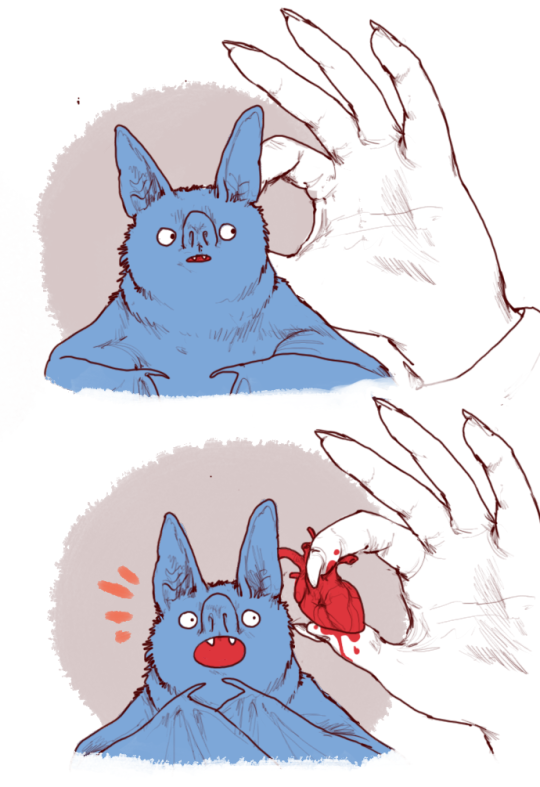
It warms my heart to see the fandom active, too! It’s always been waves of more or less engagement, but recently there does seem to be something of a renaissance. If the VCTV series happens, we’ll probably have even more engagement!
#InktoberVC and the @vcsecretgifts exchange both stimulated great fanworks, I’m planning on setting aside a chunk of time to go through and reblog those Dec. gifts here (I haven’t had a chance to read all the fics yet!) ❤ I’m hoping that more calls for fanworks get rolling in 2018, too, and I’ll make an effort to promote them. We can’t wait 9 months until the next #InktoberVC ;D
In this world in a time when we’re on the brink of nuclear war bc of reasons I can’t attempt to tackle on a blog for entertainment and there are people in power tirelessly dedicated to stripping away our rights one by one, people
determined to widen the class divide, people dehumanizing other real life people, and there is unpunished crime on a daily basis, I come here for an escape and to offer the same to anyone who likes this blog.
I hope 2018 is a better year for all of us, online and offline, Anon. *hugs*
I used to think tension and conflict were the same thing. I mean don’t they go together?
Well, a lot of the time they do, but it’s entirely possible to have one
without the other. They often go hand-in-hand, but they aren’t the same
thing. Conflict doesn’t necessarily equal tension, and tension doesn’t
equal conflict.
Lately I’ve been editing stories that seem to have so much conflict and
no tension! I don’t care about the conflicts. I don’t care about the
characters. Because there is no tension.
Tension isn’t the conflict.
A couple of months ago, I wrote this post on Mastering Stylistic Tension. In the comments, Becca Puglisi said:
I learned a long time ago that while conflict and tension are often
considered to be synonymous, they’re different. Tension is key for
winding up the character’s—and therefore the reader’s-emotions.
I admit that for some reason I read it as “Tension is the key for
winding up,” and my mind filled with an actual image of a key winding
something up. Tension winds up. Conflict is problems that collide.
Tension doesn’t need problems to collide, tension is often the promise or potential for
problems colliding. My oldest brother pointed out that there are action
movies that have conflict after conflict, but no tension. They are a
spectacle–blasts, explosions, fire. Then, he went on to say, there are
movies like Jaws that have scenes that work largely off tension.
I said in my Mastering Stylistic Tension post, “In some ways, it’s not the conflict itself that draws readers in, it’s the promise of conflicts,” which is often the tension.
Tension invests us personally in the story. We feel it. It’s
anticipation, it’s hope or dread for what will happen. It’s a tangible subtext or undercurrent for what could happen.
Tension is defined as a straining or stretching; intense suppressed emotions.
Conflict means “to come to a collision;” to fight or contend.
So tension may suggest a conflict, but it is not the conflict itself.
Conflict may be an object, but tension is the key winding it up.
Sometimes writers try so hard to put in so much conflict to make their
stories interesting when what their story needs is tension for the
conflicts they already have.
I’ll give an example from my own experience.
Last year I was working on a sequence of flashbacks for my novel. While
not the main purpose of the flashbacks, it was important that I
illustrate a romantic relationship in them, because the relationship
itself is important to a main character and what happens in the present
timeline. I was stuck trying to figure out how to communicate the
uniqueness and complexity of the relationship in such a short space. In
an old, old version of this story, I had planned to use a lot of
romantic gestures to convey the relationship, but in working on these
flashbacks, I realized that the romance and the conflict it brought
(which deals with “forbidden love”) wasn’t as powerful as the tension it could have.
I scrapped the idea of the characters touching and kissing, and instead focused on their powerful desires to touch and kiss when they weren’t allowed or able to; I gave one of
the characters a particular reason and a personal commitment to not give
the other affection.
The scene immediately became more interesting. The tension was palpable,
their desires electric, but because they could not give into their
desires, the tension couldn’t release, regardless of how much they or
the audience wanted it to.
The conflict is forbidden love, but the tension is held in the drawn out moments of a desire that can’t be manifested.
This is one of the reasons that sexual tension can be so powerful in
stories. It’s not the colliding problems that come with being with that
person, it’s the subtext and undercurrent of wanting to be with that
person, but not being with them. Once the couple is together, that
tension ends.
Likewise, some of the best dialogue comes from tension, not straight-up
conflict. It comes from subtext, from what’s not being directly said.
Once the dialogue becomes direct, the tension ends and the problems
collide in conflict. Tension often comes before direct conflict. And if
that isn’t happening much in your story, it should.
As Mindy Kaling once explained, sometimes the best tension comes from
the characters trying to avoid conflict, from them trying to stop it
from bubbling out into the open. The closer the conflict gets to the
open and the harder a character tries to stop it, the stronger the
tension gets. It winds up, tighter and tighter. We as an audience
anticipate its release.
That’s what draws a reader into the story.
So make sure that your story has tension and conflict, and not just one
or the other. If you have a story with a bunch of conflict, but your
readers aren’t interested, you may need more tension. If you only have
tension and no conflict, the reader may end the story feeling cheated.
Use both.
Armands are hard for me to stumble upon in real life, bc the whole ~Botticelli angel~ thing makes my headcanon of him so illustrational that few humans can achieve the look! I’m sort of married to Bjorn Andresen, who is not a Botticelli angel. WHY DID HE HAVE TO AGE it’s so unfair.
I also really like Matthew Clavane, who is a model but looks like someone you might just see on the street:
@sheepskeleton likes Clavane as Armand. Check out their archive to see more models and other non-model ppl that have an Armand feel ;D
You might also try my Armand+cosplay search, and you’ll see some human ppl cosplaying as him mixed into that search, does that count?
Just out on the street, it’s easier for me to find Claudias, bc there are plenty of young girls with excellent blonde hair with the perfect amount of curls, I live near Alvin Ailey, a famous dance school, so especially in the spring/summer there are girls of all ages in that area. I like to consider what kind of backpack she’d wear, what outfits. I saw a kid with a backpack covered with sharks today, I think Claudia would love that.
Lestat lookalikes are easy to find, too. 6 foot tall blond guys, especially with an arm slung around another guy, since I live near Hell’s Kitchen in NYC, a LGBT+ friendly neighborhood. I love seeing them in the summer sitting at outdoor tables, their hair in manbuns or half-buzzed looks, tank tops showing off their biceps *u* Shades and wolfy smiles.
Who else? Um, idk, I almost always feel like I’m VC casting. There’s one homeless guy that I pass on a regular basis that always makes me think he’d be great as Lestat’s father. Ornery-looking. But great silver hair.
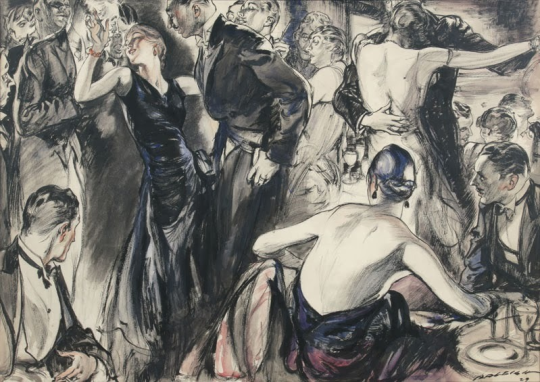
Some years they stay together, if they’ve gathered for the holidays leading up to New Year’s Eve, I would think at someone’s home that can accommodate a large group or they rent a house somewhere. Whoever is hosting sends out the fanciest invitations, each year the current host tries to one-up the previous year’s card 😉
I’d imagine a gathering would look smtg like this, black-tie affair at times (but they’d bring casual clothes, too):
And they do the stuff they normally do when they gather:
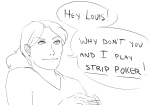
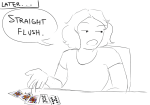
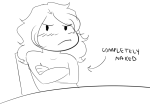
Coven Game Night where some fool challenges Louis to cards and gets their ass handed back to them, even if/when they attempt to cheat
exchanging gifts – Daniel and Lestat compete in giving the best gag gifts.
there’s teasing each other about all the VC books, from the oldest to the most recent “So that ghostwriter of yours-” “DON’T YOU START WITH ME, ARMAND.”
Sharing pics they’ve taken from their year’s travels
Watching movies together in fancy screening rooms with couches, blankets, and pillows
improvised jam sessions for the musicians in the group
artsy sessions for the artistic ones in the group, although they do invite everyone, and Gabrielle has done a few gorgeous fingerpaintings that Lestat treasures
dancing to the improvised music or someone DJ’ing recorded music
BONFIRE and/or FIREWORKS (outside tho!)
Inviting very special mortal friends over for “drinks,” wherein the mortals are aware and consent to get drunk and then share 😉
marriage counseling (come on, cabin fever sets in and at least one pairing gets into a fight every time).
shameless flirting (sometimes causes the fighting that needs marriage counseling)
Other years, they go their separate ways and celebrate NYE on their home territory, or in smaller groupings.